

September 17, 2023, 10:46 am | Read time: 3 minutes
The end of old oil and gas heating systems is drawing closer. Instead, more and more heat pumps are being installed. However, this has led to an increase in heat pump thefts. Owners should therefore secure them properly.
Unlike other heating systems, heat pumps are installed outside the building. This exposes them not only to the elements but also to potential thieves. Heat pumps are expensive and often not adequately secured. In addition to appropriate insurance, one should properly secure their heat pump to protect the costly equipment.
Properly Securing Heat Pumps
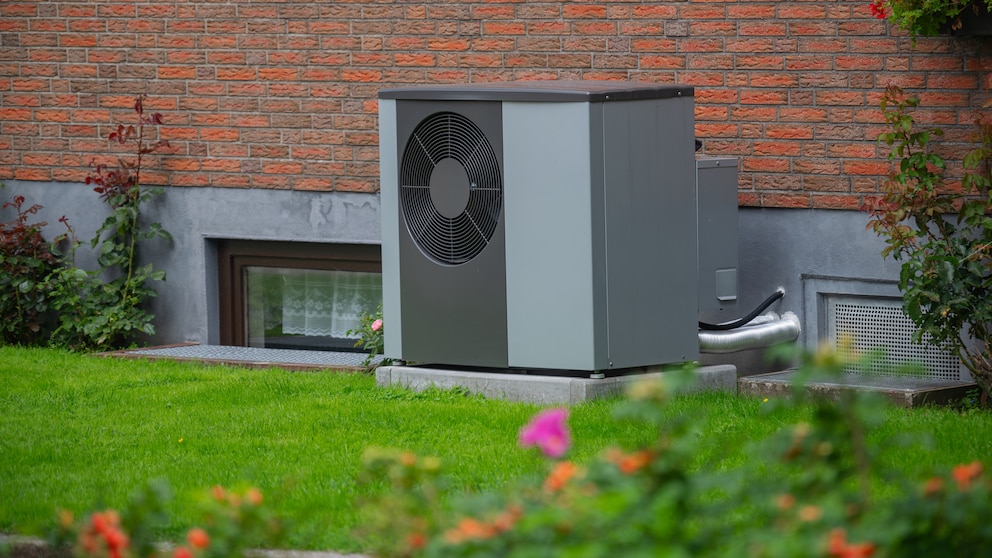
In practice, heat pumps are often placed on a freestanding concrete foundation. If the units are firmly bolted to this, it makes it harder for thieves to steal them. According to the Consumer Center Schleswig-Holstein, so-called breakaway nuts can further reduce the risk of theft. These nuts can only be removed with special tools; they break with standard equipment, preventing the screws from being loosened. Welding the screws can provide additional security.
Additionally, structural measures can make dismantling and vandalism more difficult. According to the Consumer Center, enclosing the heat pump or securing it with a cage are particularly suitable options. Both measures ensure sufficient air permeability so that the devices are not restricted in their function. Owners should always keep in mind that the devices must remain accessible for maintenance and repair.
The Association of Insured (BdV) also points out that securing with alarms, lighting, or installed GPS trackers can be effective ways to deter thieves—or to recover the heat pump after a theft.
If the heat pump is not yet installed—such as in new construction—it should not be left unsecured and freely accessible on the property. In these cases, thefts are particularly common, according to BdV.
Additionally, consumers should prevent damage from storms, rain, flooding, hail, and lightning, advises the Association of Private Homeowners (VPB). Depending on the location, appropriate roofing and a sufficiently large drainage system can help. Moreover, surge protection measures specifically for the heat pump may be necessary.
Choosing the Right Location Is Crucial
A heat pump installed in a visible location—such as near a walkway or street—tends to invite theft or vandalism. Therefore, it may be advantageous to choose a somewhat more concealed location.
Mounting on or at the house can also be an option, according to the Consumer Center Schleswig-Holstein. Some devices are suitable for mounting on the house wall. If the flat roof’s load-bearing capacity allows, the unit can also be placed there.
Homeowners should always consider the noise generated by the heat pump. Ideally, the impact should be minimal for both the owners and their neighbors.
Related: 4 Tips to Reduce Heat Pump Noise
With material from dpa