


July 30, 2026, 10:17 am | Read time: 3 minutes
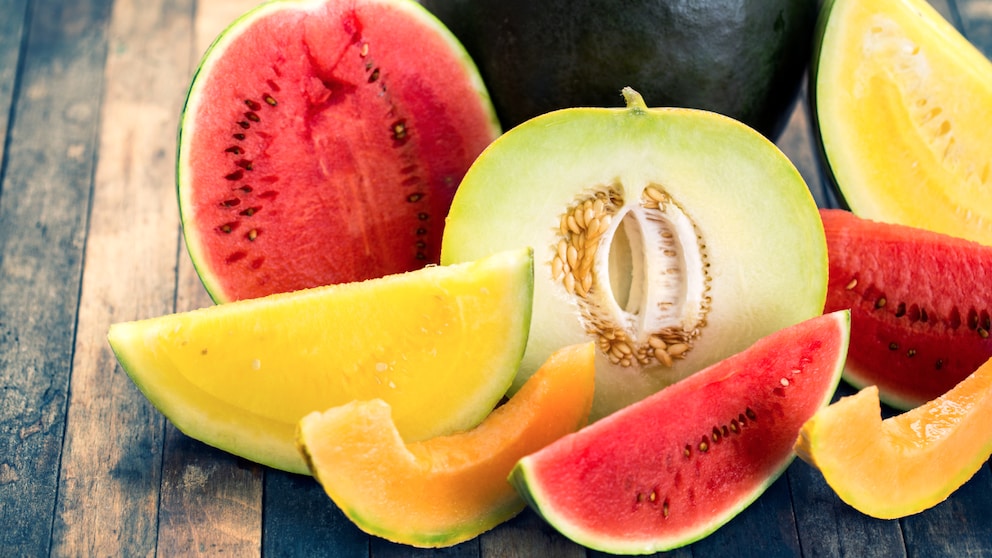
Watermelons are in high demand during the summer, but they are often not cheap. The disappointment is even greater when the seemingly perfect fruit turns out to be a dud after cutting it open. Inside, it is either still unripe and bland or already so overripe that it is hardly edible. Knowing what to look for can save you from this annoying mistake. For watermelons, honeydew, and cantaloupe melons, there are some indicators that reveal the ripeness before cutting.
Overview
When is the melon ripe?
Occasionally, you see people in the supermarket curiously tapping on melons, lifting them, examining them from all sides, and even squeezing them. But does this help in determining the ripeness of a melon?
Recognizing a ripe watermelon
The so-called tapping test is preferably performed on watermelons. If a dull sound is heard when tapping, the melon is ripe for eating. If it sounds somewhat flat, the melon should ripen for a few more days before it can be enjoyed. A yellow spot on the melon can also provide information about its ripeness. A slightly yellow spot indicates that the melon was allowed to fully ripen on the plant. An intense yellow spot, on the other hand, suggests an overripe fruit. Lastly, weight is crucial. When comparing two watermelons of the same size, the ripe one should be heavier.
Also interesting: Growing and harvesting melons in your own garden
Recognizing a ripe honeydew melon
Honeydew melons are not only incredibly delicious, but they are also a good and especially low-calorie snack on hot days. However, finding the perfectly ripe honeydew melon is a bit of a challenge. There are various indicators. A ready-to-eat honeydew melon emits a pleasantly fruity aroma, but if it is too strong and reminiscent of perfume, the melon is most likely overripe.
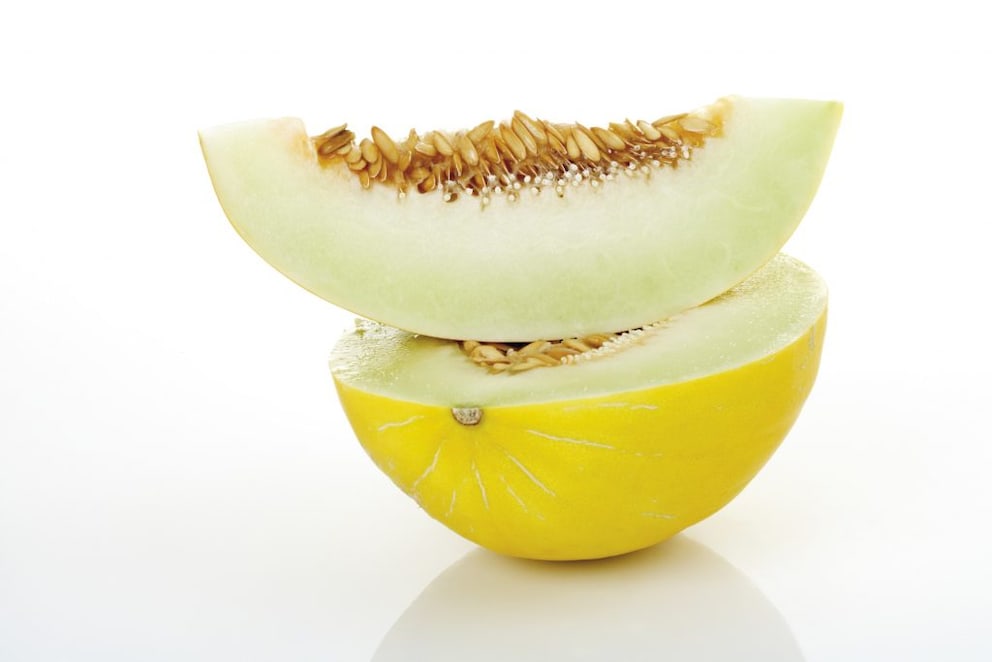
The color is also a good indicator of ripeness. The melon should be uniformly golden yellow all around. If it is still slightly green, the flesh is also very hard. You can also perform the so-called pressure test to determine if a melon is ripe. For honeydew melons, the skin should give slightly when it has reached its perfect ripeness. If it gives too much, it is most likely an overripe specimen.
Also interesting: Did you know that melons can just burst?
Recognizing a ripe cantaloupe melon
The cantaloupe melon, like the honeydew melon, is a type of muskmelon. Due to its small size, it is very popular in gardens and on balconies. But when is it ripe? It behaves similarly to the honeydew melon. If it can be slightly pressed, it is a good sign that it is ripe for eating. However, it should not be too easy to press.
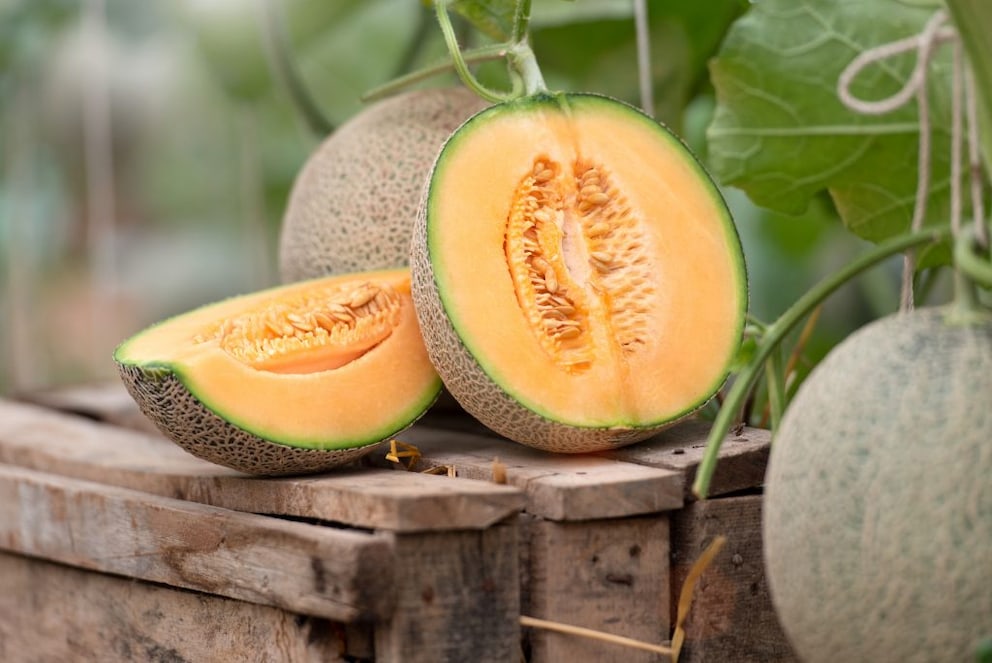
Another characteristic is the pleasantly sweet smell. Additionally, the stem end of a ripe cantaloupe melon shows cracks. The color is also an indicator of the melon’s ripeness. If the color is light green to slightly yellow, it is ripe. If the melon is more green-gray with dark green grooves, it is not yet ripe.