


November 9, 2026, 12:24 pm | Read time: 5 minutes
After a break-in, household insurance usually covers the loss. However, there are limits to coverage: There are cases where insurers see shared responsibility with the policyholder and therefore do not pay. myHOMEBOOK spoke with an insurance expert and a lawyer about this.
Follow myHOMEBOOK on WhatsApp now
Most Burglars Enter Through Doors and Windows
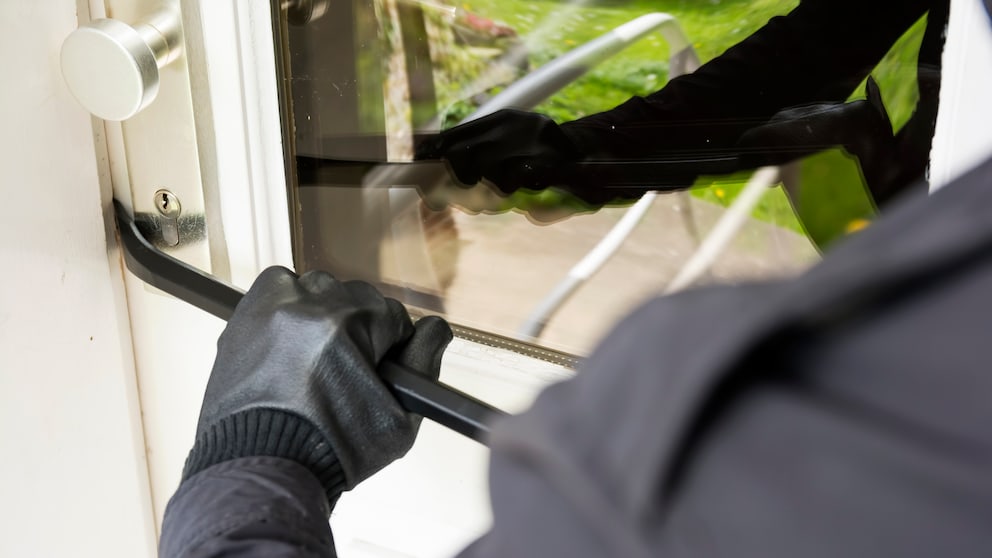
Whether it’s a multi-family or single-family home: According to the consumer portal of the German Insurance Association (GDV), most burglars enter through entrance doors, window doors, and windows.
The sense of security in one’s own home is irreplaceable, as are the emotional values and psychological effects a break-in can have on those affected. For all other damages, however, insurance usually covers the costs. According to insurance expert Mathias Zunk, household insurance replaces the replacement cost for stolen or irreparable items. It also covers repair costs for damaged items and depreciation for damaged but still usable items.
However, household insurance does not automatically cover break-ins. Lawyer Nicole Mutschke says: “What matters is how easy it was for the perpetrators to enter the apartment and how long the residents were absent at that time. Not every mistake automatically leads to a loss of insurance coverage.”

Who Is Liable for Theft in a Bike Storage Room?

Who Is Liable for Damages After a Break-In via Scaffolding
In Which Cases Do Insurances Not Pay?
Apartment Door Only Pulled Shut and Not Locked
There are cases where insurers see shared responsibility with the policyholder. This can apply, for example, if the apartment door was not locked and only pulled shut. According to Mutschke, it depends on how long you are away. “If you leave the house for several hours or even overnight without locking it, you risk losing your insurance coverage. In one case, the Kassel Regional Court already considered a good two-hour absence during shopping as grossly negligent and therefore justified a 50 percent reduction in insurance benefits.”
What If the Window Is Tilted?
The insurance may also not cover if the windows were tilted. Unlocked windows are almost an invitation for burglars. In this case, there would be gross negligence on the part of the insured. The household insurance does not cover or only partially covers it.
“The greater the shared responsibility of the homeowner or tenant, the more the insurance can reduce compensation after a break-in,” says the GDV insurance expert. Thus, the break-in and resulting damage could have been prevented. The tenant or homeowner should have acted more attentively and closed the windows.
Nicole Mutschke adds that the location of the windows also plays an important role: “A window on the ground floor that burglars can easily reach is much more problematic than a hard-to-reach window on an upper floor.”
Also interesting: This measure really protects against a break-in with acid
What Applies to an Open Patio Door?
Those who leave their patio door unlocked also risk, in some cases, that the insurance will not cover the break-in. If a thief can simply walk in through the open patio door, it’s almost an invitation. Nicole Mutschke sees it that way too. In such cases, it must also be distinguished whether it is still a burglary or a theft. “The usual household insurance protects against burglary theft, not against every ordinary theft. It’s different if a perpetrator, for example, breaks open a locked door or enters through a window. Then insurance coverage can generally exist.”
Forgot Apartment Key in the Car–What Now?
It happens to many, but in the worst case, it can be costly. Because if you leave your apartment key in the car, you must expect that the insurance will not pay in the event of a break-in. “In one case, a man had left his apartment and safe keys in a briefcase visible from outside the car. It also contained documents with his address. According to his statements, thieves stole the keys and then valuables worth more than 64,000 euros from his apartment,” reports Mutschke.
According to the Federal Court of Justice’s ruling, the insurance did not have to pay in this case. It remained unclear, according to Mutschke, whether the car was locked or not.
Break-In Through Cat Flap
It may sound crazy, but a break-in through a cat flap has already happened. Nicole Mutschke reports a case where a cat flap became the downfall of a burglary victim: “In one case, there was a cat flap in the lower part of a kitchen window. According to the resident’s account, burglars could reach the window handle through the flap and open the window.”
The resident was away from home for a full eleven hours and did not lock the window, even though there was a device for it. The Dortmund District Court then decided that the insurance should prevail.
Also interesting: Who is liable for damage after a break-in over the scaffolding
Whether the Insurance Pays Depends on the Individual Case
What may sound clear in theory and on paper is often a matter of interpretation in practice. In the event of damage, it must be clearly determined how much shared responsibility the insured has.
While the example cases can provide a rough direction, according to Nicole Mutschke, insurances have become somewhat more generous. “Many modern household insurances now also pay if the insured acted with gross negligence. Therefore, it is definitely worth taking a closer look at your own insurance conditions.” In any case, you should check the following points if a break-in occurs:
- Why and how long was the insured absent?
- Is there a causal connection between the break-in and the unlocked door?
- What does the insurance contract say?
Since prevention is always better than cure, the insurance expert advises mechanical security measures. These “are the top priority in burglary protection.” Burglary-resistant house and apartment doors, as well as protection for windows and balcony doors, are still the most effective investments.