


July 17, 2024, 8:54 am | Read time: 4 minutes
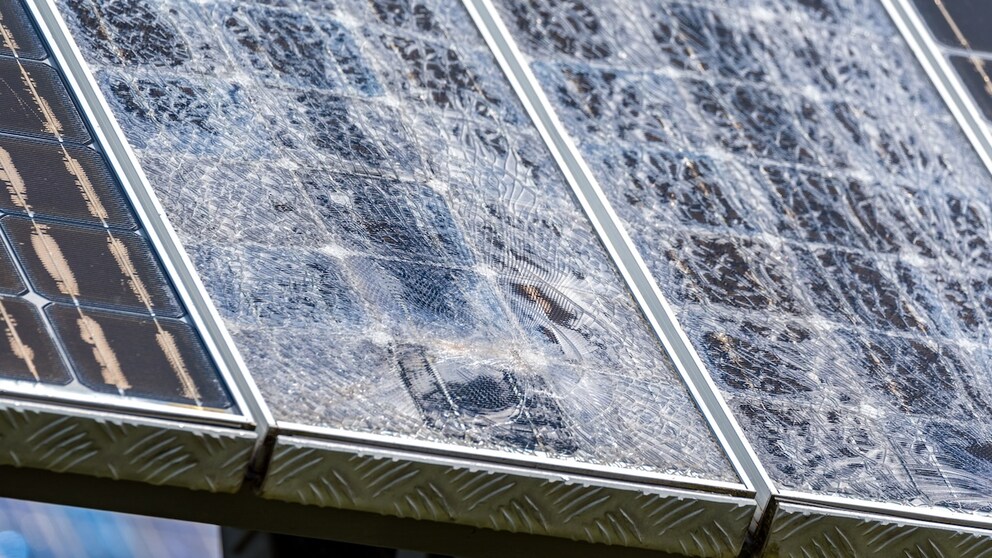
Glass can break–that’s well known. However, ideally, it shouldn’t happen without an external impact. Yet this is exactly what occurs with the so-called “spontaneous glass breakage” in solar cells, as observed by U.S. scientists. myHOMEBOOK consulted an expert to find out what might be responsible for this.
Spontaneous glass breakage in solar cells is reportedly becoming more frequent. The California-based Renewable Energy Test Center RETC noted a concerning rise in these glass breakages in solar modules in its annual “PV Module Index.” Often, the modules break even before they are put into operation.
More Reports of Spontaneous Glass Breakage in the U.S.
“Spontaneous glass breakage is an example of a defect we didn’t know about before,” explains Teresa Barnes, head of the Photovoltaic Reliability and System Performance Group at the National Renewable Energy Laboratory (NREL) of the U.S. Department of Energy in the report. “When I started looking into the reliability of solar modules seven or eight years ago, we mostly heard about glass breakage when there were sloppy operation and maintenance practices.” That has since changed. NREL is increasingly receiving reports of glass breakage in solar modules that are not due to direct damage, such as storm damage.
The quality of solar glass seems to be declining over time. Previously, the modules withstood the load test, Barnes explained in the “PV Module Index.” “Today, they either only pass the simple static basic test or pass it without higher safety margins,” says the expert. Some new module designs do not even pass the static minimum load test.
Also interesting: How bird droppings can damage solar systems
Can Also Happen in Germany
The NREL team suspects that glass damage in solar modules progresses similarly to car windows. A small damage can develop into a large crack in extreme weather.
However, spontaneous glass breakage in solar cells is not solely a U.S. problem; it also occurs here. “Glass, by its structure, is a brittle material and can always break spontaneously,” explains Carsten Körnig, CEO of the German Solar Industry Association (BSW) upon myHOMEBOOK’s inquiry. “Unlike other materials, the break does not announce itself through cracks or the like, but it breaks spontaneously.”
Spontaneous Glass Breakage in Solar Cells–These Are the Causes
According to the Solar Association, glass breakage can have various causes: on the one hand, external influences, on the other hand, incorrect measurements or production errors. “External influences arise from temperature fluctuations, wind suction, snow load, hail, and the like,” explains Körnig. But even with overuse that exceeds the “resistance” of the glass, spontaneous glass breakage can occur.
There are other reasons as well. “Thermal effects can cause temperature stresses in the glass.” Improper storage or mounting can also lead to glass breakage. “Material-wise, impurities such as nickel sulfide inclusions in tempered glass can also reduce the resistance of the glass,” adds Körnig.
By the way: Specific data on how often spontaneous glass breakage occurs in solar cells in Germany is currently not available, as this is “not statistically recorded.” However, such cases are only “very rarely” reported to the BSW.
Also interesting: Can hail really destroy a solar system?
How Harmful Bird Droppings Can Be for Solar Panels
Can Hail Really Destroy a Solar Panel?
Preventive Measures
In Germany, certain standards must be met for the mechanical load of PV modules. Influences include wind load, snow, and hail, and aging or durability tests are also conducted. The basis for this is the standards DIN EN IEC 61730 and DIN EN IEC 61215.
A problem also known from single-pane safety glass is spontaneous breakage due to nickel sulfide inclusions. This can be countered with hot storage tests, explains Körnig. In general, it depends on the correct planning and construction of the modules. The quality of the glass is measured, and so-called “safety factors” are considered, both on the impact side and on the resistance side. “The basic rule is that the resistance of the glass must be greater than the expected loads,” Körnig clarifies.
What Solar System Operators Should Pay Attention To
“Customers should ensure that the PV modules come from specialist retailers,” is the recommendation of the BSW. The modules should also carry a CE mark, which guarantees that certain safety standards are met by the manufacturer. However, compliance with the CE and testing of DIN standards is the responsibility of the planner or installer, Körnig concludes.