


June 15, 2023, 3:20 pm | Read time: 4 minutes
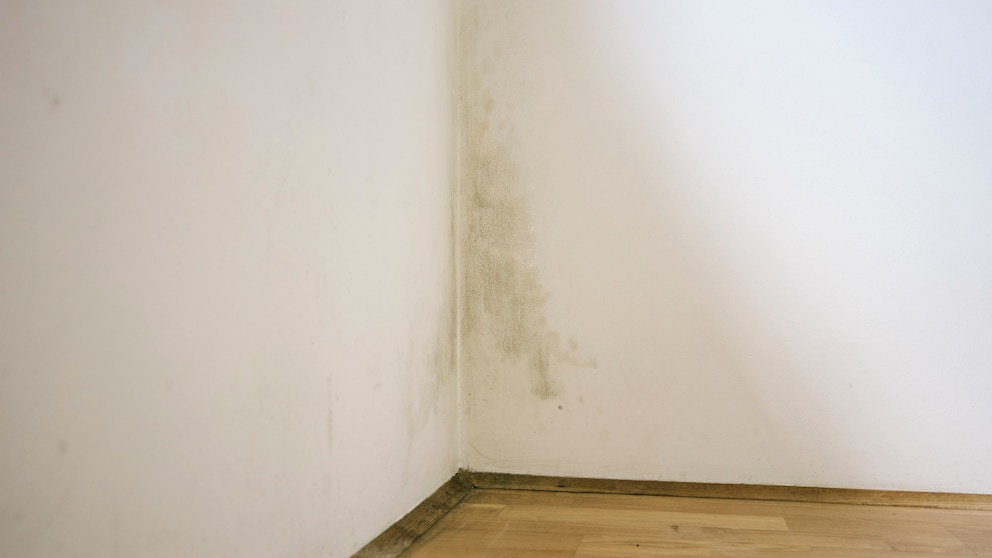
When rearranging furniture reveals mold on the wall, quick action is needed. And what’s faster than simply painting over the spot? Especially if it’s with special anti-mold paint, that should solve the problem, right?
Mold on the wall is not only unsightly but also a serious health hazard. The spores can cause skin and mucous membrane irritations, allergies, and asthma. To address the problem, it is possible to use special anti-mold paint. With this, mold can simply be painted over. myHOMEBOOK asked the Federal Association for Mold Remediation (BSS) if this is true.
Overview
Can you paint over mold?
To the question of whether you can simply paint over mold, there is a clear answer: No, you cannot and should not. This is also confirmed by Angela Berg from the Federal Association for Mold Remediation: “Mold should never be painted over.” Because “even painted-over mold can pose health risks.” These include, for example, microbially volatile organic compounds (MVOC) that emit into the indoor air.
This means there is no paint you can apply to mold to combat it. “Even if some manufacturers’ advertising claims otherwise, you cannot eliminate mold with paint,” says the expert.
Are there paints that prevent mold from returning?
Although you cannot solve a mold problem with paint alone, there is hope when it comes to preventing mold. “Preventively, silicate paints have proven effective in practice,” says Berg. But lime paints are also suitable for preventing the recurrence of mold.
“However, it is essential to first eliminate the cause of the mold infestation,” adds the mold expert. Possible reasons can be high humidity or moisture penetration. Additionally, it is important to remove the mold before applying the paint.
Also interesting: 4 home remedies for removing green deposits on house walls
How does anti-mold paint work?
There are different types of mold paints. They all have in common that mold does not grow on them. Mineral anti-mold paints like lime or silicate paints naturally have a very high pH value. This is around 11 or more. “These alkaline surfaces are generally not colonized by mold.” This method is safe for humans and the environment.
Emulsion paint works against mold fungi through added fungicides. Due to the poison, this paint is very effective. However, the toxins can also be harmful to humans. Therefore, this anti-mold paint is not recommended for allergy sufferers. The effectiveness of both mold paints diminishes over time. They do not provide long-term protection.
Prevent and Effectively Remove Mold in the Bathroom
What Prevents Mold in Houseplant Containers
How to effectively remove mold from the wall?
The expert advises: “Mold should not be removed by laypeople, depending on the size of the infestation.” If the affected area is smaller than 0.5 square meters, the mold can usually be removed directly by the resident of the house or apartment. “For remediation of larger mold infestations, a mold remediation professional should be hired.” Exceptions are people with pre-existing conditions. Those with weakened immune systems or allergies should also hire an expert for smaller areas.
Home remedies like high-proof alcohol (at least 70 percent) and vinegar are best suited for mold removal by laypeople. “When remediating mold, even in small areas, work should be dust-free,” emphasizes Berg. This means that the mold should be packed dust-tight on-site immediately after removal. Personal protection is important: “Personal protective equipment should consist of an FFP2 mask and gloves,” explains the expert.
Also interesting: Is it enough to simply wipe mold off surfaces?
How can you prevent mold?
Mold thrives in damp environments. Condensation is particularly an ideal breeding ground for spores. To prevent mold from settling on the walls, proper ventilation and heating are crucial. It’s best to ventilate several times a day for about ten minutes each time. A hygrometer can help monitor humidity and temperature. Humidity in living spaces should be between 40 and 60 percent.