

October 27, 2026, 5:23 am | Read time: 5 minutes
The colder it gets, the more often the heating is turned up. Most people want their homes to be comfortably warm. However, heating costs must be considered. If you’re traveling, it’s often not worth keeping the heat on. But what happens if you leave the heating off for an extended period? myHOMEBOOK asked energy consultant Birgit Holfert from the Consumer Center.
Follow myHOMEBOOK on WhatsApp now
What happens if you leave the heating off?
By the time the first noticeable subzero temperatures arrive, most tenants turn on their heating. In fact, it’s even harmful to the apartment if the heating is completely turned off. “If there is no heating, high humidity can lead to moisture on the walls and subsequently even mold,” explains Birgit Holfert. Mold usually appears on exterior walls or the ceiling of top-floor apartments and can also spread to furniture. The expert explains that with lower room temperatures, the humidity must also be lower to prevent damage.
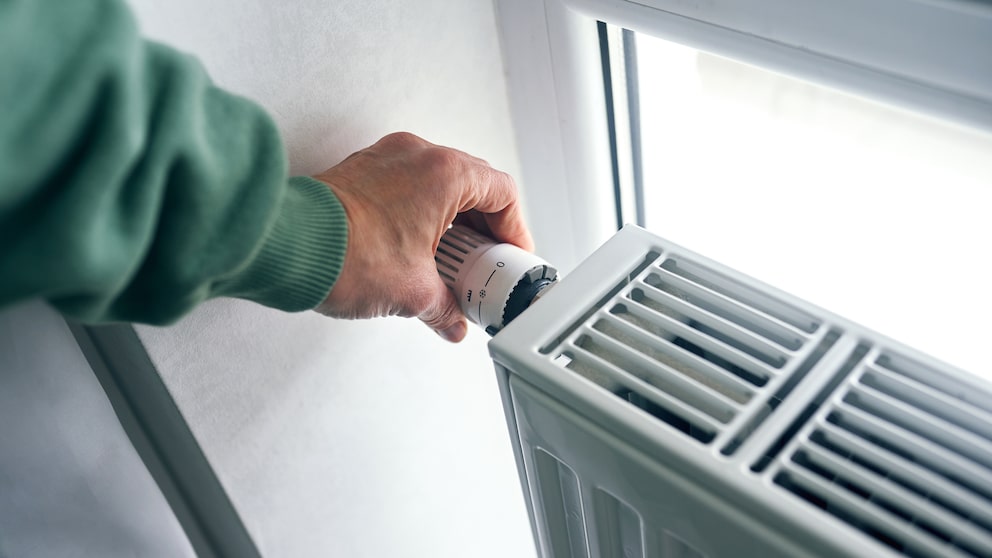
Holfert also sees dangers in the freezing of pipes or the heating water in the pipes if there is no heating. To avoid major damage, at least the “star” setting on the thermostat should remain on.
The ideal temperature for a living space
Birgit Holfert emphasizes that the right balance between room temperature and humidity is crucial, and she explains which temperatures are ideal for different rooms:
- For living rooms, offices, and children’s rooms, a room temperature of 68 to 72 degrees Fahrenheit is recommended, with humidity between 40 and 60 percent.
- In the bathroom, the recommended room temperature is 73 degrees Fahrenheit, with humidity temporarily reaching up to 70 percent.
- In the kitchen, 64 degrees Fahrenheit is sufficient, with humidity between 50 and 60 percent.
- In the bedroom, a room temperature of 60 to 64 degrees Fahrenheit can result in humidity between 40 and 60 percent.
“With higher humidity, poorly insulated facades, and very cold outside temperatures, it can happen that moisture condenses on the wall or window,” explains Holfert. If moisture settles, it leads to mold. It’s important to ventilate sufficiently to remove moisture from the rooms.
Can the landlord prescribe a minimum temperature?
The energy consultant has already explained that mold can develop if there is no heating. So, can the landlord dictate the temperature in the rental apartment? To answer this question, myHOMEBOOK consulted attorney Nicole Mutschke.
According to Mutschke, tenants must heat and ventilate adequately to prevent avoidable damage from mold or frost. However, there is no legally mandated minimum temperature. Nevertheless, landlords can claim damages if insufficient ventilation causes damage. If water pipes burst, tenants can also be held responsible. “This only applies if they recognize the frost risk and could have prevented the damage by heating adequately,” explains the attorney. If the cause is a defective heating system or structural defects, the landlord is generally responsible.
“In cases of serious or repeated breaches of duty, termination is also a risk,” warns Nicole Mutschke.
Also interesting: When standing showers are prohibited for tenants
Heat Efficiently Without Damaging Your Home
13 Simple Tips to Save on Heating Costs at Home
Only minimal savings on heating costs
If you want to save on heating costs, you should still follow some measures. If these are not followed, turning off the heating can have more disadvantages. According to the energy consultant, when traveling for an extended period in winter, you can turn the thermostats to a low setting or “star” to avoid long-term damage. However, this not only cools the room air but also the walls and all furniture. “If you then want to have a comfortable room temperature of 68 degrees Fahrenheit again, it can take a long time to reach this and a pleasant room climate,” explains Birgit Holfert. Depending on the size of the apartment and the condition of the facade, it can take several hours or even days to get the apartment comfortably warm again.
Tricks to save on heating costs without damaging the apartment
To save on heating costs, you should not overheat the rooms. Therefore, the room temperatures recommended by Birgit Holfert should be adhered to as much as possible. If you temporarily reduce the thermostat setting, such as during work hours, the energy consultant advises not to turn it up to the maximum upon returning home. The room can unknowingly heat up to a stuffy 77 degrees Fahrenheit. Therefore, it is advisable to set the heating to a reasonable thermostat setting, such as level 3. “For rooms that are only slightly heated or rarely used, the doors should remain closed,” explains Birgit Holfert. Rooms like the bathroom, kitchen, or bedroom, where a lot of humidity is generated during use, should be regularly and adequately ventilated. The most effective method is to fully open the window for a short period. If the window is tilted for a longer time, the window lintel cools down.
Mold usually does not result from too low temperatures but because too much humidity has accumulated. Birgit Holfert ultimately advises that the apartment should not be allowed to cool below 50 degrees Fahrenheit, especially when there is a risk of frost. This protects the heating water in the pipes and prevents mold growth on the walls.