


July 20, 2026, 4:47 am | Read time: 3 minutes
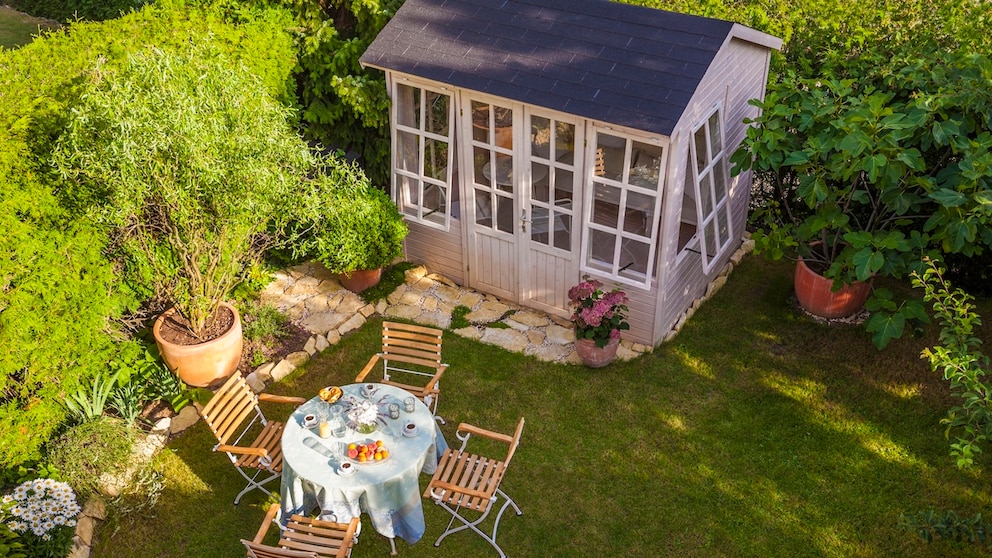
Garden sheds can be purchased at any major hardware store. Often, these prefabricated houses serve as a more elegant alternative to a tool shed or as a favorite spot to sit with family and friends. When buying a garden shed, almost no one thinks about obtaining a building permit. This can end unpleasantly. myHOMEBOOK spoke with a lawyer about the legal consequences in Germany.
Building Permits Are a State Matter
Those who decide to build a garden shed themselves are more likely to consider the legal consequences. However, when purchasing such a house, many people act on the motto: “Everything will be fine.” This is often the first mistake. For garden owners in Germany, it is also difficult to avoid legal pitfalls. Building permits for garden sheds fall under the jurisdiction of local authorities and are therefore a state matter. Sixteen federal states, sixteen different regulations? It’s not quite that bad.
While in Bavaria, garden sheds up to 75 cubic meters are exempt from permits, “in North Rhine-Westphalia, a maximum gross volume of only 30 cubic meters with an average wall height of no more than three meters above ground level applies,” reports Thomas Pliester, a specialist lawyer for tenancy and condominium law from Mönchengladbach.
The usual garden sheds are generally not much larger. Therefore, there is reason to assume that installation can occur without a permit. However, in case of doubt, it is not the size of a house that is legally relevant, but the type of use.

Is It Actually Allowed to Offset the Last Month’s Rent With the Security Deposit?

Planning a garden shed: Do you really need planning permission?
Moving Into Your Garden Shed Causes Problems
“Those who use their garden shed only for storing garden tools and seeds are legally safe with a garden shed from the hardware store,” emphasizes lawyer Pliester.
But those who convert the garden shed into additional living space with electricity and water connections will soon receive a visit from local authorities once it is discovered. This is because the necessary building permit is missing.
“Even if there are no such plans, it is always better to check with the relevant authority in advance. Sometimes there are regional special regulations that can cause problems if not followed,” advises the lawyer, recommending that projects be planned as transparently as possible, whether setting up a garden shed from the hardware store or building a house according to personal designs.
What Tenants Should Consider Regarding Garden Sheds
Those who do not own property but want to place a garden shed as a tenant in an existing garden “should coordinate this with their landlord beforehand,” recommends Pliester. “This involves a significant structural change that is not permissible without the owner’s consent. In extreme cases, the owner can demand its removal.”
In rental relationships, there are also additional special rules that the lawyer does not want to leave unmentioned: “Especially in larger residential complexes, there are sometimes landlord specifications about which garden sheds are permissible and which are not. Tenants should inform themselves about this in advance.”
If a garden shed that actually required a permit was erected or set up without official approval, “the question must be clarified whether a subsequent permit is possible. If this is not the case, for example, because setback distances were not maintained, then demolition is the only option,” notes Thomas Pliester, referring to the extreme case that hopefully will never occur.