

November 2, 2021, 4:03 pm | Read time: 3 minutes
At the start of the heating season, people want to quickly achieve comfortable temperatures in their homes. For this reason, many turn the thermostat to the highest setting. But does this really make the heating warm up faster?
No one likes sitting in a cold home. However, there’s a common mistake people make when turning up the thermostat on the radiator. Most set it directly to the highest level, hoping it will warm up faster.
Turning the Thermostat All the Way Up–What Does It Do?
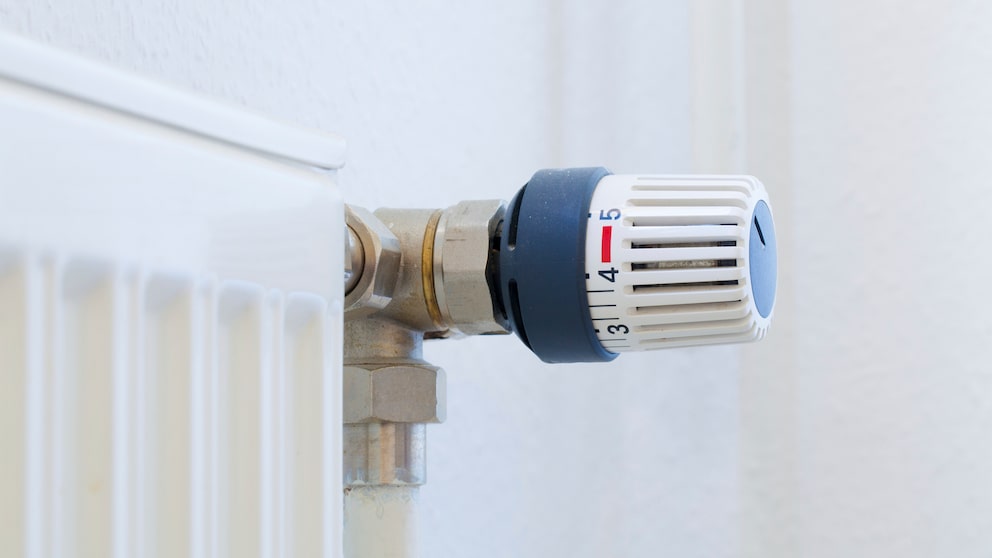
A cold room doesn’t heat up faster by fully turning up the mechanical thermostats on the radiators. Instead, you just end up heating for longer, as turning it up aims for a higher room temperature.
In fact, turning the thermostat all the way up offers no advantage. However, it does increase heating costs, as explained by the nonprofit advisory organization co2online. The numbers on the thermostat indicate the desired room temperature. For a room temperature of around 68 degrees Fahrenheit, experts recommend setting mechanical thermostats to level three. Level four can result in about 75 degrees. Electronic and smart thermostats have a digital display.
What to Do with Old Radiators?
If the apartment doesn’t warm up evenly, it’s likely that not all radiators are receiving enough water. They may also gurgle or fail to turn off even when adjusted. “These issues can usually be fixed, but they can also indicate larger problems and unnecessary energy consumption,” explains Jens Hakenes from co2online. Here you can learn how to bleed a radiator yourself.
Upgrading Old Heating Systems
It’s not always necessary to replace the entire system. “Even retrofitting modern valves and fittings and optimizing system temperatures can enhance the efficiency of the heating system,” explains Helmut Bramann from the Central Association for Sanitation, Heating, and Air Conditioning. “Replacing an old, non-regulatable heating pump with modern technology also significantly contributes to higher efficiency.”
Even replacing smaller parts like the thermostat valves on radiators can make a difference. “After ten to fifteen years, they often break. Then you might consider installing programmable thermostats instead of simple ones,” says Hakenes. This is something a DIY enthusiast can handle.

8 typical errors when bleeding the radiator

What It Means When Radiators Heat Only at the Top or Bottom
Also Check Newer Heating Systems
The expert adds another measure: “A hydraulic balance is often beneficial not only for older but also for newer heating systems.” This ensures that water flows evenly through the pipes to all rooms. “The hydraulic balance helps to use the energy more efficiently, saving costs and reducing CO2 emissions,” explains Hakenes.
Nevertheless, experts ultimately advise calculating whether replacing components is more cost-effective than a new purchase in specific cases. Many small components can add up in cost. “Without financial investment, significant savings on older heating systems are unrealistic,” explains Andreas Lücke from the Federal Association of the German Heating Industry.
When Is a Replacement Worth It?
Industry experts like Lücke recommend replacing rather than repairing heating systems that are over 15 years old and considered outdated. This is also for environmental reasons: “Older heating systems consume about one-third more energy than modern systems.”
If you want to switch to a different heating source, don’t wait until the current system breaks down. “If it fails in winter, it’s often replaced with the first available new system,” explains Hakenes. Quick replacement is necessary when it’s cold, leaving no time for planning and potentially complex retrofitting. It’s better to explore alternatives when the system is aging but still operational.