

July 6, 2026, 5:01 am | Read time: 3 minutes
If you want to give your cat safe access to the outdoors, you’ll quickly encounter legal limits in a rental apartment. Many practical solutions for balconies or gardens are not readily permissible. Experts explain which measures require landlord approval, when exceptions are possible, and what rights cat owners have.
Follow myHOMEBOOK on WhatsApp now
Cat Flap Considered a Structural Change
For many cat owners with gardens, a cat flap is a convenient way to allow their pet independent access. However, in a rental apartment, its installation is not allowed without the landlord’s consent.
“Since such a measure usually requires irreversible alterations to the apartment door or exterior wall, installing a cat flap always requires the landlord’s approval,” explains attorney Andreas Ackenheil, who specializes in animal law.
The reason: A cat flap is legally classified as a structural change to the rental property. Landlords may refuse permission if they have safety concerns or fear disadvantages for future rental of the property.
Also interesting: How to make the balcony safe for cats
If the cat flap is installed without consent, the landlord can demand its removal. As Anja Franz from the Munich Tenants’ Association explains to myHOMEBOOK, the tenant must restore the door to its original condition. If this is not possible, the landlord may even require the installation of a new door.
When a Balcony Staircase Is an Option
If the installation of a cat flap is not approved, a balcony staircase can be an alternative. This usually involves a ramp that allows the cat to leave and return to the balcony. For those without a balcony, some models can also be attached to a window.
Whether approval is required depends on the specific construction. If the staircase can be installed without alterations and later removed without a trace, landlord approval is generally not required—provided it poses no safety risk and does not affect the appearance of the facade. To avoid future disputes, prior coordination with the landlord is still recommended.

Is It Permissible for Tenants to Drill on the Balcony?

How Far Can Tenant Security Measures Go?
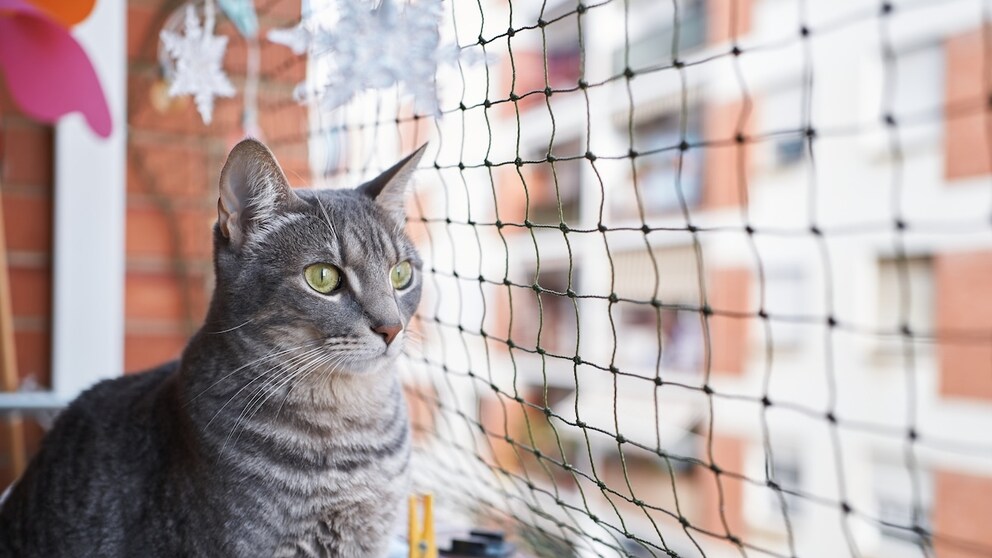
What Applies to Tenants Regarding Cat Nets on the Balcony
A cat net ensures that cats can safely use the balcony. However, the specific execution is crucial here. “If the cat net is visible from the outside, the landlord may prohibit its installation to preserve the facade’s appearance,” says Ackenheil.
Exceptions can exist, as shown by a 2008 decision by the Stuttgart District Court. According to this, a removable cat net may be permissible if it is merely a “moderate change” that benefits pet owners. The condition is that the net can be completely removed upon moving out without leaving permanent traces. Similar principles apply to balcony staircases.
Outdoor Cats May Enter Neighboring Properties
Before making any structural changes, tenants should obtain their landlord’s approval. Without permission, legal consequences may arise for cat flaps, balcony staircases, or cat nets. At the same time, landlords must tolerate certain changes if they do not cause permanent damage and can be removed without a trace.
Those who allow their cat to roam should also consider that the animals often visit neighboring properties. According to case law, this is generally acceptable. “Outdoor cats roam a large territory. The courts also grant them this freedom,” explains Ackenheil. However, the condition is that the animals do not cause permanent damage in the neighbors’ gardens. Otherwise, neighbors may assert claims.