

November 27, 2025, 4:15 pm | Read time: 3 minutes
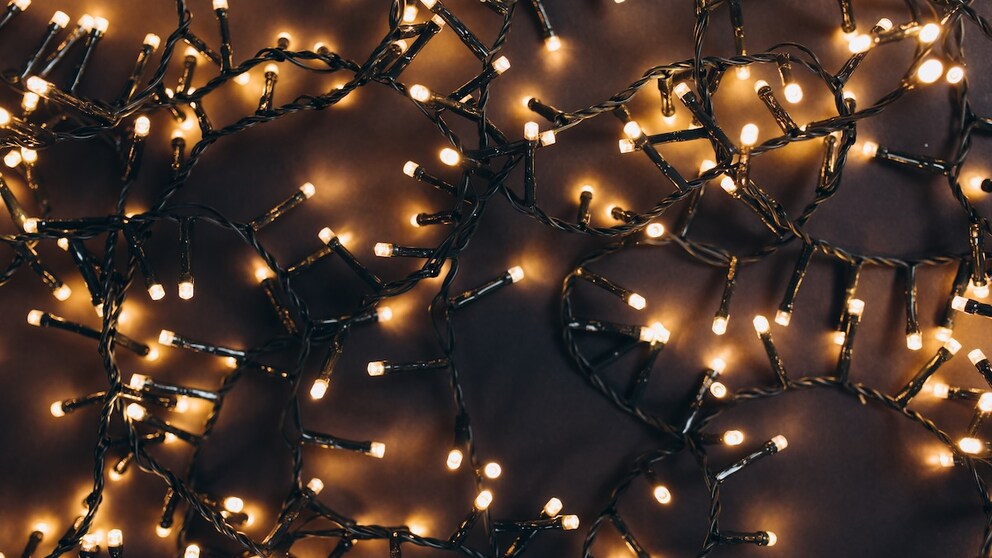
As the days grow shorter and temperatures drop, string lights create a festive atmosphere during the Advent season. But not all string lights are the same. When choosing Christmas lights, it’s important to consider more than just the design, as energy consumption, safety, and quality vary significantly. Seven practical tips show what really matters when buying.
Tip 1: The Right Light Color Creates Coziness
String lights come in various color temperatures, indicated in Kelvin (K) on the packaging. The Consumer Center of North Rhine-Westphalia recommends: Lamps with less than 3,000 K produce a warm white, yellowish light, creating a particularly cozy atmosphere.
Tip 2: Quality Pays Off in the Long Run
The lifespan of a string light heavily depends on its quality. Manufacturers provide information on the packaging. According to “Öko-Test,” LED string lights should last at least 20,000 hours—some models even up to 50,000 hours.
Tip 3: LEDs Save Significant Energy
To reduce energy costs, it’s better to opt for LED lighting, according to the Consumer Center NRW. They consume only about one-tenth of the electricity compared to incandescent or halogen lamps. Additionally, their lifespan is about 100 times longer.
Tip 4: Plug-in Power Is Cheaper Than Batteries
According to consumer advocates, it’s also important to consider the power source: Battery power is 300 times more expensive than electricity from the outlet. Therefore, plug-in models are significantly more cost-effective and environmentally friendly than battery or rechargeable options.
Tip 5: Only Use Splash-Proof Lights Outdoors
Not every string light is suitable for outdoor use. Indoor lighting should never be used outside, warns the Consumer Center NRW. For outdoor use, models should have splash protection—identifiable by the “drop in triangle” symbol or the abbreviations IP44, IP54, or IP64. This ensures that moisture doesn’t cause a short circuit.
Tip 6: Pay Attention to Certification Marks
There are clear recommendations regarding safety. The GS mark stands for “tested safety.” Other reliable indicators include the VDE certification mark or the TÜV seal. In contrast, the CE mark is merely a manufacturer’s self-declaration of compliance with EU guidelines.
These Household Appliances Are Real Energy Hogs

5 Common Misconceptions About Energy Storage for Photovoltaic Systems
Tip 7: Plan the Right Length and Density
To achieve a uniform lighting effect, measure the area to be illuminated carefully beforehand. Only sufficient LED density ensures a harmonious overall appearance.
Save Energy Through Conscious Use
A final savings tip: The lights should only be on when they can actually be seen. Turn them off at night or when you’re away. The easiest way is with a timer or by unplugging them. This keeps the festive mood alive without turning the electricity bill into a nightmare.
With material from dpa