

January 12, 2026, 4:12 pm | Read time: 3 minutes
When sidewalks turn into slippery paths in winter, many instinctively reach for road salt. But this popular ice-fighting agent poses significant environmental problems—and is even banned for private use in many places. So what alternatives are there? And how effective are sand, gravel, ash, or wood chips in everyday use?
Why Road Salt Is Not a Good Choice
The use of road salt is not only prohibited in many areas, but also raises ecological concerns. “Road salt burns roots and degrades the nutrient content in the soil. The salt accumulates in the soil and disrupts water absorption by trees throughout the year,” explains Christian Hönig, head of biodiversity at the German Federation for the Environment and Nature Conservation (BUND). Animals also suffer: Road salt can be problematic for their sensitive paws.
These Alternatives Exist
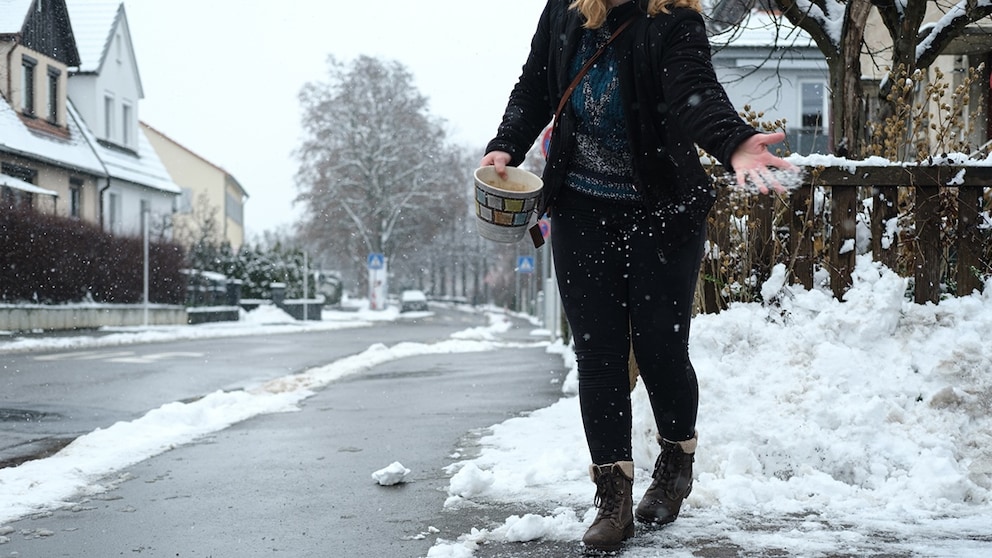
Instead of chemically melting the ice, abrasive materials rely on friction. The goal is to break up the smooth surface so shoes or tires can grip better. “Basically, all classic abrasive materials are suitable for this,” says Hönig. These include sand, gravel, granules, ash, or wood chips.
Sand, Gravel or Granules–What Works When?
Depending on the area of use, the materials differ in their effectiveness and durability. While coarser materials like gravel, granules, or wood shavings usually remain on the ground longer, finer sand is quickly worn away. “With coarser gravel, you can be generous to ensure the stones cover the walkway,” says Hönig.
If the paths are also used by cyclists, sand may be the better choice. The reason: Finer abrasive materials provide better grip for bicycle tires. Additionally, sand can be spread more evenly over larger areas. Hönig generally recommends regular reapplication.
What to Consider When Buying
To be on the safe side, it’s worth checking for environmental certifications when purchasing. “This ensures that the abrasive material is safe to use,” advises Hönig regarding the Blue Angel environmental label.
It’s even more sustainable to opt for natural and regional materials. Abrasive materials produced with high energy consumption or transported over long distances—such as volcanic rock—should be avoided if possible. Better options are regional byproducts that are already available.

Don’t Throw It Away! How to Clean Your Fireplace Glass
Which Mulch Alternatives Suit Which Plants
Using Byproducts as an Alternative
Regional byproducts can be an eco-friendly alternative–provided certain points are considered. “If there’s a sawmill or carpentry nearby, you can inquire if they have leftover wood shavings or sawdust,” says Hönig. Fine wood chips from horticulture are also suitable–and sometimes even available for free.
However, it’s crucial that the wood used is untreated. Painted or chemically treated shavings can introduce pollutants into the environment. The same applies to ash. “It’s always a question of what was burned beforehand. It’s best to use ash from your own fireplace, as you can be sure only untreated wood was burned,” says Hönig.
Hot Water as a Short-Term Solution?
Spreading isn’t always necessary. Removing ice as early as possible is the most effective way to reduce the risk of accidents. In certain cases, hot water can help—but only to a limited extent. “The risk of slipping is not automatically eliminated,” warns Hönig. “Ice surfaces are particularly dangerous when they only partially thaw and a slippery film of water forms on top.”
Note: The best time to clear snow and ice is when it is freshly fallen. It often becomes truly slippery only after the surface has been compacted by pedestrians or vehicles.
With material from dpa