

September 22, 2022, 3:29 am | Read time: 2 minutes
Mattresses and springy slatted frames often don’t make a good team. The latter can even reduce the comfort of the mattress, according to findings by Stiftung Warentest, a German consumer organization.
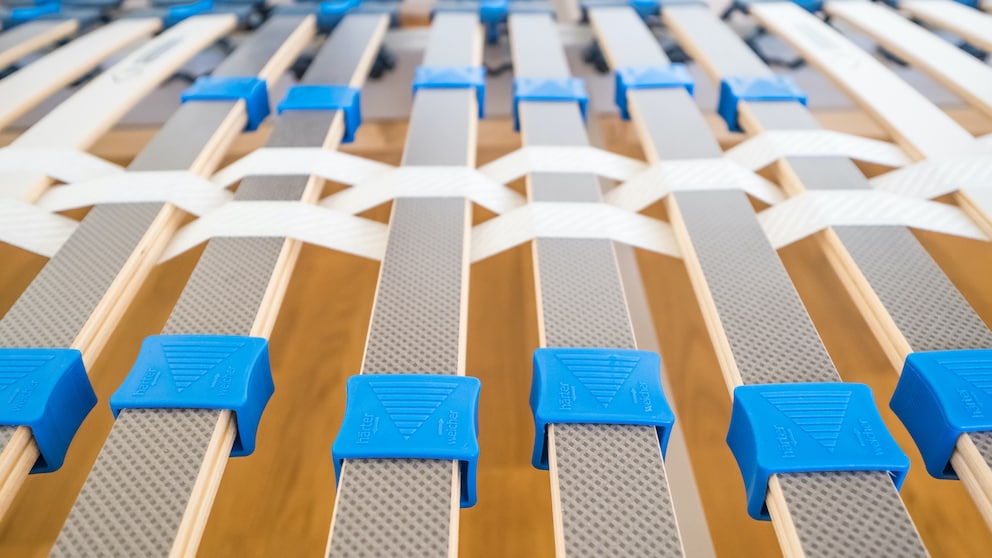
A slatted frame under the mattress ensures good ventilation and allows moisture to escape downward. But its main purpose is to make lying down more comfortable. However, this is often not the case with springy models, according to a study by Stiftung Warentest. Not all slatted frames were convincing in the test when combined with mattresses.
How Do the Slatted Frames Perform in the Test?
According to the magazine test, the classic in Germany was tested: a wooden frame with springy slats and adjustable foot and head sections. Ten mattresses were combined with slatted frames from the same provider in the test—with initially reasonably good results. Three of the ten combinations received an overall rating of “good,” while the other seven were rated “satisfactory.”
Related: Firmness, Material, Size–How to Find the Right Mattress
https://oembed/myhomebook/affiliate/3f962d1855ec3d8f565f68fb82934c7588dec9a78a6de9f0d114b6c2a3b1964a/8e6e2b30-0677-421d-83d2-e1e4481878f8/embed
Better for Side Sleepers Than for Back Sleepers
However, a comparison must be made: There is hardly any real added value when mattresses are placed on flexible rather than rigid frames. In fact, they often worsen the supportive properties of the mattresses when lying on the back—and sometimes significantly so.
In the side position, there are hardly any changes in most combinations. Only three setups show some improvements compared to the mattress on a solid base.
Therefore, the product testers advise: Those who primarily sleep on their back and purchase a good mattress should place it on a rigid slatted frame. This is because, at least in the test, the mattresses were mostly designed to support sleepers effectively even without a slatted frame.