


October 3, 2026, 10:52 am | Read time: 4 minutes
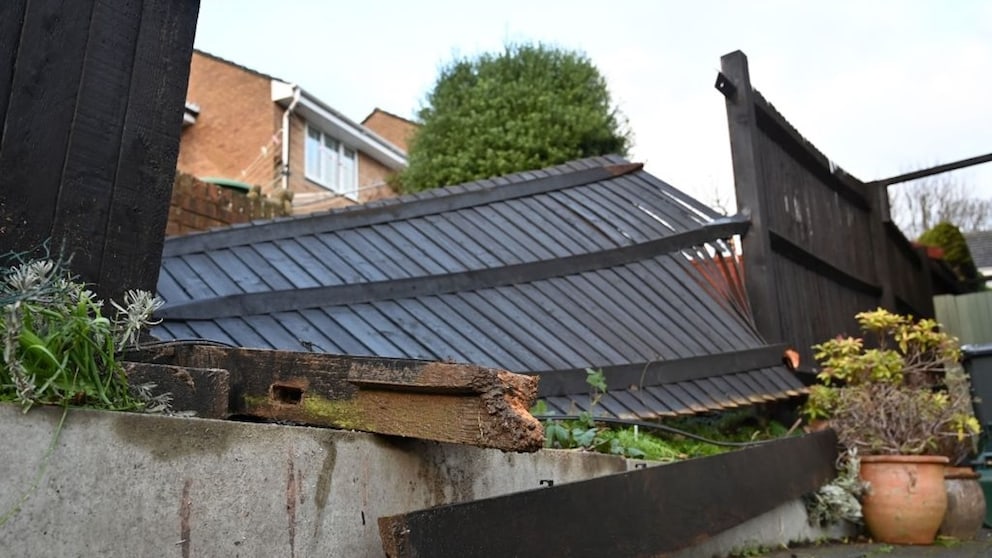
A storm knocks over the fence post. The neighbor’s dog breaks through the slats. A child kicks the ball against the fence until it gets damaged. Who is responsible for the damage to the fence depends on several factors. In this article, myHOMEBOOK examines the case in an existing rental agreement. Thomas Pliester, a specialist lawyer for tenancy law from Mönchengladbach, explains the legal situation in this case and who ultimately pays.
The legally interesting case concerns the so-called boundary fence. This fence stands exactly on the boundary or touches it at one or more points. It serves to separate two properties from each other.
Therefore, both property neighbors are equally owners. Lawyers refer to this as co-ownership, which is regulated in Section 1008 of the German Civil Code (BGB). This means both owners are jointly responsible for the fence. “This already affects the design of the fence, so both owners decide together on the type, height, or color. Neither of them may unilaterally change the fence,” explains attorney Thomas Pliester when asked by myHOMEBOOK. The same applies if a third party, such as a tenant, damages the fence.
When the Tenant Damages the Fence
If a tenant damages such a boundary fence, there is an obligation to compensate for the damage. In this case, the landlord and the other co-owner of the fence can decide which form of compensation they choose: repair by the tenant themselves or monetary compensation.
This rule applies regardless of whether the damage was caused negligently or intentionally. According to Pliester, in such a case, negligence is almost always assumed.
Also of interest: How high can a garden fence be?
In the case of more significant damage, the co-owners of the fence will likely decide to have the damage repaired by a professional craftsman. The tenant will not pay the costs directly out of pocket; instead, the tenant’s liability insurance usually covers it.
If you’re wondering who is liable if it’s not a boundary fence, the fundamental question remains unchanged. In this case, there are simply no two co-owners. The landlord can directly ask the tenant to repair the damage, a typical case for liability insurance.

The 5 Most Important Insurances for Homeowners
Who Is Liable for Damages After a Break-In via Scaffolding
Third-Party Damage and the Tricky Issue with Children
The same applies if a third party, not the tenant, is responsible for the damage. They are also obligated to compensate for the damage.
For children, special rules apply. According to Section 828, Paragraph 1 of the German Civil Code (BGB), a child who has not yet reached the age of seven is not responsible for damages they cause. Before the seventh birthday, liability only applies if the parents have violated their duty of supervision.
This can lead to frustrating results in individual cases, as attorney Pliester knows from his own practice: “The case law allows appropriately developed children from about five years old to be left unsupervised for longer periods, such as on the playground or in the yard while playing soccer. If the ball hits a fence and damages it, no one is liable. Not the child, because they are not yet seven years old. Not the parents, because they have not violated their duty of supervision. And the insurer only pays if there is an existing claim for damages, which does not exist in this described example.”
Storm Damage and the Duty of Maintenance
Returning to the example of the boundary fence. If a storm knocks down the fence, the responsibility for the repair lies jointly with the two co-owners.
Such storm damage can be covered by homeowners insurance or natural hazard insurance. For this, the fence should be explicitly mentioned and insured in the policy. “This is regularly not the case. Therefore, it is worth checking your own contract documents in case of doubt,” advises Thomas Pliester.
If the fence is entirely on the rented property, the co-owner as a co-payer is no longer involved. Then the landlord alone bears the cost of the repair.