

November 18, 2025, 4:03 pm | Read time: 3 minutes
Whether in a diffuser, an aroma lamp, or as an additive in cleaning water, fragrance oils have long been a staple in many households. But they are not always as harmless as they smell: In some cases, they can even harm your health.
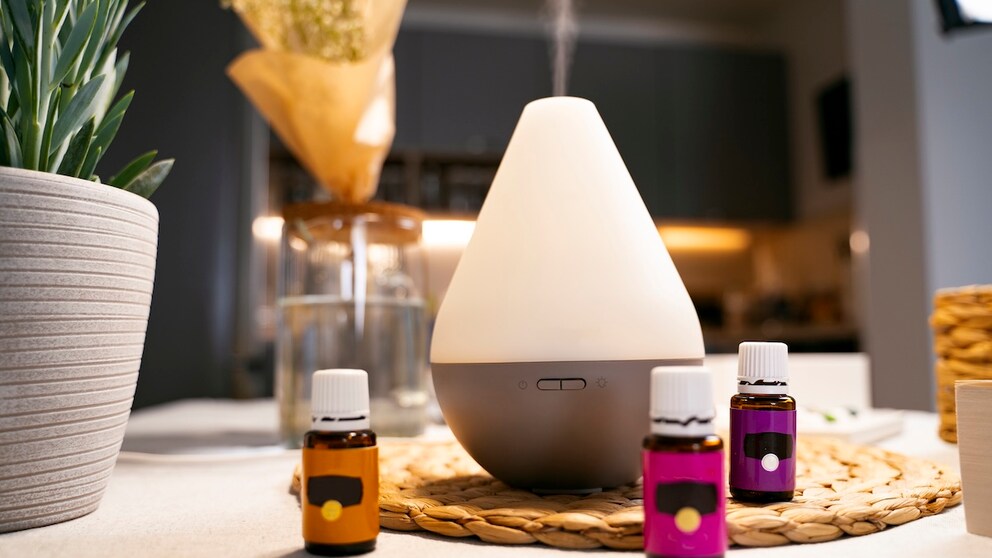
Many people are familiar with this: A few drops of fragrance oil in the diffuser or on a small fabric cushion for a pleasant scent in the home. From lavender to orange, the selection is vast, and according to some manufacturers, the oils are not only supposed to smell good but also relax or enhance concentration. However, caution is advised when handling fragrance oils, as their use can potentially harm your health.
What Are Fragrance Oils?
The term “fragrance oils” includes both pure essential oils and synthetically produced fragrance blends. Essential oils are derived from plant extracts obtained from various parts of the plant, such as bark, roots, flowers, or leaves. To obtain the aromatic compounds in concentrated form, methods like distillation, cold pressing, or extraction with alcohol and fats are used. This results in oils that emit an intense fragrance when evaporated.
In addition to essential oils, which are entirely made from plant extracts, so-called aroma oils are also available in supermarkets and drugstores. These are usually synthetically produced fragrance oils composed of various scent components. For example, scents like vanilla, opium, or baked apple can be found here, which do not naturally occur in this form.

How Harmful Scented Candles Really Are to Your Health

Why You Should Avoid Using Air Fresheners
When Aroma Oils Can Be Harmful
How the regular use of aroma diffusers with essential oils affects health in the long term is still largely unexplored. However, it is clear that essential oils themselves can have negative effects. According to the Consumer Service Bavaria, some of them are toxic to the central nervous system, kidneys, and respiratory system. People with pre-existing conditions like asthma often react more sensitively to the use of such oils.
Even natural essential oils are not automatically harmless, warns the Hesse Regional Council. In too high a concentration, they can irritate the skin and mucous membranes or trigger allergic reactions. Children, asthmatics, and people with sensitive airways are particularly sensitive—they may experience symptoms like shortness of breath, dizziness, or watery eyes.
Special caution is advised with eucalyptus and peppermint oils, as these are usually highly concentrated. Even small amounts can release intense vapors that cause headaches, coughing, or dizziness. Additionally, regular use in aroma lamps or diffusers carries the risk of overdose. The sense of smell quickly becomes accustomed to the scent, leading many to unknowingly add more, significantly increasing the concentration of fragrance substances in the room air.
What to Consider When Buying
For use in a diffuser, only pure natural oils labeled “100% pure” or “pure essential oil” should be used. If these labels are missing, they are usually artificially produced fragrance oils.
At the same time, the Consumer Service Bavaria advises using the oils only in diluted form. Those using essential oils for room scenting should also ensure they are used only in well-ventilated rooms. Infants and toddlers should also not come into contact with undiluted essential oils to protect against dangerous reactions, warns the Federal Institute for Risk Assessment.
Additionally, oil residues should never be disposed of down the drain, as they can cause blockages in the pipes. Instead, the residues should be absorbed with cloths and disposed of with regular waste.