


August 22, 2025, 9:05 am | Read time: 3 minutes
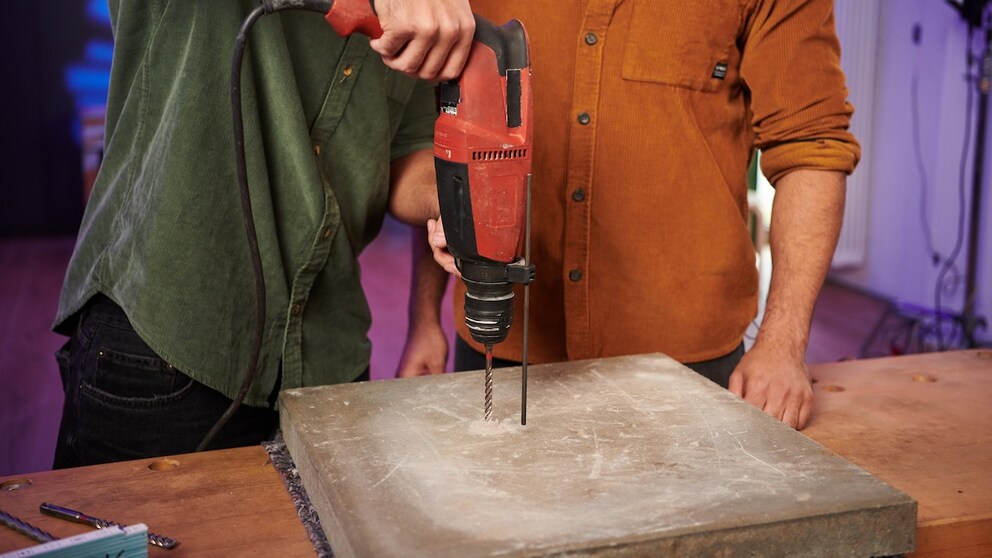
A rotary hammer can be intimidating—but when used correctly, it offers impressive performance, such as when drilling into concrete. The DIY twins, Julian and Marian, explain what to watch out for when working with one.
A rotary hammer is the ideal tool for concrete and stone walls. Proper technique, suitable protective clothing, and maintenance are essential for efficient and safe work. Julian and Marian reveal how to use the tool correctly.
The Rotary Hammer–Powerhouse for Hard Materials
Standard cordless screwdrivers or drills quickly reach their limits with concrete, as they are simply not designed for such materials. With a rotary hammer or hammer drill, the work becomes significantly easier. Smaller drill holes are no problem for these devices and are created in no time.
However, when larger drillings are required, even hammer drills reach their limits. When more power is needed, the rotary hammer comes into play—an indispensable tool for drilling and chiseling in concrete and stone walls.
Suitable Materials
The rotary hammer is ideal for drilling into stone, brick, and concrete or reinforced concrete. Especially with the latter material, weaker drills usually don’t suffice. Additionally, it can also drill holes in metal—but only with special metal drill bits.
Learn more: What to Consider When Buying a Rotary Hammer
Technical Features
Unlike a hammer drill, the rotary hammer has a pneumatic impact mechanism. This acts directly on the chuck and thus on the drill towards the drill hole. The effort is significantly reduced, as the tool almost independently penetrates stone and concrete.
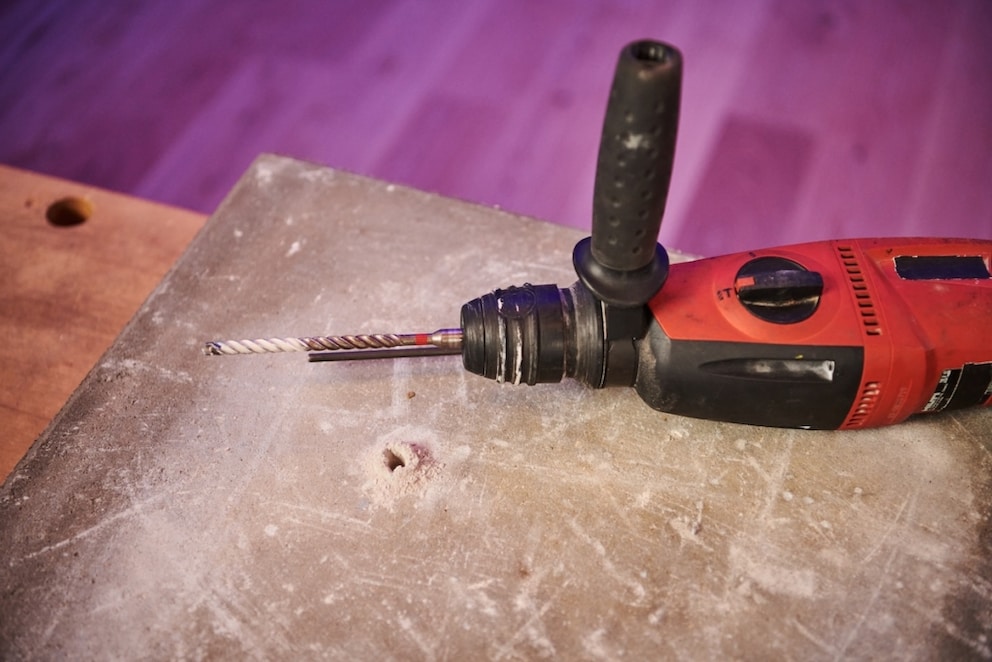
For work in softer materials like drywall, soft stone, or tiles, the impact mechanism can be deactivated. This turns it into a powerful drill for everyday use.
Safety While Working
- Wear safety gear: Always use safety glasses, hearing protection, and sturdy gloves. Solid footwear is also recommended. Safety comes first.
- Proper posture: Maintain a firm stance and always handle the device with both hands. Stability is crucial.
- Tool maintenance: Regular cleaning and maintenance preserve performance and extend lifespan.

Sanding with a Cordless Drill? This Tool Makes It Possible

What to Consider Before Drilling
What to Consider for Protective Clothing
When working with a rotary hammer, appropriate protective clothing is essential. This includes:
- Safety glasses to protect against splinters
- Sturdy work gloves for hand protection
- Hearing protection against noise exposure
- Solid shoes to protect the feet
Depending on the work environment, a safety helmet and dust mask may also be advisable.
Suitable Drill Bits
Rotary hammers are typically equipped with an SDS or SDS-Plus chuck, requiring special drill bits. The advantage of the SDS system lies in the positive connection between the drill and the machine. As it has become a standard, compatible drill bits are available in almost every price range. In addition to classic drill bits, hardware stores also offer drill crowns and chisels in various sizes.

Extra Tip
“At the hardware store, you can not only buy a rotary hammer but also rent one. Since these heavy devices are usually needed less frequently than a cordless screwdriver, renting can be a sensible option.”