

October 20, 2026, 10:16 am | Read time: 4 minutes
Wrinkles in a blouse or a dress that needs refreshing after a long time in the closet: Besides the classic iron, you can now also use a steamer to smooth clothes. However, not every garment and situation is equally suited for both devices.
The steamer entered the market as a device intended to simplify the ironing process. This electric appliance is designed to smooth clothes in just a few minutes with a single motion using steam. But is the steamer really a practical alternative to the classic iron? myHOMEBOOK spoke with Nadia Bouraoui-Gretter, president of the German Association of Home Economics, about the pros and cons of both textile care devices and highlights when a steamer or iron is the better choice.
Follow myHOMEBOOK on WhatsApp now
How Do Irons and Steamers Work?
Irons and steamers operate differently. The classic iron smooths clothes through high heat and pressure. The hot soleplate is pressed onto the garment and moved over the fabric. A steam iron also uses steam to help smooth the fibers.
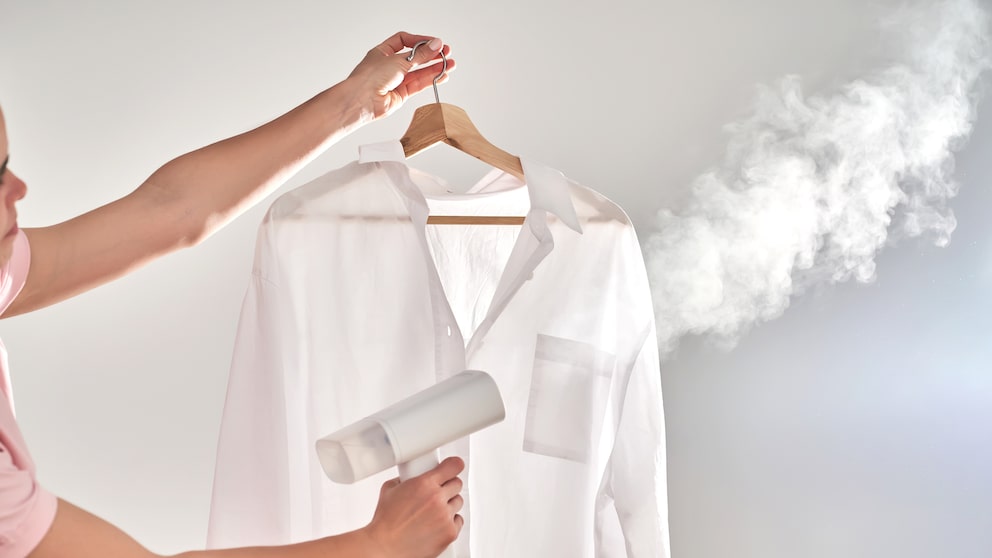
A steamer, on the other hand, primarily uses steam. The device has a small tank that is filled with water. A heating element ensures the water heats up within minutes. Unlike ironing, you don’t need to set up an ironing board. The garment can simply hang on a hanger and be treated directly with the steamer. It’s best to proceed slowly and evenly.
The use of a steamer is quick and uncomplicated. It often works more gently than an iron, explains Bouraoui-Gretter. When steaming, textiles are only exposed to heat and steam, she explains in a conversation with myHOMEBOOK. The additional pressure from the hot soleplate is absent, which can help avoid shiny spots or flattened fibers.
Also interesting: The Most Important Care Tips for Your Iron
These Types of Textiles Can Handle Steam
Even though a steamer seems practical, it is not suitable for all types of textiles. “Not every textile can handle hot steam. Caution is especially advised with leather, suede, waxed or coated materials, as well as with delicate prints and appliqués. Very heat- or moisture-sensitive fabrics can also be problematic,” says the expert. These fabrics include silk, cashmere, viscose, and elastane. Bouraoui-Gretter therefore advises following the manufacturer’s care instructions and testing the steamer’s compatibility on an inconspicuous area if necessary.
And what about smoothness? The expert’s answer is clear: “If it really needs to be smooth, the iron has the edge. Especially with collars, cuffs, creases, or deeper wrinkles, the steamer reaches its limits.”

Discount Steamer Put to the Test–Is It Really Worth It?

How to De-Wrinkle Clothes Without an Iron
Energy and Water Consumption of Steamers and Irons
In terms of energy and water consumption, both devices differ only slightly. Water consumption is relatively low for both the steamer and the iron, according to Bouraoui-Gretter. For energy consumption, performance, heating time, and usage duration are key factors.
A steamer can be more energy-efficient for individual garments because it is quickly ready for use and only needs to be used briefly. For large piles of laundry, however, reaching for the iron may be more worthwhile, says the expert. Ultimately, the level of energy consumption depends on several factors.
Who Should Use Which Device?
Whether a steamer or an iron is the better choice depends largely on individual daily life. Nadia Bouraoui-Gretter explains: “Those who regularly handle larger quantities, iron collars and cuffs, or value a truly smooth and precise result are better off with an iron.” An iron is also known to achieve effective results with heavily wrinkled garments and thick textiles like tablecloths and bed linens.
A steamer, on the other hand, is suitable for flexible applications. If you don’t like ironing or need to do it quickly, it makes sense, according to the expert. It’s also a practical gadget for people who travel frequently and are on the go.
For the expert, the steamer has another major advantage: It can refresh clothes. This is especially practical for garments that have been worn once. A brief use of the steamer can be enough to make a favorite piece look well-kept again without needing to be washed immediately. However, this only applies if the clothing is not dirty. Steaming cannot replace necessary washing, says Bouraoui-Gretter.
Both steamers and irons have their pros and cons. More important than which device is better are personal preferences. “What matters is what I want to achieve and what fits my daily life,” the expert concludes.