


June 29, 2026, 11:04 am | Read time: 4 minutes
Summer is the best travel time for many people, but it’s also the most demanding time for tomato plants. High temperatures, intense sunlight, and warm winds cause the plants to evaporate large amounts of water daily. Tomatoes in pots or containers often dry out significantly after just one hot day. Those planning a two-week vacation often wonder how the plants will survive without daily watering.
Generally speaking, tomatoes growing in the ground have much better conditions than those in pots or containers. In the garden, roots can grow deeper into the soil and access moisture from deeper layers. The soil also dries out much more slowly than the limited soil volume of a planter. Potted tomatoes are therefore much more dependent on a reliable water supply during a longer absence. With the right preparation, both garden and container plants can be well-prepared for a two-week vacation. myHOMEBOOK gardening expert Franka Kruse-Gering outlines six measures to ensure tomatoes survive a two-week vacation without major damage.
1. Thoroughly water the root area before leaving
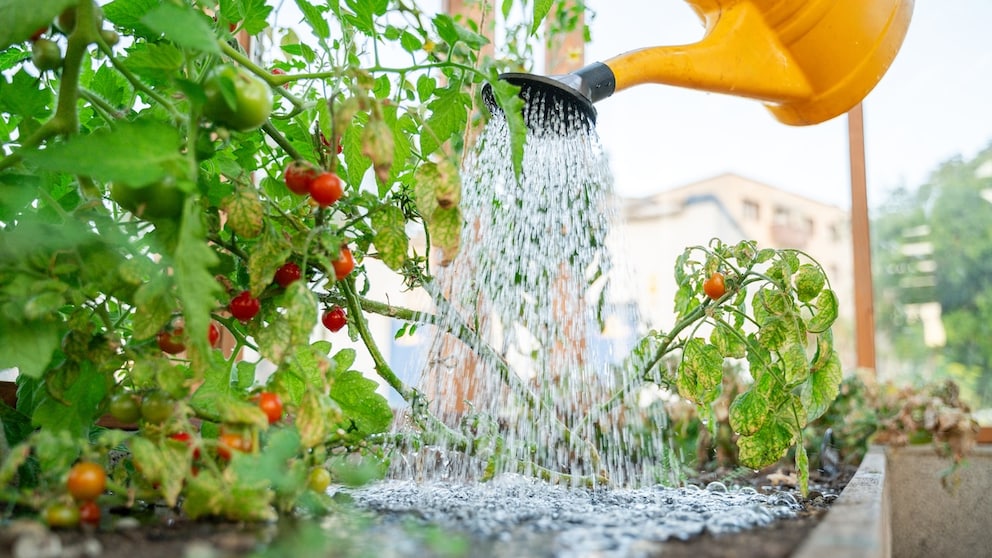
The most important step is taken immediately before departure. Tomatoes should be watered slowly and thoroughly so that the water can penetrate deep into the root area. Especially with dry soil, it’s advisable to water in several rounds, as water often runs off the surface or flows sideways along the pot edge. Only when the entire root ball is soaked can the plants store enough water.
Tomatoes in the ground benefit particularly from their deep rooting. There, moisture can spread over a larger soil area and be retained longer. In contrast, potted plants have only a limited amount of soil available as a water reservoir, which is why they dry out much faster.
Also interesting: Fertilizing tomatoes with milk? Expert has a clear opinion
2. A mulch layer reduces evaporation
A mulch layer is one of the simplest ways to keep moisture in the soil longer. Suitable materials include straw, dried grass clippings, or leaves. The cover protects the soil surface from direct sunlight, which means the soil heats up less and significantly less water evaporates.
Especially in the garden, a mulch layer shows its full effect, as larger soil areas can be protected from drying out. But even for tomatoes in containers, a thin mulch layer can help keep the soil moist longer. Especially during a longer absence, this simple measure can noticeably reduce water needs.
3. Automatic irrigation ensures even water supply
If no one can water the plants during the vacation, automatic irrigation is the most reliable solution. Drip irrigation, clay cones with water bottles, or irrigation systems with a water tank have proven effective. They release water slowly and continuously to the soil, ensuring the plants are evenly supplied. It’s important that the water is dispensed in doses and no waterlogging occurs, as constantly wet roots can promote rot.
Potted tomatoes benefit especially from such systems, as the limited soil volume dries out faster than garden soil. In the garden, stored soil moisture often lasts longer, but drip irrigation can also be useful there–especially in high temperatures or sandy soils.
4. Do not fertilize shortly before vacation
Tomatoes should not be fertilized immediately before a longer absence. Fresh fertilizer stimulates growth and promotes the formation of new shoots and leaves. While this initially sounds positive, it also increases the plant’s water needs. If the tomato has to manage with limited water supplies during the vacation, the additional growth can quickly become a disadvantage.
Those who fertilize regularly should plan the last fertilizer application a few days before departure. This way, the plants remain well-nourished without triggering a new growth spurt right before the vacation.

7 Mistakes in Garden Watering–and How to Avoid Them

Plants Get Just the Right Amount of Water With These Tips
5. Keep water consumption as low as possible
The less water the plants consume during the absence, the better they can manage with the available reserves. Potted plants should be placed in a bright location that offers some shade during the hot midday hours. This way, the pot and soil heat up less, and evaporation decreases.
For tomatoes in the garden, a shade net can help mitigate the most intense sunlight. However, it’s important that the plants still receive enough light and that air can circulate well. Good ventilation also reduces the risk of fungal diseases.
6. Harvest ripe fruits before leaving
Before the vacation, it’s best to harvest all ripe or nearly ripe tomatoes. This way, the plant needs to invest less water and energy in already mature fruits and can better utilize its reserves. At the same time, this can prevent tomatoes from becoming overripe, splitting, or rotting during the absence.
Damaged or diseased leaves and spoiled fruits should also be removed before leaving. This keeps the plant healthy and reduces the risk of diseases during the two weeks without care.