


August 15, 2025, 3:51 am | Read time: 4 minutes
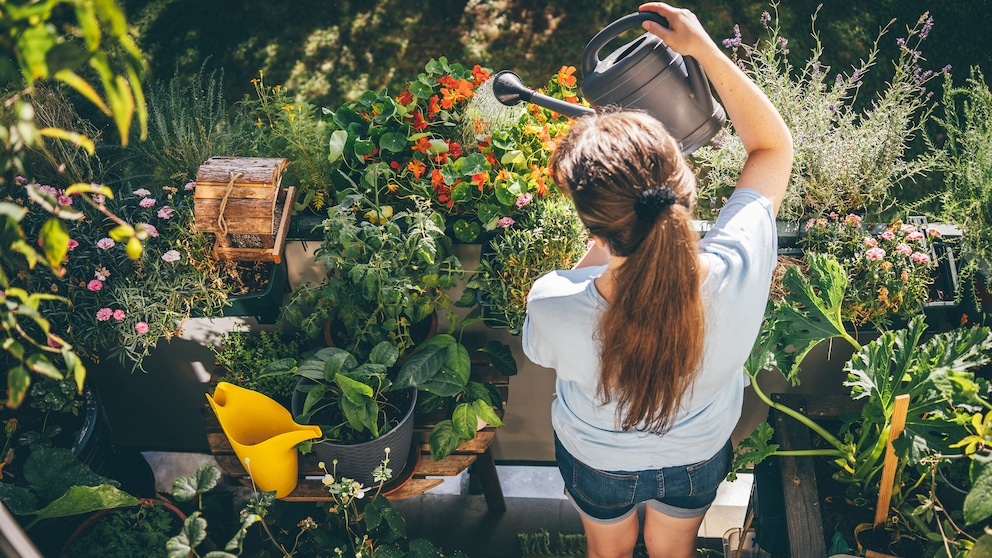
A lush green garden with robust plants and plenty of blooms—that’s what many hobby gardeners wish for. However, mistakes are often made when watering the garden, which can hinder plant growth and even promote diseases. myHOMEBOOK explains how to water your garden correctly, what typical watering mistakes occur, and how to do it better.
Overview
- 1. Common Mistake in Garden Watering: Too Often, But Too Little
- 2. Watering at the Wrong Time of Day
- 3. Watering Cold from the Tap
- 4. Watering Leaves Instead of Roots
- 5. Watering Only One Side
- 6. Forgetting to Mulch
- 7. Mistake in Garden Watering: Misjudging Water Needs
- Common Watering Myths in the Garden–What’s Really True?
1. Common Mistake in Garden Watering: Too Often, But Too Little
A common mistake is giving only a little water daily. This only moistens the top layer of soil, leaving the roots dry. Plants develop a shallow root system and become more susceptible to drought.
Better: Water less often but thoroughly. This allows water to penetrate deep into the soil, helping plants develop strong roots. It makes them less vulnerable to surface soil drying out during heat and drought.
2. Watering at the Wrong Time of Day
Many water at midday when the sun is strongest. The water evaporates quickly and barely reaches the roots. Additionally, water droplets on the leaves of sensitive plants can act like small magnifying glasses under intense sunlight, causing burns.
Better: Water early in the morning or evening. This way, the water stays in the soil longer, allowing plants to absorb it optimally.
3. Watering Cold from the Tap
Very cold tap water can stress the roots and hinder plant growth.
Better: Let water warm up in the watering can or rain barrel. Rainwater is also low in lime and ideal for most plants. Many plants tolerate tap water less well, especially if they prefer a low-lime soil (such as hydrangeas, which thrive better in slightly acidic soil).
4. Watering Leaves Instead of Roots
Many hobby gardeners mainly wet the leaves when watering. This is not only ineffective but can also promote fungal diseases like mildew, which thrive in moist conditions.
Better: Always water directly at the soil and target the root area. Drip irrigation or watering rings help distribute water precisely where it should go.
5. Watering Only One Side
With larger plants or shrubs, watering is often done only on one side—usually because it’s more convenient. This can lead to uneven root growth and weaken the plant.
Better: Water evenly around the plant so all roots receive water. If you have trouble with a heavy watering can, you can attach a garden hose to the kitchen or bathroom faucet at home. Or fill the watering can halfway and make multiple trips to refill it.
6. Forgetting to Mulch
Uncovered soil quickly loses moisture, requiring more frequent watering.
Better: Cover the soil with bark mulch, grass clippings, or straw. This reduces evaporation and keeps moisture in the soil longer. Pay attention to the nutrient needs of a plant. Grass clippings are suitable for plants with high nitrogen needs, while straw is a better alternative for others. Bark mulch is ideal for plants that require slightly acidic soil (rhododendrons, hydrangeas, etc.).

How Harmful Is It Really to Water Plants at Noon?
6 Common Mistakes When Watering Zucchini
7. Mistake in Garden Watering: Misjudging Water Needs
Not every plant needs the same amount of water. Mediterranean herbs like lavender or thyme prefer it dry, while tomatoes or cucumbers need a lot of moisture.
Better: Know the individual water needs and ensure there is no waterlogging. This can promote root rot and diseases.
Common Watering Myths in the Garden–What’s Really True?
- “Water on leaves always burns in the sun” : Only partially true. Burns occur only on very fine, hairy leaves and under strong sunlight. Still, watering in the morning or evening is better to avoid the magnifying glass effect of water droplets.
- “Daily watering is a must” : Depending on the plant, fewer but more generous waterings per week are better to deeply moisten the soil.
- “Brown leaf tips = water shortage” : Often, waterlogging or a nutrient deficiency is the cause. If more watering is done due to incorrect assumptions, it can even worsen the brown leaf tips.
- “Only water in summer” : Even in cool weather, the soil can dry out, especially in windy conditions or sandy soils. Therefore, potted plants dry out more often in winter than they freeze.

Watering with a Delicate Touch
“Use the finger test to check if watering is needed: Stick your finger a few centimeters into the soil—if it’s still moist, watering can wait. Soil moisture meters or smart irrigation systems that automatically adjust watering are also practical.”