


August 21, 2025, 4:57 am | Read time: 4 minutes
Nettles are resilient and very invasive. Once you have them in your garden, you won’t get rid of them quickly without a major digging effort. But that doesn’t have to be the case. myHOMEBOOK gardening expert Franka Kruse-Gering and biologist Saskia Schneider explain how nettles can be used in the kitchen, as they are not only tasty but also healthy.
Why Nettles Are So Healthy
Nettles have been considered a medicinal plant for centuries, and modern studies confirm their high health value. They are rich in vitamins such as A, C, and K, as well as minerals, especially iron, calcium, and magnesium. Their leaves also contain substances that have anti-inflammatory effects and can strengthen the immune system. As a tea or fresh in a salad, nettles can stimulate metabolism, promote blood formation, and gently detoxify the body. Their diuretic properties also make them a natural aid for kidney and bladder issues. Thus, this often underestimated wild plant combines culinary enjoyment with a variety of healing effects—and deserves its place both in the kitchen and in naturopathy.

Can You Really Not Reheat Mushrooms? Expert Explains
Preserving tomatoes in just a few steps
What to Consider When Harvesting Nettles
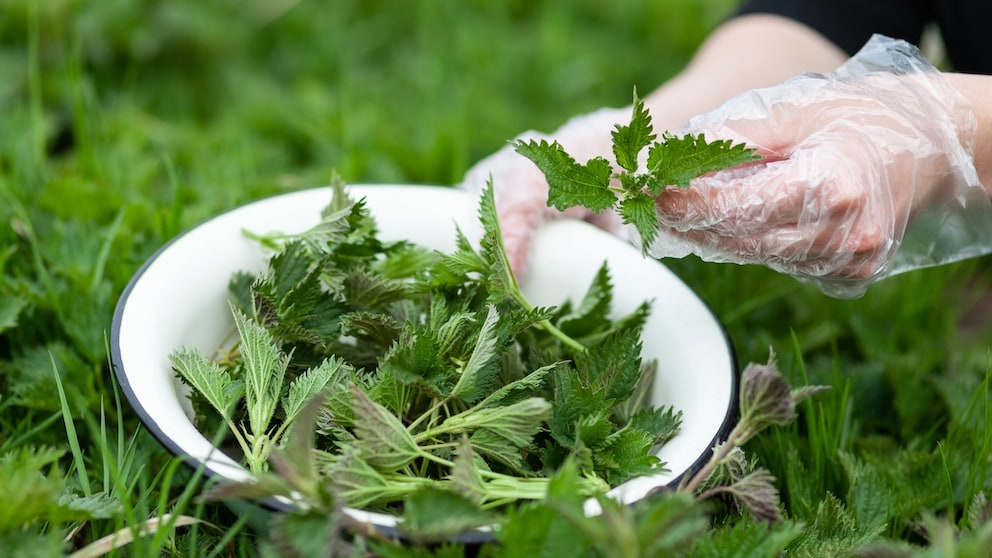
If you want to collect nettles for further use, there are a few things to consider. Always exercise caution and mindfulness. Since the fine stinging hairs can cause painful irritation upon contact, always wear gloves and preferably long clothing. The best harvest time is in spring and early summer when the plants are still young, tender, and particularly nutrient-rich, but collecting is also possible at other times of the year. The most valuable parts are the top four to six pairs of leaves, as they are fresh and free of coarse fibers.
It’s also important to harvest only in clean locations, not directly by the roadside, on heavily trafficked paths, or in heavily fertilized fields. Nettles often grow abundantly, but you should never cut down the entire plant; always leave a part so it can regenerate.
If you want to use the leaves in the kitchen afterward, you can briefly roll them with a rolling pin, roll them with your fingers, or blanch them—this neutralizes the stinging hairs, making the plant easily edible.
3 Recipe Ideas for Using Nettles in the Kitchen
After harvesting nettles, you might find yourself at a loss in the kitchen. Below, myHOMEBOOK shares three recipe ideas to spark your imagination and use nettles.
Nettle Pancakes
The green leaves of the nettle are not only healthy, but they also have the ability to color our food in an interesting way. Pancakes, for example, take on an appetizing green hue when nettles are added.
What you need:
- 100–150 g fresh young nettle leaves
- 250 ml milk (or plant-based milk)
- 2 eggs
- 150 g flour (wheat or spelt)
- 1 pinch of salt
- Oil or butter for frying
How to prepare nettle pancakes
The cleaned nettles should be briefly blanched, squeezed, and coarsely chopped. Mix milk, eggs, and salt, and gradually add the flour. Next, add the chopped nettles to the batter. Now, you can fry the pancakes in the pan as usual.
Spaghetti with Nettle Cream Sauce
What you need:
- 500 g fresh young nettle leaves
- 200 ml cream
- 1 large onion
- 500 g spaghetti
- 3–4 cloves of garlic
- Salt, pepper to taste
- Olive oil for frying
How to prepare spaghetti with nettle cream sauce
Wash the nettles well and chop them finely. Dice the onions finely, chop the garlic cloves. Sauté the onions in olive oil until translucent, then add the garlic. Add the nettles, season with salt and pepper to taste, and simmer for about 15 minutes. Add a little liquid if needed. Add the cream and season with salt and pepper. Drain the spaghetti, add it to the sauce, and let it simmer for another one to two minutes. The pasta will then release some starch into the sauce. For a thicker sauce, you can thicken it with a roux.
Muesli with Nettle Seeds
What you need:
- 1–2 tablespoons of fresh nettle seeds
- 50 g muesli of your choice
How to prepare nettle seed muesli
Botanically speaking, nettle seeds are considered nut fruits. They actually have a slightly nutty taste and can be added fresh to muesli or dried for a longer shelf life. For a crunchier texture, you can also roast the seeds. In addition to vitamins, they are rich in essential fatty acids and proteins, making them a nutritious addition to your breakfast.