


August 26, 2025, 3:02 pm | Read time: 3 minutes
From a small seed to a large, climbing cucumber, we have nurtured our plant. Now, we eagerly await each blossom and the subsequent cucumber. But then, the blossoms fall off at irregular intervals. And without blossoms, there are no cucumbers. myHOMEBOOK gardening expert Franka Kruse-Gering explains why cucumber blossoms fall off.
1. Temperature Fluctuations Cause Blossoms to Fall
Cucumbers are generally quite easy to care for, but they are not entirely self-sufficient. Temperature fluctuations can really affect them and cause stress. This can result in a bitter taste, as they may produce the so-called “cucurbitacins” under suboptimal conditions. Sometimes, they don’t even reach this point because the blossoms fall off beforehand. The ideal temperatures for cucumbers are between about fifty-four and eighty-six degrees Fahrenheit.
2. Mistakes in Watering Habits
A common reason for cucumber blossom drop is mistakes in watering. Both water scarcity and waterlogging can severely affect the plant. Under drought stress, the cucumber cannot adequately supply its blossoms and sheds them to conserve energy—this is typically accompanied by limp, drooping leaves that perk up again at night. However, too much water is also harmful, as waterlogging leads to oxygen deficiency in the root area, blocking nutrient uptake and causing the plant to lose blossoms as well. The constant switch between drying out and overwatering is particularly damaging, as this stress further weakens the plant. Cucumbers need consistent, even moisture without the roots standing in water.
Also interesting: 3 Tips to Accelerate Cucumber Growth

6 Reasons Zucchini Plants Aren’t Bearing Fruit
Why Zucchini Rot at the Tip
3. Nutrient Deficiency Causes Cucumber Blossoms to Fall
A lack of essential nutrients can also lead to cucumber blossoms falling off. Potassium and boron are particularly crucial, as they are needed for blossom and fruit formation. Without potassium, the plant cannot provide enough energy to supply the blossoms, leading to their drop. A boron deficiency, on the other hand, impairs the development of the blossom structures and prevents them from developing healthily. Additional symptoms such as light leaf discoloration or growth disturbances often appear. Since cucumbers are heavy feeders, they require sufficient and balanced nutrient supply throughout the growing season. Thoughtful fertilization and regular supplementation with organic or mineral fertilizers ensure that the blossoms are not unnecessarily lost.
4. Pollination Must Be Successful
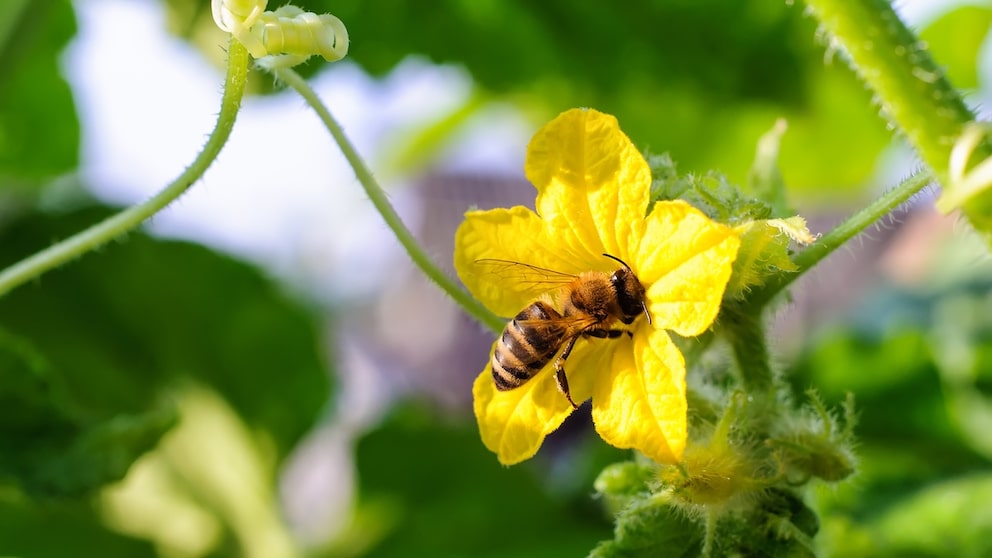
A common reason for cucumber blossom drop is a lack of or incomplete pollination. Female blossoms, in particular, need pollen from male blossoms to develop fruit. If pollination does not occur, the plant sheds the blossom after a short time. This problem is especially prevalent in enclosed spaces like greenhouses or balconies, where bees, bumblebees, and other insects have limited access.
Unfavorable weather conditions, such as rain, wind, or cool temperatures, can also result in fewer pollinators being active. To remedy this, attract pollinators by planting insect-friendly flowers nearby, or manually pollinate by transferring pollen from male to female blossoms using a brush or cotton swab. This significantly improves the chances of fruit set.