


August 22, 2025, 9:07 am | Read time: 3 minutes
For months, we nurture our zucchini. From seed to small seedlings, to larger plants in the garden. The blossoms sprout and anticipation grows. But then, no fruits develop. myHOMEBOOK gardening expert Franka Kruse-Gering explains six reasons why zucchini don’t produce fruit.
Follow myHOMEBOOK on WhatsApp now
1. Too Little or Too Much Water
Zucchini have a very high water requirement. Too little water causes the plant to become stressed and drop blossoms before fruits form. But too much water isn’t good either, as waterlogging can occur, damaging the roots. Then the plant can’t absorb nutrients anymore. The result is that the blossoms on the zucchini rot and it can’t produce fruit.
2. The Nutrients Don’t Suit the Zucchini
Many hobby gardeners initially provide a lot of nitrogen, such as through horn shavings or compost. While this promotes lush leaf growth, it comes at the expense of blossoms and fruits. For zucchini to produce fruit, the plant also needs phosphorus and potassium. Phosphorus stimulates blossom formation, while potassium supports fruit development and strengthens the tissue.
3. Zucchini Have Too Little Space
Zucchini need a lot of space, at least one meter by one meter per plant. If they’re too close together, they compete for light, water, and nutrients. This weakens the plants, leading to more leaves and fewer blossoms. Consequently, the zucchini don’t produce fruit. Additionally, close planting encourages moisture between the leaves, which promotes diseases like mildew. This, in turn, costs energy that should go into fruit production.
Also interesting: Planting, Caring for, and Harvesting Zucchini
4. Only Male Blossoms Are Present
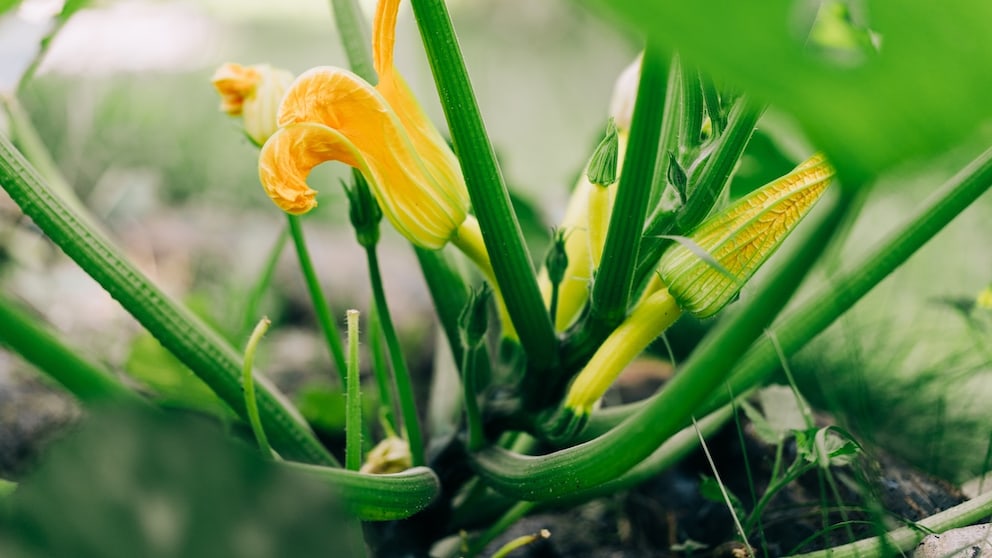
Zucchini often initially open only male blossoms. This is a kind of “pre-phase,” where the plant ensures enough pollen is produced before female blossoms appear. Male blossoms can be identified by their thin stems, while female blossoms appear on a small fruit base. When the plant is still young, it can take weeks for the first female blossoms to show.

4 Reasons Why Cucumber Blossoms Fall Off

Why Zucchini Rot at the Tip
5. The Temperature Doesn’t Suit the Zucchini
Zucchini love warmth. At temperatures below 10 degrees Celsius, they stop growing, and blossoms may fall off or not form at all. But heat above 30 degrees Celsius is also problematic, as pollen quality suffers. It becomes sticky or infertile, preventing successful pollination.
6. Pollination Has Failed
Zucchini belong to the squash family and rely on cross-pollination. This means pollen from male blossoms must be transferred to the stigma of female blossoms. Normally, bees, bumblebees, or other insects handle this. If these are absent, due to bad weather, few insects in the garden, or the use of pesticides, the female blossoms remain unfertilized and the small fruits fall off again.