


November 15, 2026, 12:39 pm | Read time: 4 minutes
The tree is planted, the hole is filled, now all that’s missing is water, and it needs to be in the right place. Learn how a watering ring can help and how to set it up correctly here on myHOMEBOOK.
Water isn’t interested in helping your apple tree take root. It follows the slope, which doesn’t automatically lead to the roots. On a slight incline, it simply flows down, and on compacted soil, it briefly forms a puddle and sometimes disappears to the sides. So, an entire well-intentioned watering can might end up soaking the lawn rather than the young tree. A watering ring, also known as a watering edge or berm, sets boundaries for the water. It keeps the water where it should seep in: in the root area of the plant.
Follow myHOMEBOOK on WhatsApp now
What a Watering Ring Is and What It Does
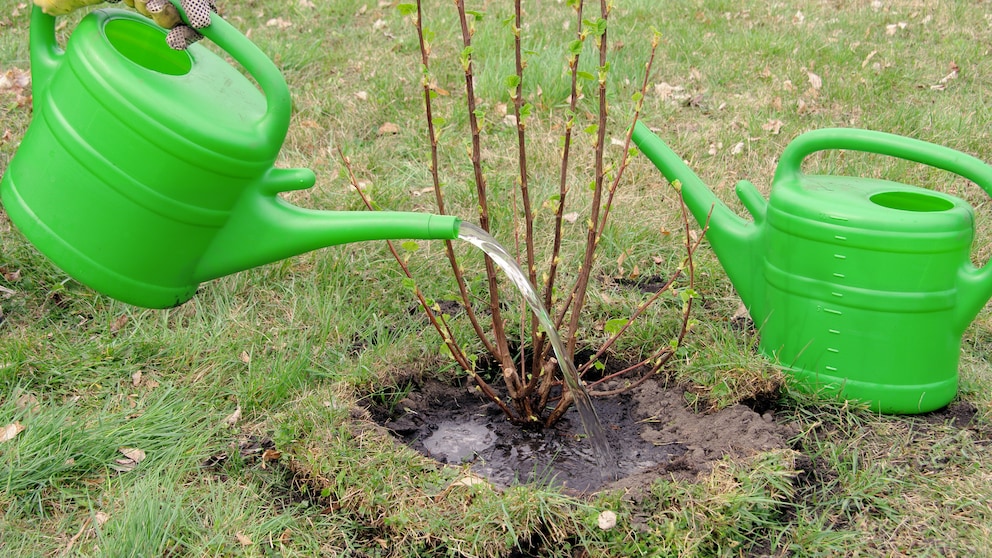
A watering ring is a low earthen berm that is formed around a tree or shrub after planting. It creates a shallow basin where watering and rainwater can slowly seep in. This is especially helpful during the establishment phase. The roots have not yet spread into the surrounding soil and rely on the water in their immediate vicinity.
Creating Your Own Watering Ring: Size, Height, Construction
The diameter of the watering ring depends on the size of the plant. A small container shrub needs a much smaller watering edge than a newly planted two-meter-high tree. The height also depends on the plant: Small shrubs can manage with about five to ten centimeters, while a tree may require a higher berm.
To build it, after planting and compacting the soil, pile up a closed berm of the appropriate size around the plant. Make sure to press the berm firmly and carefully so that the water doesn’t find a way out. Then fill the basin with watering water, let it seep in, and refill if necessary. This way, the water washes soil around the roots and closes any air pockets.
Using and Maintaining a Watering Ring
One-time watering is rarely enough. Keep an eye on the weather and water as needed in the following months. It’s better to water infrequently and thoroughly than often and lightly. Rain and wind can erode the watering ring over time, so you may need to make adjustments.
Buying a Watering Ring
If you want to save the effort of piling and adjusting, you can opt for ready-made watering rings from the store. These mostly reusable plastic rings are available at garden centers, hardware stores, or online. They aren’t necessary, as the earthen berm serves the same purpose and is plastic-free.

How Sponge Gardens Efficiently Water Your Plants

How to Repot Houseplants Correctly
The Three Most Common Mistakes When Creating Watering Rings
Water always takes the easiest path and finds every weak spot. A berm that is too loose or too low will be washed away when watering. A ring that extends too far beyond the planting hole is also ineffective, as the water then spreads widely instead of staying at the roots. Conversely, rings that are too small hold too little water.
Also interesting: How to find the right pot size for plants
How Long the Watering Ring Should Stay
A watering ring is primarily intended for the establishment phase, which lasts at least until the next season for a fall planting. How long it should remain also depends on the weather. The drier it is, the more necessary it becomes. If the rain stays away for longer, water even in winter on frost-free days.
Dry spells are becoming more frequent: The climate crisis is causing dry periods to occur more often and last longer. While they also weaken established trees, young plants, whose roots have not yet reached deep, are particularly hard hit. Therefore, it may be wise to keep the watering ring beyond the establishment phase.