


June 24, 2026, 3:23 pm | Read time: 5 minutes
Banana peels end up in the compost bin in most households. This is actually a waste, as the peels can be used in various ways, such as in the garden. Whether banana peels should be buried as fertilizer or just worked into the surface, and what to keep in mind, is explained by gardening expert Katharina Petzholdt at myHOMEBOOK.
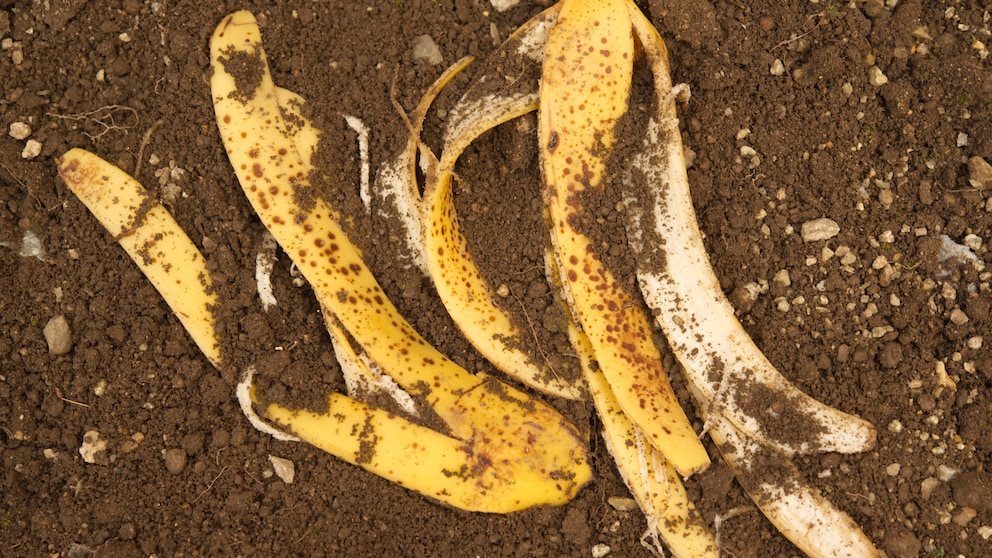
Amid the tomatoes, a small piece of banana peel sticks out from the freshly loosened soil. It is dark and looks quite worn, but still recognizable. Just before the tomatoes were planted in the bed in mid-May, the chopped peels were worked into the soil to serve as buried fertilizer. The idea is obvious but often overestimated in the garden: While banana peels have some fertilizing effect, they do not provide a balanced nutrient ratio and work slowly in the soil.
What Nutrients Are in Banana Peels??
The peel mainly contains potassium, which, along with nitrogen and phosphorus, is one of the three main plant nutrients. Potassium regulates the water balance of plants, strengthens cell walls, and makes plants more robust against drought, frost, and diseases. Magnesium and calcium are also present in banana peels, along with smaller amounts of phosphorus and sulfur. Despite all these nutrients, the peels are not suitable as a sole fertilizer, partly due to their low nitrogen content. In the garden, banana peels are better understood as a supplementary organic fertilizer rather than a complete replacement for traditional fertilizers.
Which Plants Benefit From Banana Peels as Fertilizer?
In the vegetable garden, plants with a high potassium requirement benefit from fertilization with banana peels. These include tomatoes, peppers, chili, cucumbers, zucchini, and pumpkins, as well as strawberries. Ornamental plants like roses, fuchsias, or geraniums also respond well to fertilization with banana peels. However, many plants that prefer acidic soils, such as blueberries, rhododendrons, azaleas, or cranberries, react sensitively—at least with frequent applications—because the peels slightly raise the soil’s pH over time.
Organic Makes the Difference
If you want to use banana peels in the garden, be sure to use only organic bananas. Conventionally produced bananas are among the most heavily sprayed fruits. Using the peels of such fruits means pesticide residues end up in the soil and potentially on the crops grown there. Additionally, the chemicals used to kill fungi on banana plantations also disrupt the soil life that is supposed to decompose the peel.
Work in Shallowly Instead of Burying Deeply
Simply throwing banana peels onto the beds is the easiest way to use them, but unfortunately also the least useful. Decomposition proceeds slowly here because contact with the soil organisms necessary for decay is minimal. Additionally, fresh peels quickly mold and make the bed look untidy. It is more effective to cut the peel into small pieces, about two to three centimeters long, and work them into the soil surface. There is still enough oxygen here to initiate decomposition.
Sometimes it is also recommended to bury banana peels deeper, such as in planting holes. But further down, oxygen becomes scarce, decomposition takes even longer, and in annual crops like tomatoes, the nutrients may only be available when the season is almost over.
6 Home Remedies That Work as Fertilizer for Cucumbers

How to Make Old Soil Fertile Again
Can You Bury Whole Bananas?
Sometimes the tip circulates to bury the entire fruit as fertilizer. With an overripe banana that no one wants to eat anyway, this is theoretically possible, as it also contains nutrients that become available to plants after decomposition. Unlike the peels, the fruit flesh contains additional sugar, which serves as food for soil microorganisms.
A buried banana is often dug up by rats overnight. Burying it deeper reduces the risk but brings the same disadvantages as with the peels.
Can You Dispose of Banana Peels in Nature?
What applies to garden waste also applies to bananas and their peels: They must not be thrown into the bushes or left lying around in nature, even if it seems harmless at first. The Circular Economy Act classifies such actions as illegal waste disposal. In most regions, a discarded peel incurs a fine of between ten and fifty euros, and in some places up to one hundred. Regardless, there are ecological reasons for this: Organic material from outside disrupts the nutrient balance in nature and remains as a foreign body in established ecosystems. With conventional bananas, pesticide residues can also seep into the groundwater.