

November 18, 2022, 3:51 pm | Read time: 2 minutes
No room in the fridge? No problem if you have a balcony and it’s winter. With the right temperatures, you can store food outside. myHOMEBOOK explains what to watch out for in this article.
If there’s leftover food after a meal, you don’t have to throw it away immediately. In winter, temperatures usually drop enough to store food and groceries on the balcony without any issues. A terrace or a wide windowsill can also be suitable. It’s important to pay attention to the right temperature. The minimum and maximum temperatures vary between different foods.
When can you store food on the balcony?
To prevent unwanted microorganisms from multiplying, you must adhere to certain temperature limits when storing food on the balcony or terrace. The general rule is: the cooler, the better. However, the Federal Ministry of Food and Agriculture (abbreviated as BMEL) points out maximum storage temperatures that should not be exceeded:
- Milk, dairy products, butter, and cheese: 50 degrees Fahrenheit
- Fresh meat, meat products, meat preparations, delicatessen, and ready-to-eat salad mixes: 45 degrees Fahrenheit
- Poultry, ground meat, ground meat products, egg products: 39 degrees Fahrenheit
- Fresh fish: 36 degrees Fahrenheit
Also interesting: Why sauce leftovers don’t belong in the toilet
Properly preparing food for storage
Besides temperatures, the way you store leftovers is crucial for how long they last outside. By following a few basic rules, you can enjoy your food longer and reheat and consume it even days after preparation. Two things everyone should consider before placing leftovers outside:
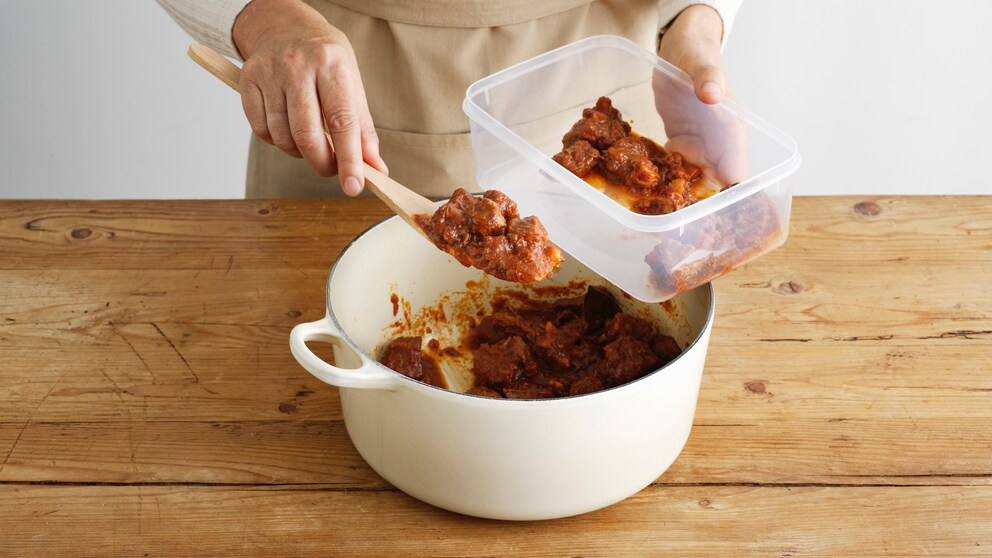
- First, do not store leftovers in used cookware outside. It’s best to transfer the food into a container no higher than two inches. This way, they cool down better and more evenly. If you need to store multiple containers outside, label them to keep track.
- Also, ensure that prepared foods are brought into the cold within one to two hours. Otherwise, cooling cannot guarantee their preservation.
Also interesting: How to properly store spray cans in winter