


November 13, 2025, 10:12 am | Read time: 3 minutes
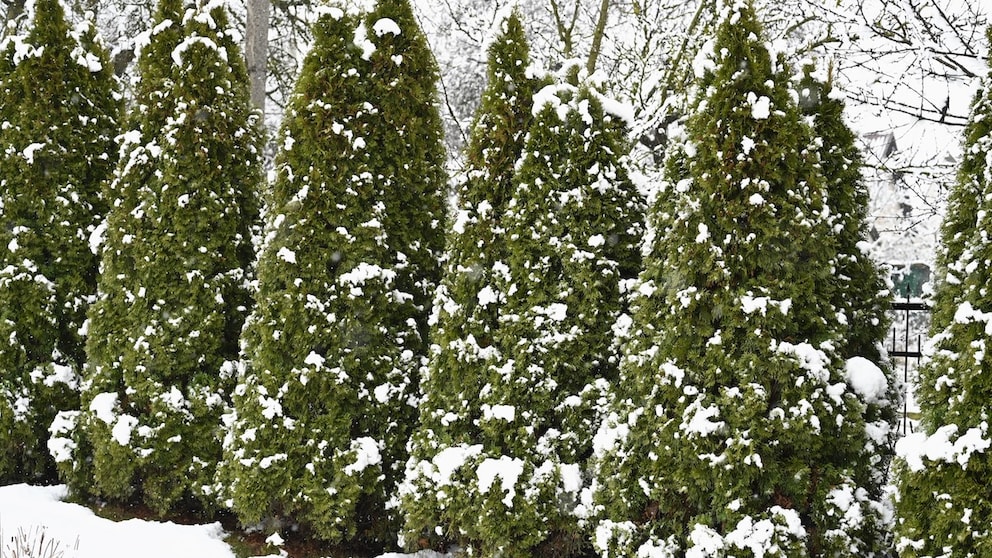
Conifers are among the most popular plants in our gardens. They are low-maintenance, evergreen, and provide structure to beds and hedges year-round. However, even these hardy trees need some attention in winter to stay healthy. myHOMEBOOK gardening expert Franka Kruse-Gering explains the care conifers need in winter.
This Is the Care Conifers Need in Winter
Anyone who thinks all plants sleep in winter and should be left alone is mistaken. The following describes three important care measures for conifers in winter.
1. Please Water in Winter Too
Conifers need water in winter as they evaporate moisture through their needles. If the ground is frozen, the roots cannot absorb water, leading to drought damage. Therefore, it’s important to water on frost-free days, ideally with lukewarm water.
Also interesting: Thuja Turning Brown? Here’s Why
2. Young Conifers Need Extra Protection
Sensitive or newly planted conifers should be protected in winter. A layer of bark mulch or pine branches over the roots helps against frost. Container plants should be wrapped additionally. Jute or coconut mats are suitable for this.
3. Sun Protection Is Important in Winter Too
On sunny winter days, the sun can harm conifers more than frost itself. The warmth of the sun’s rays causes the needles to evaporate water, even if the air is cold. If the ground is frozen, the roots cannot absorb new water. The plant loses moisture without being able to replace it.
This causes the needles to dry out, especially on the sun-facing side. This phenomenon is called frost drought. A light sunshade, such as reed mats or garden fleece, and regular watering on frost-free days can help the plants store enough water.
Understanding Frost Drought in Plants
5 Reasons Why Plants in the Garden Don’t Survive Winter
What Are Conifers Anyway?
The name conifer means “cone bearer” and describes plants that form cones and have needles instead of leaves. Conifers are thus needle trees. This includes well-known species such as spruce, fir, pine, thuja (arborvitae), cypress, larch, and yew.
Most conifers are evergreen, meaning they keep their needles even in winter. Only a few species, such as the larch, shed them in the fall. Thus, conifers provide color and life in the garden even in the cold season. Their uniform growth form also makes them ideal as hedge plants or as calm, structuring elements in beds and borders.
Conifers grow in many regions of the world and adapt to different conditions. They are resilient, long-lived, and adaptable—qualities that make them particularly popular among garden enthusiasts.
Why These Needle Trees Are So Popular
Conifers bring greenery to the garden year-round and create a calm, natural atmosphere. They come in many shapes, sizes, and color nuances—from low-growing ground covers to tall hedge plants. They are robust, tolerate drought and frost well, and require little care. Especially in winter, attention should be paid to the plants.