


May 29, 2026, 11:20 am | Read time: 5 minutes
Compost is almost a jack-of-all-trades, as it fertilizes and improves the soil. But if these effects are absent, the problems are often self-inflicted. myHOMEBOOK reveals how to avoid mistakes when setting up compost, interpret warning signs correctly, and optimize biological processes.
Three Common Mistakes When Setting Up Compost
Many gardeners treat their compost like an open-bottomed trash bin. But a compost pile is alive and has needs. If the ingredients and climate aren’t right, the hoped-for “black gold” remains a distant dream.
The Location Mistake
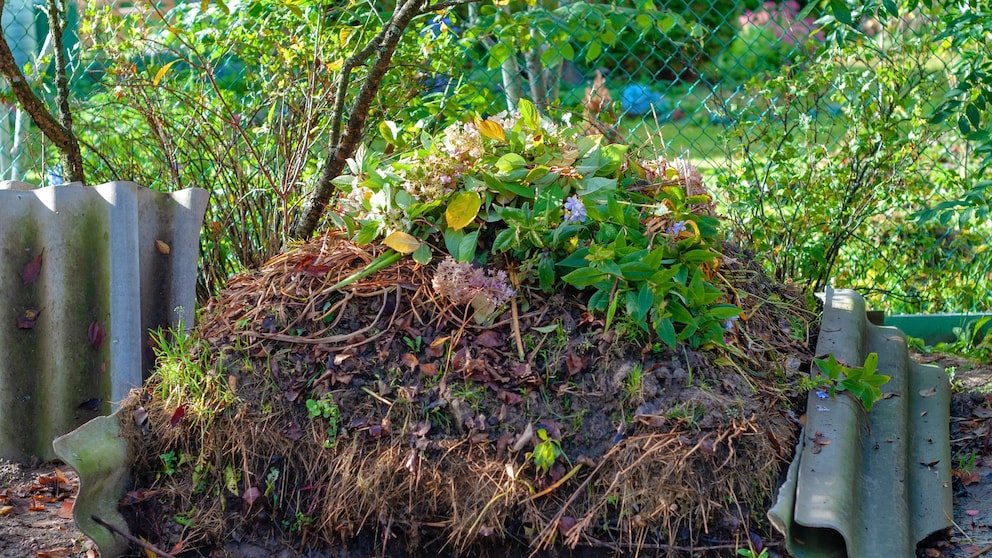
Choosing the wrong spot for your compost encourages mold or stagnation instead of humus formation. An ideal location is semi-shaded and wind-protected. Direct contact with the ground is essential so that soil inhabitants—from microorganisms to earthworms—can migrate in and start their work unhindered.
The Wrong Mix
Monotony is the biggest enemy of decomposition. Piling up only juicy, nitrogen-rich “greens” like grass clippings creates a smelly, airtight mat—a sure recipe for neighborhood disputes. Conversely, using only carbon-rich “browns” like wood chips preserves the waste instead of breaking it down. The chemistry is right only when both types of materials are well mixed.
The Moisture Trap
The right level of moisture is crucial in a compost pile. Too little water slows down microorganisms, while too much displaces the essential air. Ideally, the material should feel like a wrung-out sponge.
These Things Should Not Go on the Compost
Just as good chefs pay attention to their ingredients, gardeners should carefully choose their compost materials to avoid mistakes when setting up compost. Those who indiscriminately dispose of all organic materials in the compost risk pests or endanger the health of the entire garden.
Hygienic Risks
Cooked food scraps, meat, fish, or dairy products are magnets for rats. Additionally, fat films disrupt gas exchange in the pile and delay the process. The feces of carnivores like dogs or cats are also off-limits, as they can contain parasites that are dangerous to humans and cannot be safely killed in a typical garden compost.
Weed Invasion
While young seed weeds are harmless before flowering, root weeds like goutweed or couch grass should never be placed fresh on the pile. Even small root pieces sprout anew in the moist environment. If they haven’t been completely dried out in the sun beforehand, the problem will later spread widely in the bed with the finished compost.
Infected Plants
Sick plants do not belong in the compost but should be disposed of. The temperatures in hobby garden composts are often not sufficient to reliably kill the pathogens.
Growth Inhibitors
The peels of conventionally produced tropical fruits are often treated with pesticides. They enrich the compost with harmful substances and block the work of decomposers. Even natural substances can delay decomposition, such as the tannins in large amounts of oak or walnut leaves. Special caution is also advised with ash: It accumulates heavy metals and raises the pH level.

9 Typical Composting Mistakes to Avoid
How to Properly Turn and Sift Compost
The Compost Check with Smell, Feel, and Sight
Composting doesn’t always go according to plan. To counteract in time and bring the compost back into balance, you should pay attention to three clear warning signs.
Smell
While finished compost smells like forest soil, a working pile should smell neutral or slightly fungal. However, if you are hit by a pungent stench of rotten eggs or ammonia, rot has taken over.
Temperature
An active compost generates its own heat. If the core remains cold for a long time, it’s a sign that the biology is stagnating.
Appearance
While fungi that aid in decomposition form fine, white-gray threads, extensive white coatings indicate waterlogging. This is also a health risk, as turning the pile releases large amounts of spores into the air, which can burden the respiratory system.
Decomposition vs. Rot
While decomposition is the goal, rot indicates a process failure. During decomposition, microorganisms break down organic materials and gradually convert them into humus. The result is a dark, crumbly, earthy-smelling fertilizer. If the compost is too wet or lacks air, the process shifts: Instead of decomposition, rot sets in. This produces foul-smelling gases and slimy residues.
First Aid Measures for Compost Rescue
If the compost is out of balance or the decomposition process isn’t starting properly, it doesn’t necessarily mean the compost is lost. Usually, it can be saved with some effort. However, if the pile is just a black, slimy mass without any structure, disposal is the better option.
Remediation for Mold and Rot
The compost needs air. Turn everything over and mix in plenty of dry structural material like straw or coarse wood chips. Once air circulates again, the pile will regulate itself. When turning, wear a mask to protect your lungs.
Reactivation in Case of Stagnation
If the pile is too dry, the microorganisms “starve.” Perform the sponge test: The material should feel like a damp, wrung-out sponge. If necessary, carefully add water and mix in a few shovels of finished compost as a biological starter.