


February 16, 2026, 4:27 am | Read time: 2 minutes
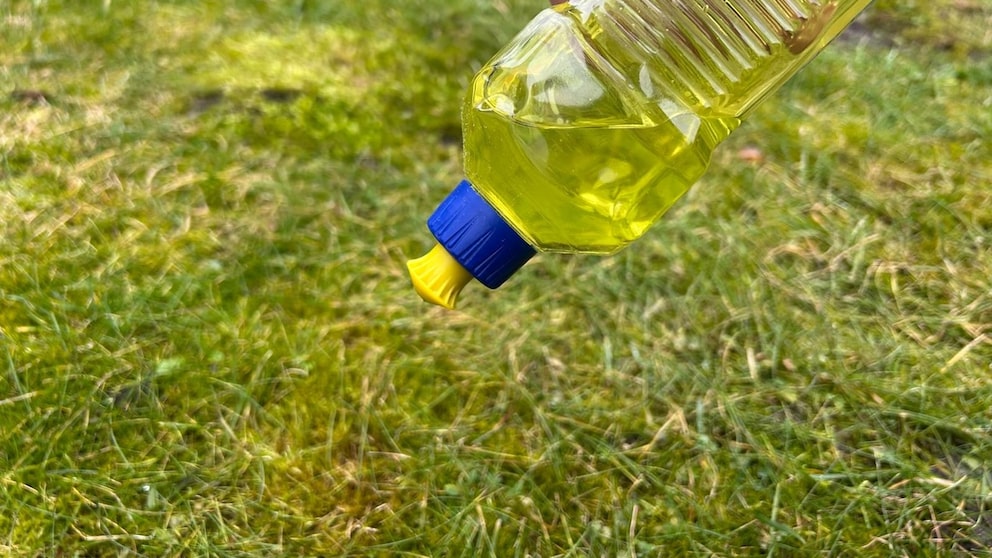
The snow is slowly retreating, and what emerges beneath it doesn’t bring joy to all garden owners: Alongside the first green tips of the lawn, moss is also becoming visibly widespread again. It’s no wonder that many are now looking for quick solutions. A surprising tip is circulating online: Dish soap is said to help against moss in the garden. But does it really work—or does it potentially cause more harm than good? myHOMEBOOK investigated the matter and consulted an expert for an assessment.
Dish Soap on the Lawn–Sensible or Nonsense?
“I am not aware of any scientifically based study on this topic,” explains Dr. Harald Nonn from the German Lawn Society in response to an inquiry from myHOMEBOOK. He suspects that in various reports, dish soap might have been equated with so-called “wetting agents” because dish soap also contains surfactants. However, these do not have a harmful effect on moss.
According to the expert, wetting agents are “dispersing substances that make water-repellent components in the soil, usually organic substances, water-permeable again.” Depending on the active ingredient (anionic, cationic, or nonionic), they improve the penetration or infiltration of water into the soil. Additionally, these substances affect water distribution and the soil’s water retention capacity. “The substances remain active in the soil for some time and are biologically degraded over time,” adds Dr. Nonn.
Salt Against Weeds in the Lawn? Expert Has a Clear Opinion
Should you scarify lawn in the fall? A professional explains
Expert Dismisses Dish Soap on the Lawn
“Wetting agents are primarily used in professional lawn care in the golf sector,” the expert explains. Their effect is comparable to that of soap, dish, or laundry detergents. However, in his opinion, these are not suitable for lawns. “Dish soap is for washing dishes; it doesn’t belong on the lawn or in the soil,” Dr. Nonn further elaborates.
What Really Helps Against Moss in the Lawn
In a previous interview, Dr. Nonn explained that one should generally avoid moss killers or even home remedies like salt or vinegar: “They do remove the moss but do not prevent it from growing back.” Additionally, they can be environmentally harmful.
There are various methods to get rid of moss in the lawn, but prevention is also possible. It starts with the right seed mix. You should pay attention to the appropriate mix for the respective conditions. Regular mowing is also important. If you provide the lawn with the right nutrients, moss doesn’t stand a chance.