


November 24, 2026, 5:15 pm | Read time: 3 minutes
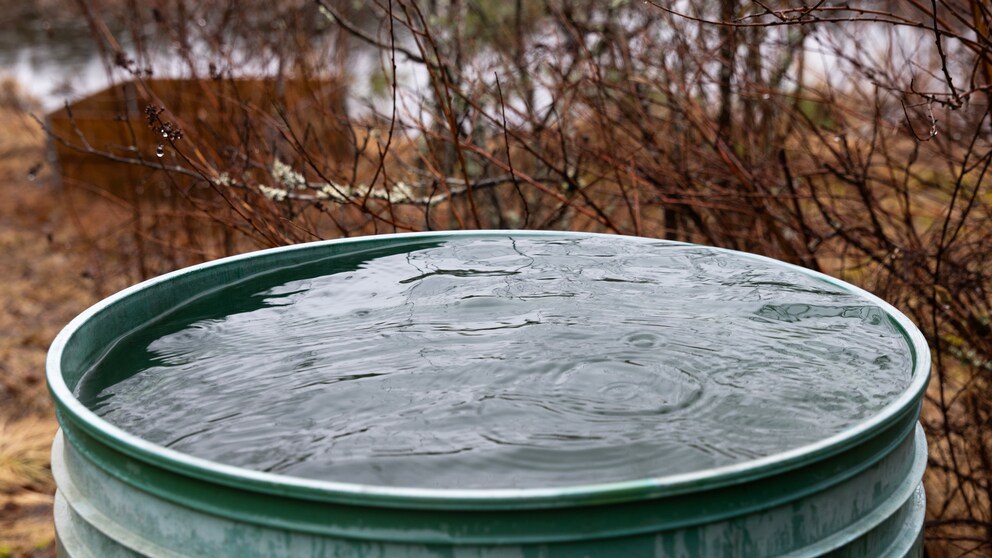
When temperatures drop below freezing at night, it’s time to prepare your rain barrel for winter. Skipping this step risks damage from freezing water, which can lead to costly repairs. Fortunately, just a few measures are usually enough to protect the barrel from frost and cold, ensuring it can be used again without issue in the spring.
Avoid Frost Damage in the Rain Barrel with a Simple Trick
If you want to collect rainwater even in the cold season, you can use a simple trick. In addition to special ice pressure pads, a piece of Styrofoam can also be helpful, advises the Consumer Center NRW in a press release. These flexible materials absorb the pressure that occurs when water freezes, preventing cracks in the barrel walls. However, the water level should be kept as low as possible—the less water, the less pressure when it freezes.
If an ice layer has already formed on the surface, caution is advised: It should be gently broken up. Otherwise, the ice acts like a solid seal, under which the water continues to expand—especially in barrels with vertical walls, this can lead to serious damage.
Protect Pipes and Accessories from Frost
Connected hoses and pipes must also be completely drained before winter. If water remains in the pipes, it can freeze and cause damage. For pipes that are deep or hard to access, remaining water can often be removed with compressed air from a compressor. It’s also important to close the inlet to the barrel—such as with a rainwater diverter that has a winter setting.
More on this: Make the Garden Winter-Ready Step by Step

How to Protect Your Backyard Pool From Frost and Ice

Things to Do in Your Allotment Garden Before the First Frost
Don’t Forget to Clean Before Storing
“This is also a good opportunity to thoroughly clean the barrel and remove sediment and leaves that have sunk to the bottom,” explains Hanna Vitz, a rainwater management consultant at the Consumer Center NRW. Cleaning not only prevents unpleasant odors but also ensures that the barrel can be used immediately in the spring.
Store the Barrel Properly
If you don’t use your rain barrel in the winter, it should be emptied as completely as possible and stored upside down in the garden—or better yet, in a protected area like a basement or garage. This keeps it safe from frost. The preparation pays off in two ways: It’s not only sustainable but also prevents costly repairs or the need for a new purchase next spring.