


November 25, 2025, 4:23 pm | Read time: 4 minutes
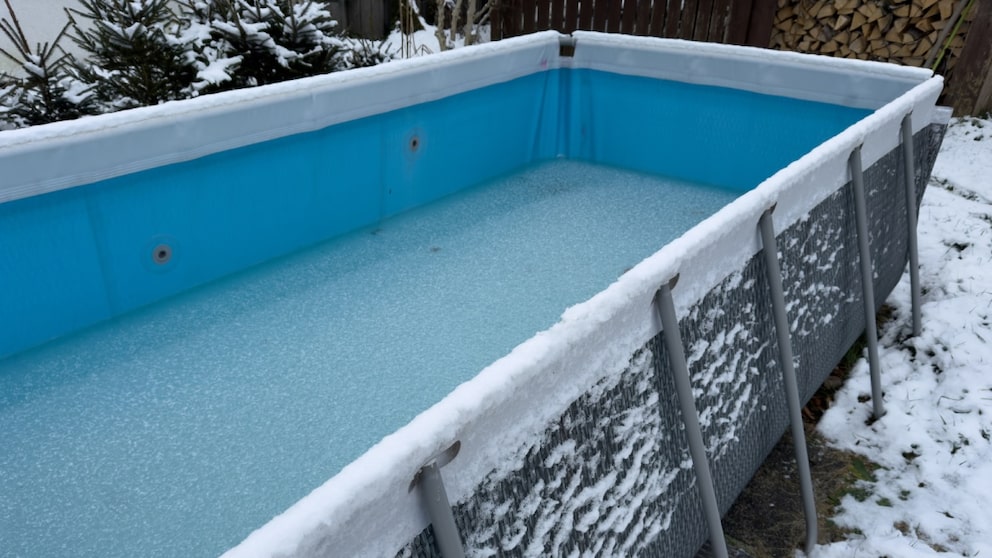
If you haven’t winterized your backyard pool yet, don’t delay any longer. The first frosty nights have arrived. It’s definitely worth the effort. A winterized pool won’t suffer frost damage, and there will be less prep work needed in the spring.
Freezing water in the pool and pipes can cause damage. As water expands when it freezes, the ice puts pressure on the pool walls and the equipment.
Overview
When to Winterize the Pool
There is no specific calendar date by which pool owners should have winterized their pools. It’s better to rely on the current weather forecast and a glance at the thermometer. When the first night frosts threaten, it’s high time to start the work.
Which Pools Can Be Left Up Over the Winter

Simple Trick Protects Rain Barrel From Frost Damage
Caution: Not Every Pool Can Overwinter
Whether a pool can survive the winter outdoors without damage is revealed by user manuals and other documents. In-ground pools or those with steel walls are included. Pools set up for the summer should not overwinter outdoors. The manual should have noted this. Frost damage to these models voids the warranty.
Even though it’s more work, these temporary pool solutions must be dismantled and stored dry and frost-free in the house or garage.
Read more: Which Pools Can Be Left Up Over Winter
Step-by-Step to a Winterized Pool
Whether the pool is in-ground or a sturdy model set up in the garden, a systematic approach will winterize the pool.
1. Thoroughly Clean the Pool
As preparation, the pool should be thoroughly cleaned. The cleaner the pool is before the winter break, the less work there will be in the spring.
Branches and leaves still floating in the pool should be removed. The pool floor and walls should be thoroughly cleaned with a brush and vacuum.
Dirt and lime deposits along the waterline should be particularly well scrubbed. If they remain over the winter, the dirt will be hard to remove in the spring.
The pool water should be clear and free of visible impurities at the end. Then, it’s best to run the filter system continuously for 24 hours to remove even the finest particles.
2. Prepare the Water for Winter
The simplest preparation for wintering is using a special winterizing agent. It ensures optimal pool chemistry. If you prefer to handle it yourself, first determine the water’s pH level. It should ideally be between 7.0 and 7.4.
Finally, you can chlorinate one last time. The chlorine content should not exceed 0.6 milligrams per liter. Higher levels can damage liners and seals over time.
3. Drain the Water
Once everything is prepared, the water level can be lowered. However, do not drain the water completely, as the remaining water actually protects the pool from damage. The water should be lowered to about ten centimeters below the lowest installed part.
4. Protect the Equipment
Next, protect the sensitive equipment from frost. Completely drain:
- The filter system and
- all pipes and hoses
Parts in the pool, like nozzles, should be sealed with plugs to prevent water from entering. Finally, anything removable should be dismantled and stored frost-free.
5. Use Ice Pressure Cushions!
As water expands when it freezes, it can exert so much pressure on the pool’s inner walls that they become damaged. Special ice pressure cushions can help here.
These are individual plastic elements that are linked together. They float on the water and have a hollow chamber. When the water freezes, the ice compresses these hollow spaces, reducing pressure on the pool edge. This keeps it protected.
How best to arrange the cushions, as well as the number needed, depends on the pool’s shape and size. It’s best to get information before purchasing or seek advice from a specialist retailer!
If the pool doesn’t have a permanent cover, use cover sheets. Ideally, they should extend 80 centimeters beyond the pool edge. When placing them on the water surface, ensure they are well secured to prevent strong winds from blowing them away.
Better and more reliable are constructions with their own framework attached to the pool edge. However, these solutions are more expensive. They offer the additional advantage of being designed to allow precipitation to drain off. With simple sheets, ensure there are openings for rain and snow to drain. Properly prepared, the pool will get through the winter well.