


September 1, 2025, 4:12 am | Read time: 4 minutes
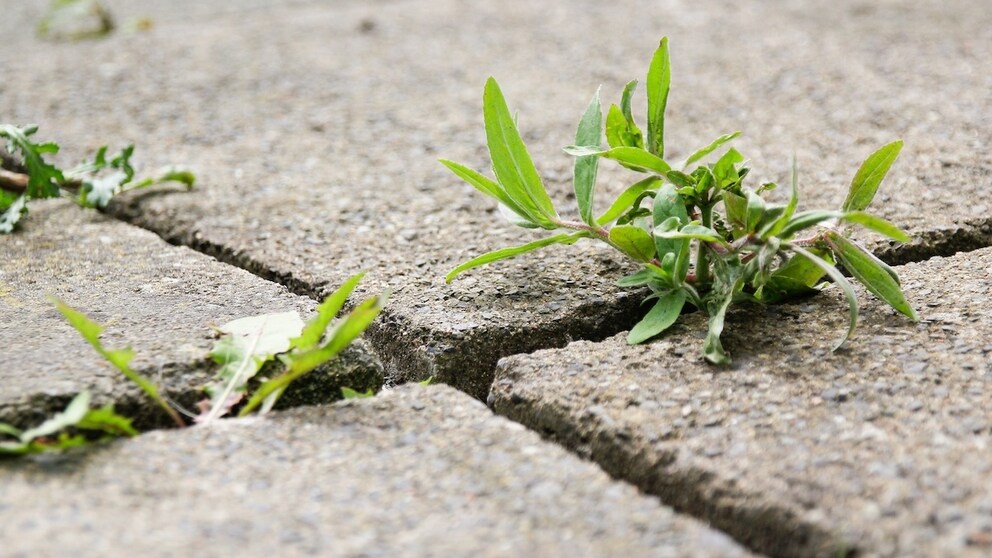
The sight of green plant tufts between the terrace slabs frustrates every gardener. However, it doesn’t always have to be the “chemical club” to prevent this. Joint sand can be the solution against weeds.
Weed removal is a strenuous endeavor. With joint scrapers, weed burners, and various home remedies, gardeners undertake the laborious task of getting rid of the unwanted greenery. To prevent growth, or at least slow it down, joint sand can be used.
How Does Joint Sand Prevent Weeds?
As is well known, plants need light and soil conditions tailored to their needs for growth. This is where joint sand comes into play. It works physically by tightly sealing the joints. As a result, little to no light can reach the seeds below. Additionally, the soil is no longer loose enough for root growth.
An optimal composition of joint sand also works biochemically. It ensures a pH value that inhibits plant growth. The sand typically consists of a mixture of oven-dried and fired sands, clays, and soils. Due to the preparation, the mixture is extremely low in nutrients, creating an environment similar to a desert.
Proper Application Is Key
Joint sand forms the basis for success against weeds. However, how it is applied is also crucial. A few things need to be considered. First, the area must be thoroughly cleaned of moss, plant debris, and soil. Any existing joint material must be completely removed. This should be done over the entire joint height of the stone. Joint scrapers and a pressure washer should help achieve this.
Before the next step, it is essential to ensure that the ground is completely dry. This applies to the tops of the stones and the joints alike. After drying, the joint sand is evenly distributed over the area and swept into the joints with a soft broom, both straight and diagonally. A vibrating plate, which can be rented from hardware stores and specialized providers, is used to compact the ground, and then the sweeping is repeated as needed.
To serve as a mechanical barrier and light seal, the sand should be so firm that a spatula can hardly be pressed into it. Another advantage of joint sand is its water permeability, allowing rainwater to drain well. However, this form of jointing reaches its limits where the surface is subjected to heavy mechanical loads.
For a terrace or a pathway to the front door, there is no reason not to use joint sand. It is also stable enough for driveways with occasional traffic. For larger mechanical loads, such as parking lots or when driven over by heavy vehicles, a binding cement remains the better option.

Best Tips for Fighting Weeds in Your Lawn
How to Quickly Get Rid of Stubborn Green Algae
Tips for Selection
It is advisable to seek detailed advice at a hardware store or garden center before starting work. Not all sand is equally suitable.
The specific choice of sand depends on the application scenario. For narrow joints, such as those typical for garden paths with low load, a highly alkaline quartz sand for jointing and weed inhibition is recommended. Wider joints with higher loads should be jointed with a special joint sand with a coarser grain.
Regular Maintenance Is Necessary
Once everything is jointed, and then permanently free from weeds? Unfortunately, that remains a pipe dream, even when using special products. Sand can be blown away by wind and washed out by water. The inhibiting density decreases due to natural influences. Cleaning the surfaces with pressure washers or a garden hose also contributes to this wear.
Therefore, fresh material must be rubbed into the joints and the ground compacted every few years. It is also recommended to regularly check the joints for tiny seedlings and manually remove them early before they manage to take root.