



April 9, 2024, 1:01 pm | Read time: 3 minutes
They often grow in home gardens, forests, or along field paths, and even in the tropics as a tree–nettles. These plants are more useful than their reputation might suggest. You can drink them as tea or use them for plant care.
Nettles grow almost everywhere in the world. The exception is Antarctica, as it offers no fertile ground. You can also make use of the plant in local gardens–specifically as nettle manure for fertilizing. myHOMEBOOK explains in the video how to easily make nettle manure yourself.
How to Make Nettle Manure
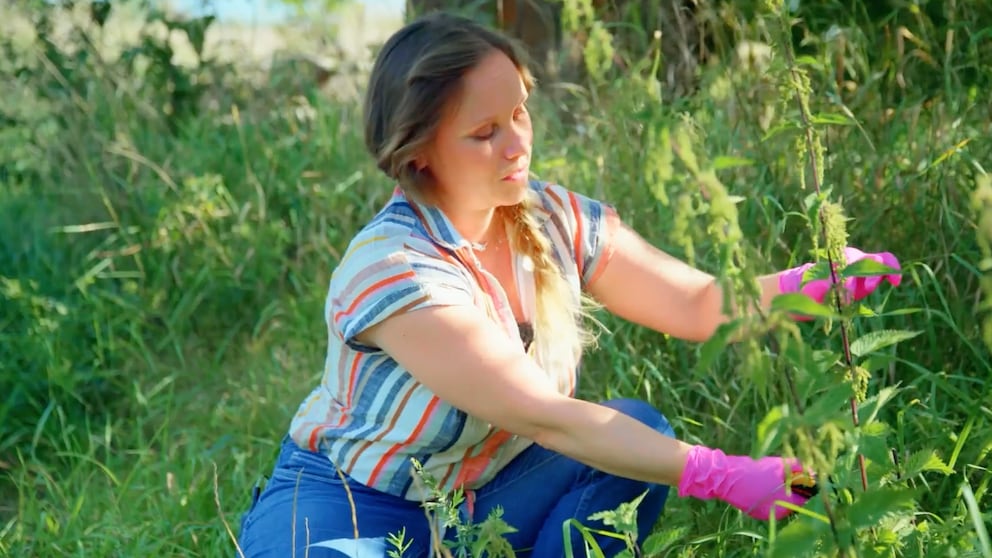
- Cut the nettles with scissors. The stems should be about 8 inches long. Be sure to wear gloves and long clothing.
- Then place the plant parts in a wooden or plastic tub and completely cover them with rainwater. Alternatively, you can make the nettle manure in a bottle.
Then it’s time to wait. The manure should be stirred or shaken regularly, ideally once a day. The container should also be opened occasionally to let in oxygen–fermentation won’t work without it. After a few days, the manure will bubble and foam. At the same time, it will smell unbearable. Choose the location of the tub carefully. Keep a good distance from your own patio.
The fermentation process takes between two and four weeks. A sunny spot speeds up fermentation and shortens the stinky period. Add a little rock dust or lavender to reduce the odor. Once the manure turns dark and stops foaming, the process is complete. After straining, your organic fertilizer is ready to use. The plant residues go on the compost.
Also interesting: Do these home remedies really work against weeds?
Tip: Metal containers are unsuitable for making nettle manure, as they chemically react with the manure. Cover the tub with a mesh or rabbit wire to prevent animals from drowning. Covering with a cloth prevents contamination from leaves and the like.
The Right Dosage of Nettle Manure
Young plants cannot tolerate the natural fertilizer from nettles as concentrated as old and large plants. The following rule applies for the correct concentration:
- Old and large plants: 1 part manure, 10 parts water
- Young plants and seedlings: 1 part manure, 20 parts water
- Lawn: 1 part manure, 20 parts water
Of course, you can also fertilize heavy feeders like tomatoes, potatoes, various types of cabbage, pumpkins, zucchini, broccoli, peppers, leeks, cucumbers, celery, and other vegetables with it. Here, too, the mixing ratio of one part manure to 20 parts water is recommended.
Also interesting: Why lady’s mantle is a must for every garden
6 Home Remedies That Work as Fertilizer for Cucumbers

3 ways to use chestnuts in the household
How to Use Nettles Against Aphids
Nettles are also suitable as a pest control agent. For this, you make a nettle broth or nettle decoction. The preparation is the same as for nettle manure, but the decoction is ready after just 24 hours. After straining, it can be transferred to a spray bottle. Plants infested with aphids must be sprayed daily. After about a week, the plants should be free of the pesky intruders.
Also interesting: Rhubarb broth–the secret weapon against aphids
Nettles for Healing and Consumption
The nettle is versatile. Nettle seeds are even surprisingly tasty. Chemical analysis shows that the plant is a complete food. It contains a lot of iron, vitamins A, C, and E, phosphorus, sodium, potassium, and magnesium. It has more vitamin C than oranges and more protein than soy. In soups, it surprises with a particularly mild taste. With its anti-inflammatory effect, it is used as a tincture or ointment to support various ailments. As a tea, it acts as a diuretic and is said to help with bladder infections.