


May 15, 2022, 4:52 am | Read time: 4 minutes
Earthworms are rarely seen at work, and they aren’t particularly cute. Perhaps these are the reasons why they are among the most underestimated residents in the garden. Yet every gardener should know what these worms accomplish beneath their feet.
Most gardeners hardly notice earthworms in the garden. This isn’t surprising, as earthworms work in secret and rarely come to the surface. Still, they are not visitors in the garden but caretakers. Most gardeners have no idea how much of what their plants achieve is due to the work of earthworms.
Follow myHOMEBOOK on WhatsApp now
How Earthworms Improve Soil in the Garden
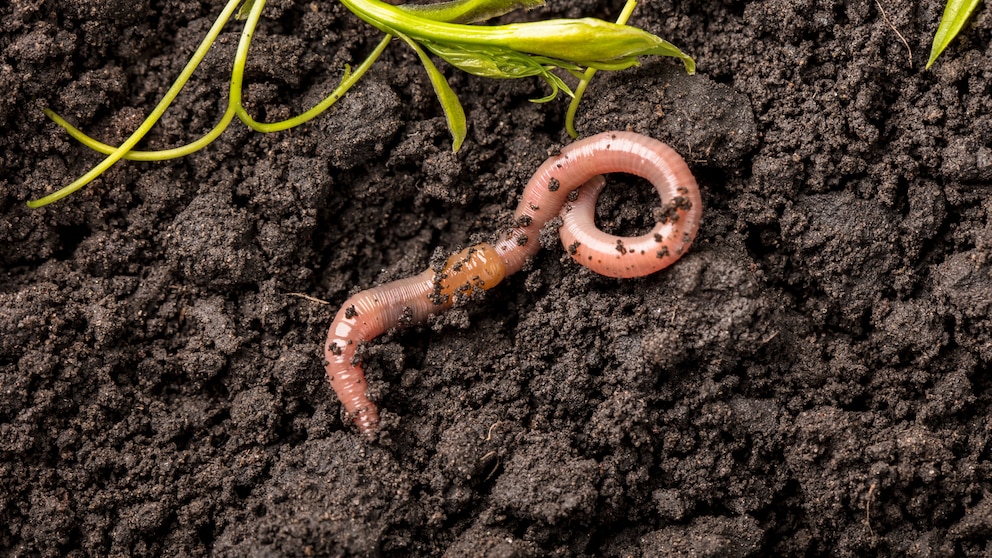
The earthworm eats and digs simultaneously: It pulls plant debris from the surface into its burrows, where microorganisms pre-decompose it, and the worm then digests it. What results surpasses regular garden soil by far. Comparatively, worm castings contain up to seven times more phosphorus, eleven times more potassium, and five times more nitrogen, all in a form that plant roots can directly absorb. At the same time, as the earthworm digs, it brings mineral salts from deeper soil layers to the surface, where plant fine roots need them.
As it digs, the earthworm creates a dense network of tunnels in the soil. During heavy rain, this network functions like an underground drainage system, channeling water from above to deeper layers. Simultaneously, the tunnels ensure good soil aeration. For plant roots, the tunnels are doubly practical: They offer little resistance when growing through and are very nutrient-rich because the earthworms line them with their excretions. A soil well-tilled by earthworms retains moisture and slowly releases it during dry spells.
Encouraging Earthworms in the Garden
You don’t simply place earthworms in the garden like young plants. But you can invite them. Creating the right conditions ensures they stay and multiply.
Temperature and Food
Earthworms are not all-weather workers. Their optimal temperature range is between ten and fifteen degrees Celsius, typical for spring and fall. If it gets too hot and dry in summer, they burrow deep into the soil, curl up, and stop working. To keep the worms active for as many months as possible, you must create the right conditions for them.
A mulch layer on beds and under shrubs made of leaves, grass clippings, shredded material, and straw serves a dual purpose: It keeps the soil cooler and moister than the air above and provides food for the worms right at their doorstep. Those who don’t dispose of leaves in the compost bin in the fall but spread them on the beds set the table for the earthworms. In contrast, gardens cleared of debris deprive worms of both protection and food.
Garden Fork Instead of Spade
Those who dig with a spade in the spring almost always catch one or two worms. Contrary to persistent folklore, one worm does not automatically become two. The head part can survive and regenerate a new tail, but only if the cut is in the right place. In practice, the animal usually dies. To spare the worms, use a garden fork. Its tines loosen the soil, giving earthworms a better chance to survive the soil cultivation unharmed.
Related: 5 Important Beneficial Insects for the Garden
Chemicals Harm
Mineral fertilizers with their high salt content directly attack the sensitive skin of worms. Chemical pesticides often harm them even more sustainably, as some active ingredients remain active in the soil for years.