

August 14, 2023, 3:16 am | Read time: 2 minutes
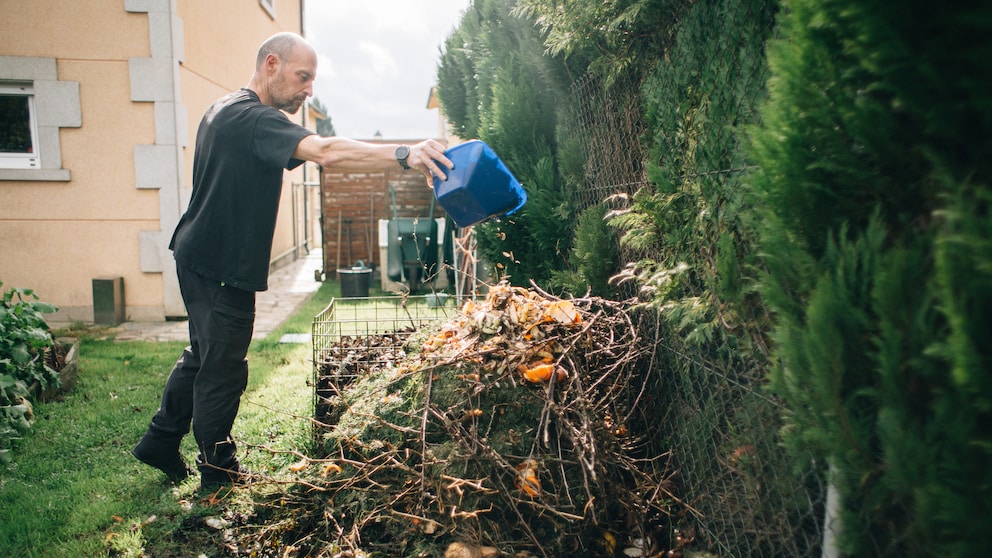
At the end of summer and in the fall, several tasks arise in the garden, including the production of green waste. This can be disposed of in the compost. This is also the right time to sift and turn the compost. How should one proceed?
Mature compost is excellent fertilizer for the garden. And the best part is, it’s free. However, there are a few things to keep in mind if you want to compost correctly. Among other things, regularly turning the compost is important.
Turn and Sift Compost Twice a Year
Occasionally, the layers in the compost need to be turned so that the microorganisms in the mix receive fresh air and decomposition continues. The Agency for Renewable Resources (FNR) recommends turning the pile twice a year—ideally in spring and fall when trees and hedges are pruned, and there is a lot of new green waste to mix in.
When turning, the material already on the compost is passed through a sieve—what comes out at the bottom is ready for the garden. What is still too large goes back into the composter. The coarsest material goes at the very bottom, followed by alternating dry and moist layers with smaller material.
Tip: The more often you turn the pile, the faster the composting process, according to experts.

What You Can Put on the Compost–and What You Can’t

6 Things to Consider for Winter Composting
The Compost Should Be Open at the Bottom
It is important that the compost is open at the bottom. Only then can earthworms and other insects enter and participate in the decomposition process. Therefore, experts advise against using containers that are closed at the bottom or covering the ground with stone slabs. An ideal location is also in partial shade.
Related: Build a Composter in 4 Steps
The Right Mixture
The agency advises shredding larger waste before adding it to the compost pile. Additionally, household and garden waste decomposes best when the different components alternate: A layer of dry tree or hedge clippings is followed by moist plant or kitchen waste. Fresh grass clippings should ideally be mixed with finely chopped branches.
Note: Such mixtures ensure that the compost heats up to around 140 degrees Fahrenheit inside, causing the green waste to decompose and killing harmful organisms.
With material from dpa