


August 29, 2026, 8:46 am | Read time: 4 minutes
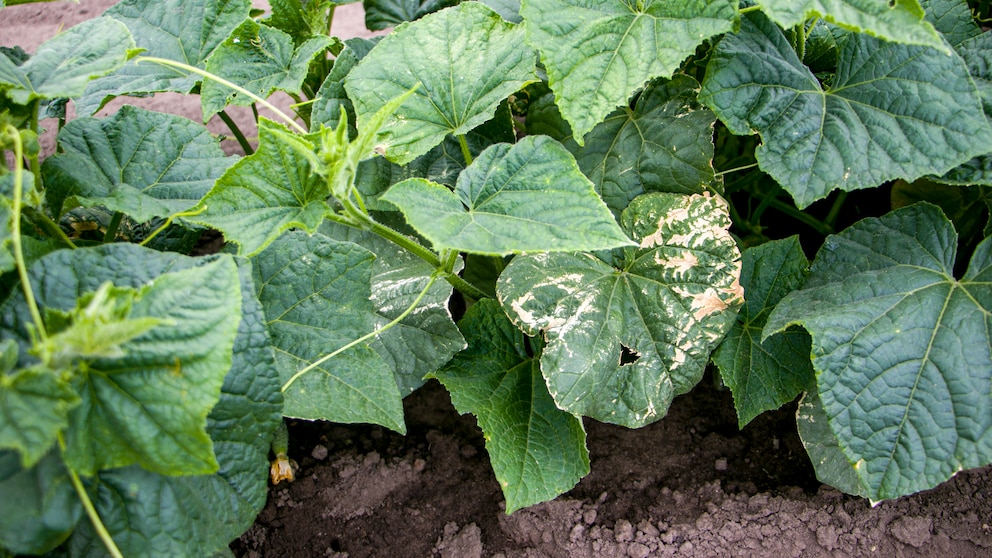
Powdery mildew is one of the most common diseases affecting cucumber plants. The fungal disease often spreads quickly and can significantly impact the harvest. There is a distinction between true and downy mildew. myHOMEBOOK explains how hobby gardeners can identify the disease and effectively combat and prevent mildew.
Distinguishing True and Downy Mildew in Cucumbers
There are many different mildew fungi. However, a general distinction is made between true and downy mildew. Cucumber mildew is among the most common diseases of the plant. The fungi can be easily distinguished based on the damage pattern.
True Mildew
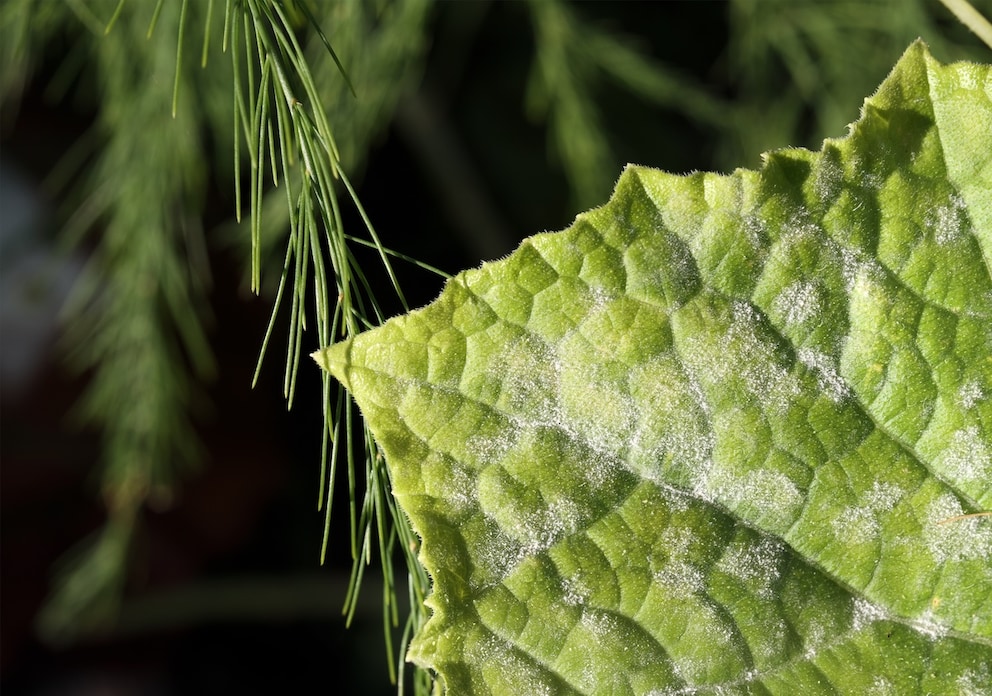
True mildew is often referred to as a “fair-weather fungus.” The reason: The responsible fungi, including “Sphaerotheca fuliginea” and “Erysiphe cichoracearum,” appear particularly in sunny and dry weather. Therefore, cucumber plants grown in greenhouses are often affected. Ideal conditions for the fungal spores prevail there, which are spread by the wind with changing humidity.
An infection with true mildew on cucumbers is easily recognized by the white, powdery fungal network on the upper side of the leaf. The fruits usually show no signs of disease.
Downy Mildew
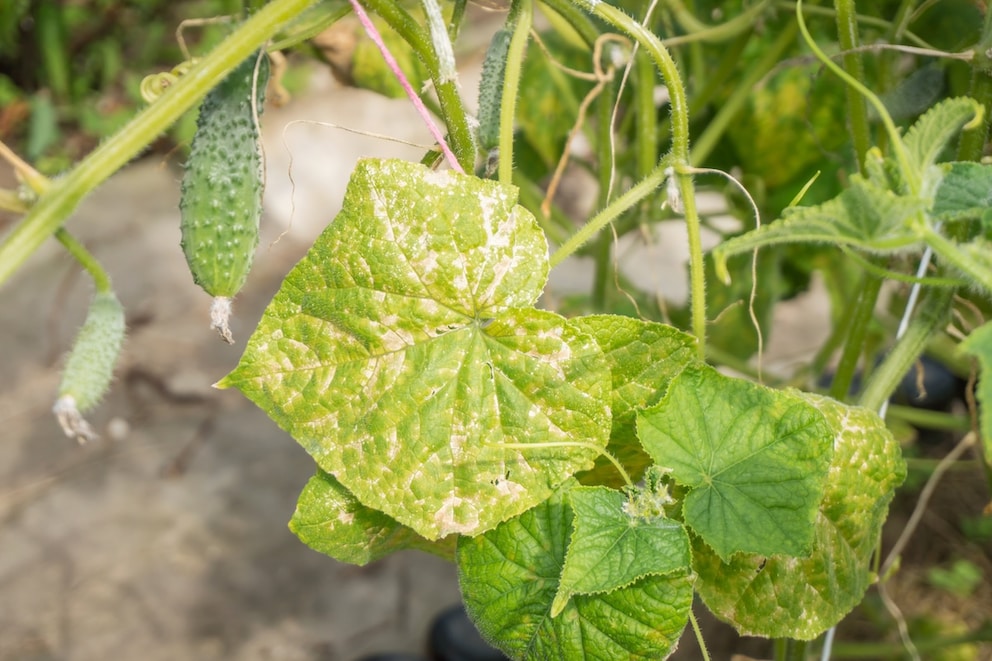
Unlike true mildew, downy mildew thrives in moist conditions. Downy mildew is caused by oomycetes and occurs in both greenhouse and outdoor cucumbers. An infection is identified by yellow, angular spots on the leaf surface. Additionally, a gray, fluffy fungal lawn is found on the underside of the leaf. Downy mildew can sometimes affect not only the foliage but also the stems and flowers.
The damage caused by downy mildew can be considerable. The spores spread quickly and can lead to the entire plant dying.
Also interesting: 4 Common Mistakes When Fertilizing Cucumbers
What Can Be Done Against Mildew in Cucumbers?
Mildew is one of the most widespread plant diseases. If signs of true or downy mildew are discovered on your cucumbers in the garden, quick action is required. The spores can spread rapidly and infect other plants in the bed.
If only a few leaves are affected by true mildew, you can cut off the affected leaves and dispose of them in the household waste. Plant parts infected with mildew should never end up in the compost, as the spores can continue to spread there. In case of severe infestation, hobby gardeners should use fungicides—this applies to both true and downy mildew in cucumbers. To further strengthen the plants, they can be sprayed with horsetail broth or a milk-water mixture.
Garden owners should keep in mind that the fungus can overwinter in the soil or on fallen plant parts. Therefore, thorough treatment is important, as is regular monitoring of garden plants the following year.

6 Common Cucumber Diseases to Recognize, Prevent, and Treat

What to Do When Roses Are Affected by Mildew
Preventing Mildew in Cucumbers
To avoid plant diseases of any kind, the right location and good care are essential. Cucumbers should be placed in a sunny, warm, and sheltered spot. Adequate planting distance should be maintained. Mildew spreads quickly, especially when plants are close together. Air should circulate well so that rainwater can dry. Speaking of water: When watering, make sure to water cucumber plants at the roots. Do not water over the leaves, as this promotes infection with the fungal disease.
Choosing resistant varieties also helps prevent mildew. Seed packets usually indicate good resistance to certain diseases.
Tip: Mildew is particularly common in plants from the gourd family, which includes cucumbers. Pumpkins, zucchinis, and melons should therefore not be planted close to each other to avoid infection chains.
Can You Eat Cucumbers Despite Mildew?
An infection with mildew can cause cucumber plants to die. However, if the infection is detected in time, the fruits can usually still be consumed—as noted by the Federal Environment Agency. It is important that the cucumbers are thoroughly cleaned beforehand.