


June 29, 2025, 4:48 am | Read time: 4 minutes
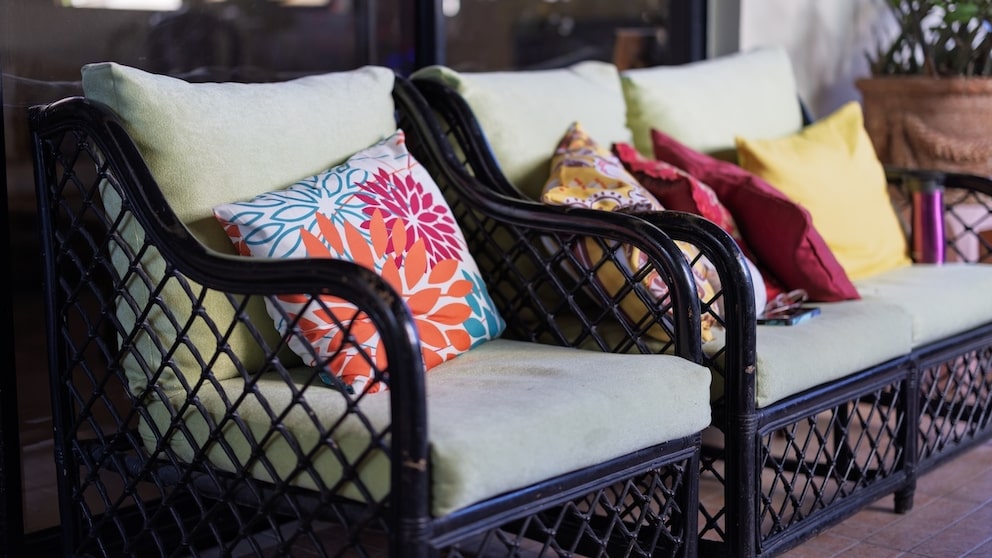
Summer, sun, sitting outside. If only it weren’t for the pesky mildew stains that appear every year on the cushions for garden chairs or porch swings. That’s why myHOMEBOOK asked for advice on how to remove these unsightly marks—or prevent them from forming in the first place.
After the end of the summer season, it’s time to pack everything up, store garden chairs and benches, and put the cushions in a box for the winter. Often, poorly insulated garden sheds or damp storage rooms serve as shelters. Unfortunately, these are also prime conditions for stains and even mold. But how do you get rid of mildew stains on the cushions and covers of garden furniture?
Properly Storing Garden Furniture Cushions
Fabrics like cotton or linen don’t like large temperature fluctuations or moisture. Mold, on the other hand, thrives in such conditions. Cool moisture, in particular, provides the basis for mildew stains. Wrapping the cushions in plastic doesn’t help either, as condensation can form inside, leading to stains.
“Fabric cushions should always be stored in a dry place with a consistent temperature,” advises Elke Messerschmidt from the Competence Center for Home Economics in Weidenbach, Bavaria, when asked by myHOMEBOOK. “This could be a well-insulated attic or a brick basement.”
Can You Remove the Stains with Home Remedies?
As with all cleaning problems, there are numerous natural solutions online. Lemon juice, baking soda, and alcohol are at the top of the list of natural helpers.
The home economics expert is not a fan of these tips: “On one hand, I find it strange to use food items to clean objects. On the other hand, while natural helpers clean the surface, they don’t have good deep-cleaning effects when it comes to completely killing germs.”
For allergy sufferers, removing mildew stains with natural helpers could be burdensome in the long run. The stain may be gone, but the cause, the mold, remains in the fabric and continues to grow over time.
“If there are only a few small stains, treating the cushion with citric acid is sufficient. Dissolve one to two tablespoons of citric acid in a liter of water. Apply the solution to the mildew stains with a cloth, let it sit, and then rinse thoroughly,” recommends Elke Messerschmidt.
Related: What You Can Clean with Citric Acid–and What Not
Removing Mildew Stains on Garden Furniture with Special Cleaners
For large mildew stains, the home economics expert recommends special cleaners. “There are special stain removers available in stores. Be sure to pay attention to the specific application area to avoid damaging the material.” If used incorrectly, these chemical cleaners can remove not only the mildew stains but also the fabric itself.
Otherwise, bleach is also sufficient to remove the pesky mildew stains. “However, bleach should only be used on light or white covers. With colored fabrics, the color could fade over time.” Here, the right dosage works wonders.
Also interesting: What to Consider When Buying Garden Furniture

Salt as a Toilet Cleaner? Expert Explains the Cleaning Trick
Tips for Removing Fresh and Dried Coffee Stains
Pay Attention to the Material
To prevent mildew stains from forming in the first place, you should look for certain features when buying cushions for garden furniture. Especially with larger cushions, such as for benches or swing seats, it’s helpful if the covers can be removed. Then the fabric can be cleaned normally in the washing machine.
There are also cushions made from synthetic fibers or blends. However, such a purchase comes at the expense of seating comfort, especially on hot days. Who doesn’t know the feeling when the cushion feels like it’s fused directly to the body? Additionally, these fabrics are not very sustainable when it comes to later disposal.
Expert’s Tip
The ultimate tip from the home economics expert requires no tools, just a few hours of sunshine. “The simplest solution is actually to lay the cushions out in the sun on the first days of spring. The UV rays act like a bleach.” This way, the mildew stains disappear as if by magic before the summer season.