


May 23, 2023, 2:57 pm | Read time: 5 minutes
Since the COVID-19 pandemic, working from home has become a daily routine for many. Finding space for a small office at home isn’t always easy. That’s why garden offices are increasingly in vogue.
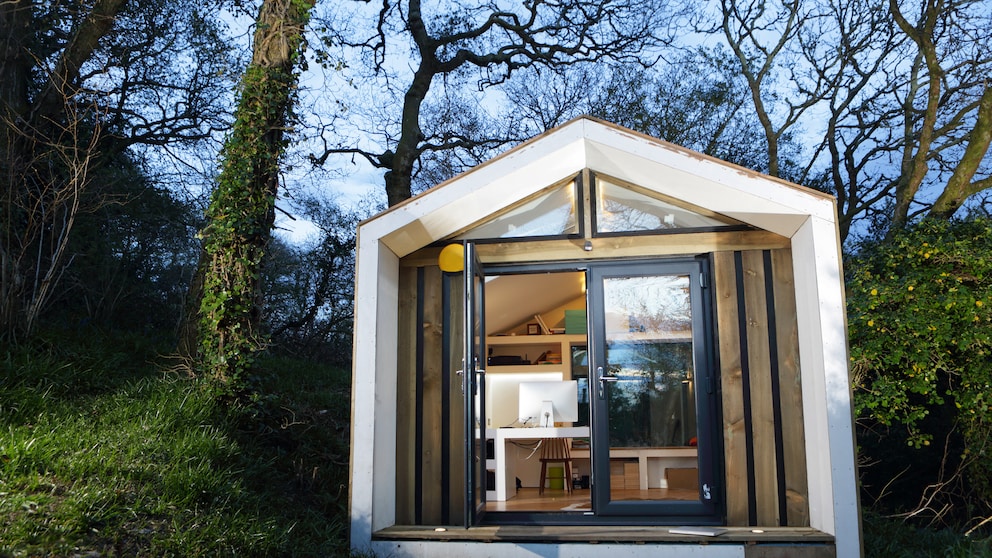
Looking directly into the greenery from your desk–with your own garden office, you can easily make this dream come true. During the pandemic, there was a real hype about it. Many set up their home office in a garden shed. There, you can work undisturbed, stay close to family, and enjoy a pleasant environment. Nowadays, besides regular garden sheds, there are also structures specifically designed as garden offices. Alternatively, a tiny house can be used as a garden office.
What is a Garden Office?
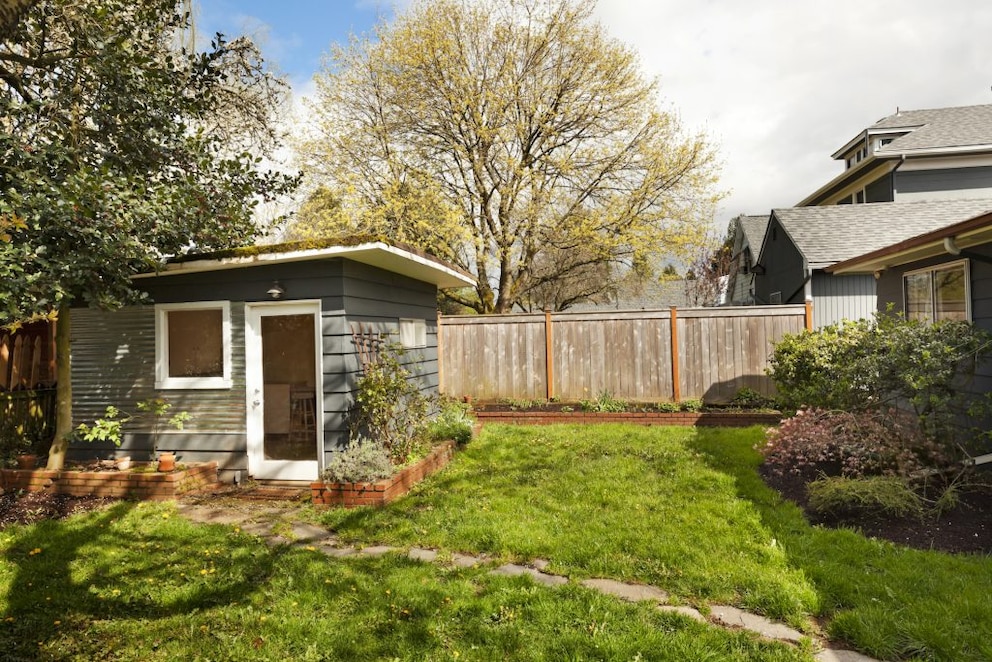
A garden office is typically completely separate from the main house and, as the name suggests, is located in the garden. You can either build a new small house or repurpose an existing garden shed. There are also so-called boxes or cubes that can be set up in the garden. In English, the trend is also called a “shoffice”–a portmanteau of “shed” and “office.” The perfect garden office has everything a regular office has: a desk, chair, phone, computer, and anything else you might need.
Garden Office: Pros and Cons at a Glance
Pros:
- In a garden office, you have peace and can concentrate well and possibly be creative despite working from home.
- Despite the peace, you’re not far from family. You can still have lunch together.
- While working, you can enjoy a beautiful view of the greenery, which might even help you concentrate better.
- The garden office can be tax-deductible under certain conditions. Learn more.
- You save on commuting and don’t rely on a car or public transportation.
Cons
- Setting up a garden office incurs costs. The amount depends on factors like size, equipment, or materials.
- You need a large garden for a garden office, as the structure takes up space depending on its size.
- Before building a garden office, you must check for building regulations. In some states, a building permit is required.
Also interesting: 7 Tips for More Order on Your Home Office Desk
Do You Need a Building Permit?
Before deciding on a garden office, you should definitely contact the local building authority. Whether you need to apply for a building permit varies by state. Several factors determine if a permit is needed, such as the size and height of the structure. Depending on the state, a certain size must not be exceeded to avoid needing a permit. The intended use is also significant. If the structure is only used as a tool shed, a permit is usually not required. However, if it is a habitable structure with a toilet or kitchen, a building application is necessary.
A garden office is considered a living space extension under building law. Therefore, it’s important to consult the building authority. The location is also crucial in determining if a permit is needed. The structure must generally maintain a sufficient distance from the property line. Exceptions exist if the neighbor provides written consent. Lastly, the foundation is another factor. If the garden office is built on a solid foundation, such as concrete, a permit is usually required.
Observe Neighbor Law
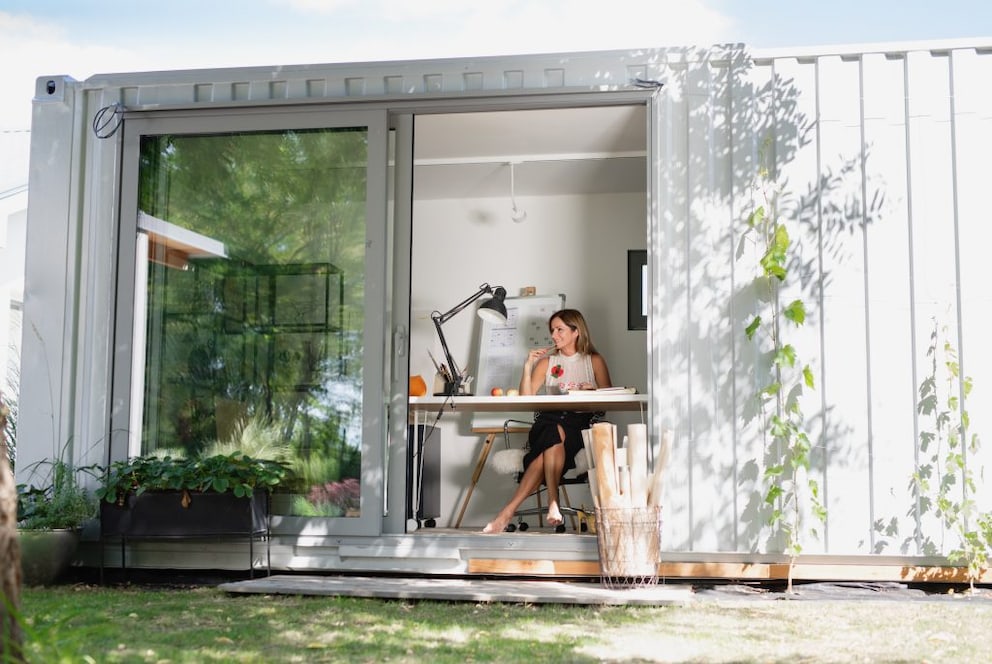
When setting up a garden office, ensure you don’t violate neighbor law. The garden house must maintain a minimum distance of three meters from the property line as stipulated in state building codes. Exceptions apply only to unheated garden houses without living space.
If you don’t have enough space to maintain the minimum distance, you can ask your neighbor for consent, which must be in writing. An exception and exemption application is also possible.

Which Projects Are Possible Without a Building Permit

What Are the Risks of Building a Garden Shed Without a Permit?
What Should You Consider?
A garden office is not just a small house in the garden–it replaces a complete office and must be equipped accordingly. The following are essential:
- Internet and phone connection: Depending on your work, these connections are crucial. You may not need to lay cables. Depending on how close the garden office is to the main house, a repeater might suffice to boost the Wi-Fi signal.
- Electricity: As the garden office serves as the workspace, electricity is necessary for the computer, lighting, or phone. Typically, the easiest way is to lay an underground cable from the main house to the garden office.
- Water connection: Whether you need a water connection depends on if you want a sink or toilet in the garden office. Check with the building authority about permit requirements. Additional sewage fees may apply.
- Insulation and heating: To use the garden office in winter, it should be well-insulated. A wall thickness of at least 40 millimeters is recommended. Double-glazed windows should also be installed. For heating, electric heaters or infrared heaters are suitable. Prepare for summer as well. If possible, choose a shady location. If the sun shines directly into the window, consider an awning or similar.
Utilize Tax Benefits
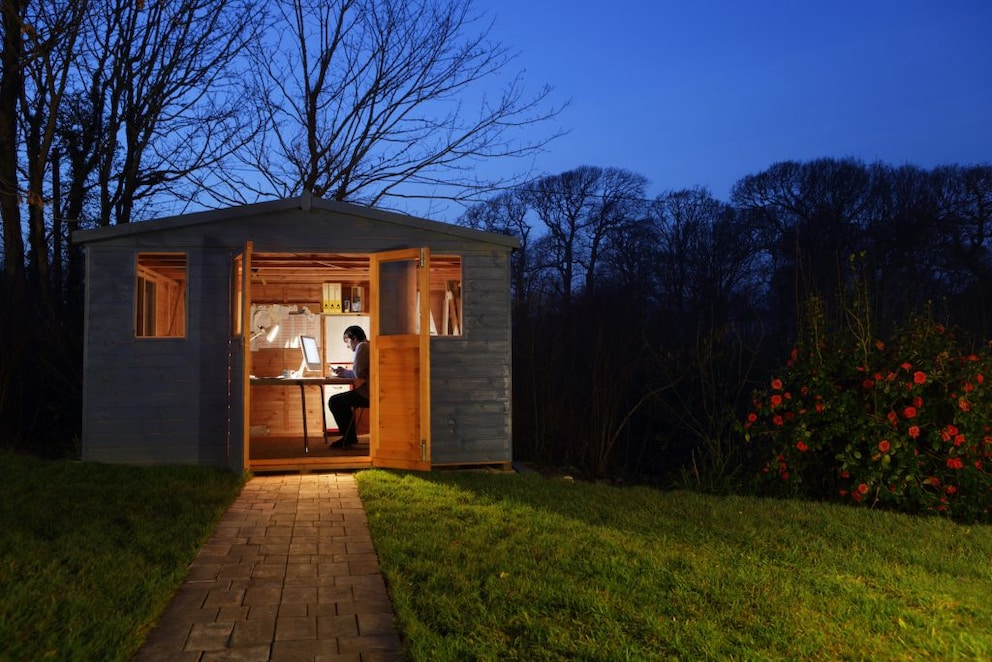
With a garden office, you not only have the opportunity to work in peace while staying close to home, but you can also save on taxes. Costs can be deducted if all conditions are met. This includes using the garden office exclusively as such, without storing garden tools. The office must not be too small and must be usable year-round. All costs can be claimed as business expenses, and the garden office can be depreciated. As it is considered a movable asset, it can only be depreciated over 16 years at 6.5 percent per year.