

May 10, 2023, 10:22 am | Read time: 4 minutes
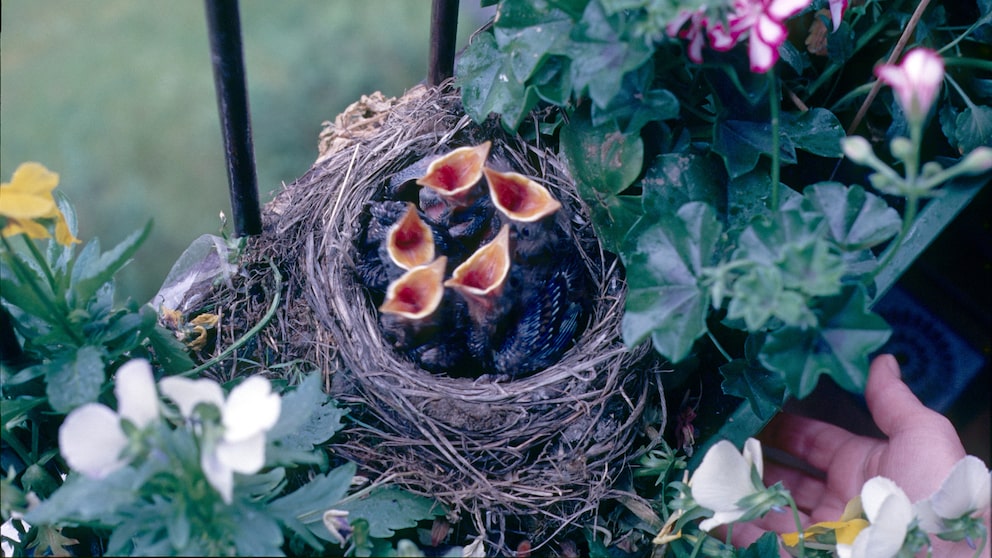
The noise and mess can quickly make you feel disturbed by bird nests and their inhabitants. It becomes particularly critical when birds build their breeding sites on the balcony or house facade. Whether you can simply remove bird nests if you feel disturbed is answered by myHOMEBOOK in this article.
In the garden, birds are useful creatures. They eat spiders, mosquitoes, and wasps, ensuring carefree summer evenings. Additionally, blackbirds, thrushes, finches, and starlings sing cheerful songs. However, many feel disturbed by the singing, especially when the birds nest on the balcony or terrace. Day in and day out, you hear not cheerful melodies but rather the begging of young birds. Added to this are eggshells and bird droppings that dirty the surrounding area. It’s clear: The bird’s nest must go–but can you just remove it?
Overview
Removing a Bird’s Nest–The Legal Situation
According to the Federal Nature Conservation Act, all European bird species are protected. Destroying their nests and clutches or disturbing the parent birds while breeding is prohibited. Without permission, a bird’s nest cannot be removed just like that. Relocating the nest is also not allowed, as the bird would not find it again. Destroying the clutch is also forbidden.
Who Can You Contact?
The responsible authority is usually the lower nature conservation authority of the city or district. You should definitely contact them if a nest is to be removed. This is generally possible if there is a large number of nests on the building or if damage to the building is expected. Also, if there are health concerns due to bird droppings. The procedure varies depending on the federal state.
Also interesting: Harmless and effective! 2 methods to deter pigeons
What Happens if You Remove the Nest Anyway?
If you fail to report, fines may be imposed. In Bavaria, for example, a fine of 75 euros is due for each sparrow’s nest removed. Bird nests containing eggs or already young birds must not be removed or destroyed.
Attention: According to the Federal Nature Conservation Act, it is also forbidden to cut a hedge from March 1 to September 30, as you might disturb nesting birds during this time.

Preventive Measures Against Bird Nests
If bird nests are not desired in certain areas of the house and garden, it is advisable to simply prevent nest building early on. When the first birds start building nests in late winter, you can observe where they want to build their nest. If this is an unsuitable place, you can still proactively deter the birds. The following measures are suitable:
- Hang wind chimes
- Electric bird deterrents
- Do not leave food scraps nearby
- Let a dog or cat into the garden
- Spread dog or cat hair
- Bird decoys of larger birds (sparrows, for example, avoid crows)
- Seal suitable entry holes on the house
Birds get used to plastic crows or the smell of cats and dogs after a while. Therefore, pennants, garlands, or ribbons that move in the wind are particularly suitable for deterring birds.

How to Prevent a Pigeon Nest on Your Balcony
Possible Reasons Birds Might Avoid a Bird Feeder
Offering Alternatives for Nest Building
The most elegant option is to offer nesting aids to the birds. Nest boxes on trees are gladly used. But tall trees and hedges in suitable places in the garden or stone walls are also ideal nesting sites.
There are also special nesting aids for swallows and swifts. Here you provide the appropriate foundation, and the birds build their mud nests on it themselves. Observing nest building and brood care up close is an experience for the whole family. You can find beautiful ideas for nesting aids, for example, at BUND or at Wildvogelhilfe.
Which Bird Nests Are Common?
According to Dagmar Offermann from Wildvogelhilfe, blackbirds, starlings, tits, corvids, and sparrows are most commonly observed building nests in the garden. They like to build their nests from small branches, stalks, and various other materials in hedges, trees, or even balcony boxes. The lapwing is among the rare ground-nesters. Swallows and swifts, on the other hand, prefer to construct their mud nests high up on facades or under the roof.