


November 15, 2023, 1:54 pm | Read time: 5 minutes
In summer, local bird species help reduce the number of pesky insects in the garden. In winter, you can help the birds by providing a feeding station. To ensure sparrows, robins, or tits visit the feeding area, there are a few things to keep in mind.
In fall, many bird species fly south, where it’s warm and they find enough food. Besides migratory birds, there are also resident birds. These species don’t migrate but stay in Germany during fall and winter. They are less affected by the cold and are satisfied with local seeds and berries. To support the birds, you can set up a feeding station in the garden or on the balcony during winter. A clear advantage: Not only do the birds benefit from the birdhouse, but you can also observe them closely thanks to the fixed feeding spot.
Overview
The Ideal Bird Feeder
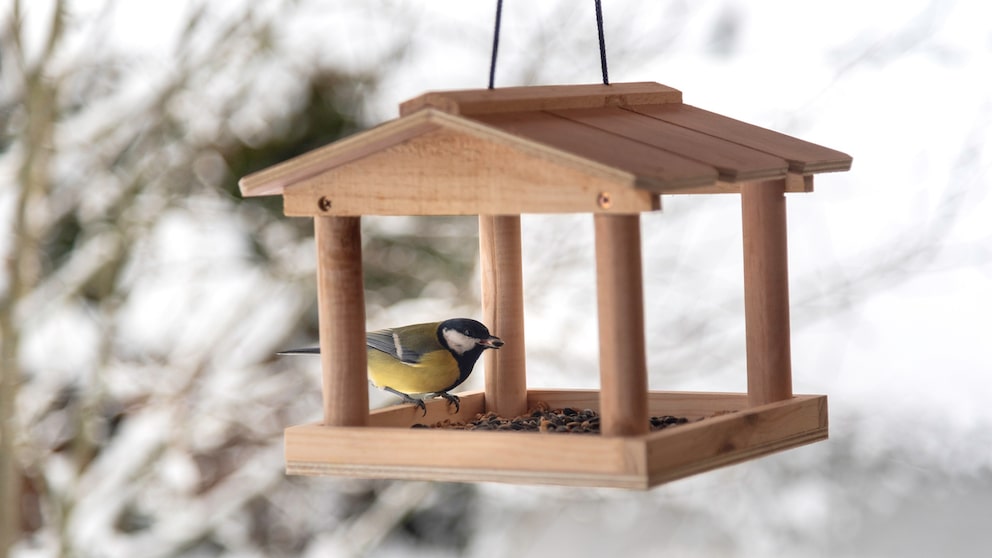
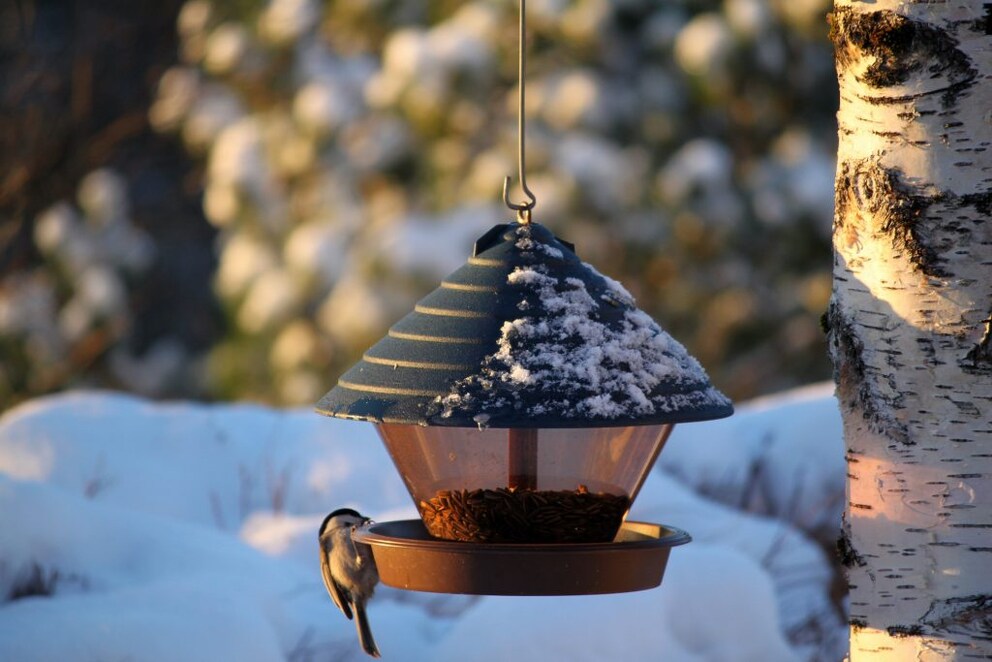
It’s important that the feeder is dry and, above all, clean. It should be cleaned regularly. Feeders where birds can’t sit directly in the food and contaminate it are best. This is the case with dispensers that only allow as much food within reach as the bird will actually eat. Feed columns or silos follow this principle, and you can observe the birds up close.
To avoid competition among birds, the feeder should also be large enough–and the roof must overhang to keep the feeding area dry during rain or snow.
Additionally, feeding shouldn’t stop abruptly at the end of winter. It’s better to gradually reduce the amount of food so the birds can adjust.
Related: DIY Bird Food Dispenser from an Old Milk Carton
Birds Don’t Accept the Feeder–Why?
The feeder is hanging, filled with bird treats–and yet the birds stay away. This can have various causes.
- Birds are quite picky about food. Therefore, it’s advisable to simply change the food.
- Additionally, regularly check if the food smells rancid or has mold. Birds don’t like spoiled food either.
- Another reason could be competition. Perhaps other neighbors have also set up a feeder. If it’s more accessible to the birds, they’ll choose that one.
- Is the feeding area empty when it’s particularly cold? This might be because birds are conserving more energy and only visit the nearest feeding spot instead of flying around.
- Lastly, a hostile attack, successful or not, could be the reason for the birds staying away. If cats or birds of prey have tried to attack the birds at the feeder, consider relocating or rehanging the feeder.
Where to Best Place the Feeder?
Even if you want to observe birds up close at the feeder, it shouldn’t be placed directly in front of a window. Otherwise, there’s a risk of birds flying into the glass. Additionally, birdhouses must be positioned so they’re out of reach for cats and martens.
It’s also helpful if there are bushes or shrubs near the feeder. They offer protection from birds of prey. Many birds prefer to observe the surroundings from a safe distance before flying to the feeder. Not a necessity, but still an advantage: To protect birds from snow and other precipitation in winter, place the feeder in a sheltered spot. This way, the food stays dry.
Fewer Birds in the Garden? Here’s Why
Build a Birdhouse in a Few Easy Steps
What Goes Into the Bird Feeder?
All seasoned and salted foods are generally unsuitable for bird feeders. Bread is also not recommended because it swells in the birds’ stomachs, explains the Nature Conservation Union Germany (NABU).
Birds are divided into two groups: soft food eaters and seed eaters. The latter include finches, sparrows, and buntings. According to NABU, they have strong beaks and eat sunflower seeds, hemp, and other seeds from feed mixes.
Soft food eaters prefer animal food or very fine seeds. These include robins, dunnocks, wrens, blackbirds, and starlings. For them, oatmeal, poppy seeds, bran, raisins, and fruit or the mixed feed available in pet stores are ideal. There are also more flexible soft eaters, the omnivores. These are tits, woodpeckers, and nuthatches–they switch to seeds in winter and also accept sunflower seeds, hemp, and poppy seeds.
Related: Which Food is Suitable for Birds in Winter–and Which Isn’t
Important: When buying a ready-made feed mix, make sure it’s free of ragweed seeds. The plant’s pollen can cause severe allergies. The seeds could be spread with the bird feed.
Build Your Own Bird Feeder
You can easily build a bird feeder yourself. Here’s what you need:
- Bird food
- Sticks
- Cordless screwdriver
- Drill
- Saw
- Screws
- Pencil
- Measuring tool
Here’s how to proceed:
Before starting to build the feeder, cut the sticks to the appropriate size. This way, you won’t be held up during other steps. Here’s how:
- First, build two frames for the feeder’s basic structure. You’ll need a total of eight sticks.
- Pre-drill and then screw everything together, placing more sticks side by side as a kind of floor on the lower level.
- Next, select shorter sticks for the four corner posts. Screw these to the frames. The basic structure is now complete.
- Then, it’s time for the roof. You’ll need five sticks. Screw two together for the gables and place a brace between them. Then attach the roof to the basic structure.
- Finally, screw many sticks at a 90-degree angle and place them on the roof brace, then secure them.
There’s no limit to imagination and creativity in the appearance of the feeder. The important thing is that the food inside stays dry and the birds have enough space.