


August 1, 2025, 11:04 am | Read time: 4 minutes
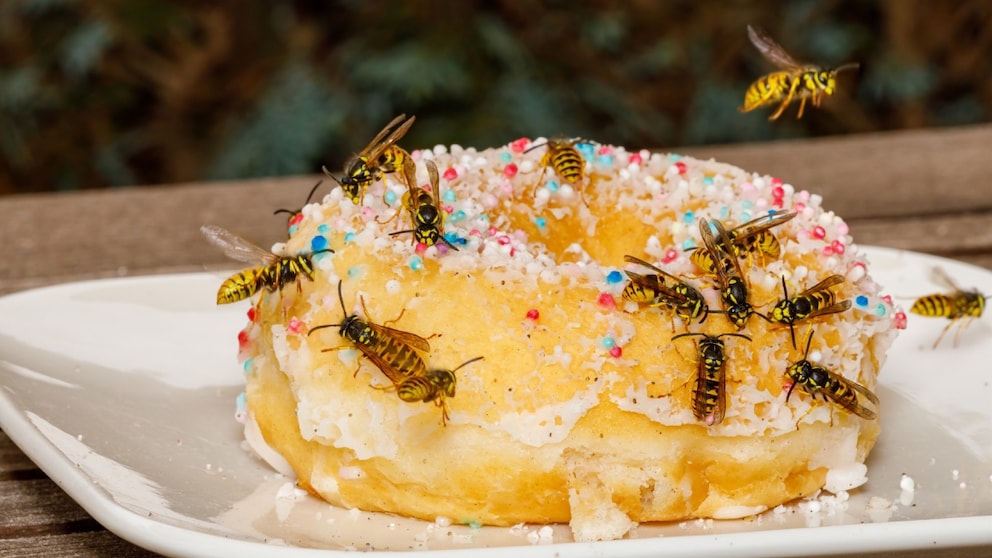
Summer is outdoor time—if it weren’t for the wasps that quickly swoop down on cake, sausage, and other treats. But if you stay calm and know a few simple tricks, you can successfully outsmart these uninvited guests. Here’s how to effectively keep these pests at bay.
Staying Calm Is Key
Whether grilling or having coffee in the garden, as soon as food is involved, wasps are usually not far away. Panicked waving or frantic swatting only makes the situation worse. “It’s important to stay calm,” explains Laura Breitkreuz from the Nature and Biodiversity Conservation Union (Nabu) in Germany. Hectic movements only encourage the insects to retaliate. Blowing on them should also be avoided.
Instead, she recommends gently pushing wasps away from food with your hand or a piece of paper. Covering food outdoors and ensuring children’s hands and mouths are clean minimizes the attraction for the insects. Another tip: Wasps can be easily sprayed with a little water from a bottle—this mimics rain and often prompts them to retreat.
Related: The Benefits of Wasps
How to Keep Wasps Away Effectively
If the insects are particularly persistent, even these measures may only help to a limited extent. In such cases, it is advisable to deliberately distract them. By strategically placing alternatives away from your table, you can effectively keep them at bay.
“If there are really a lot of wasps, even these measures can be challenging,” says Breitkreuz. At a coffee table, sweet offerings like an apple juice-sugar mixture, jam, or overripe fruit work well.
When grilling, you can lure wasps away from your plate with a small piece of grilled sausage. “Wasps are particularly interested in proteins in midsummer because they feed their larvae with them,” she explains.
How to Effectively Prevent a Wasp Nest

Hornet in the House? Here’s How to Handle It Properly
Deter Instead of Combat
Wasps can be a nuisance not only when eating but also when sitting comfortably in the garden or near open windows. With a few tricks, you can keep the insects at a distance—without using force.
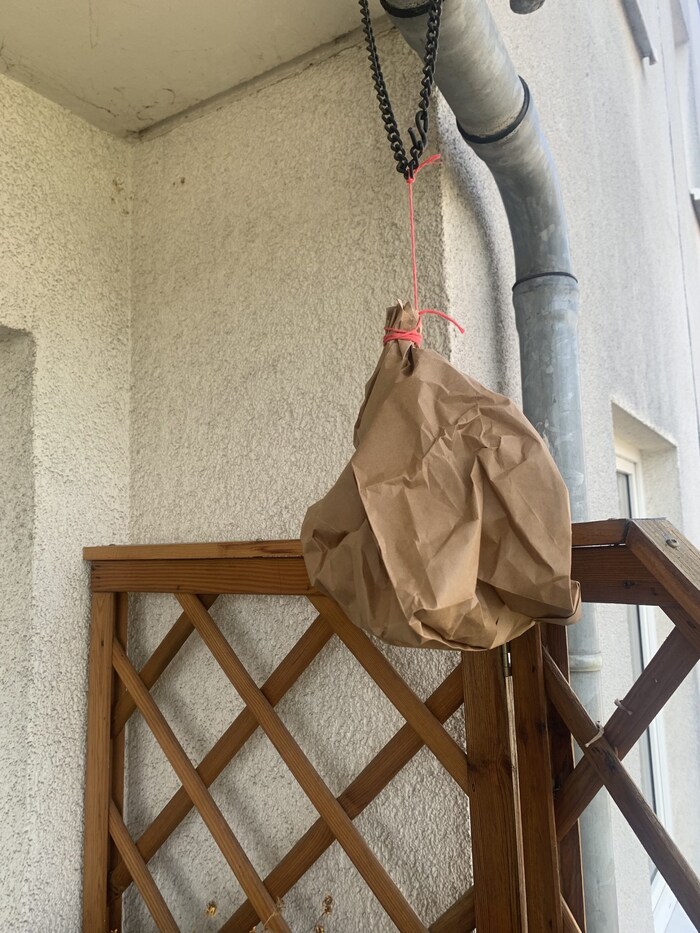
A nest decoy is often recommended as a trick against wasps. “If a supposed wasp nest is already hanging in the garden, it can keep the insects away,” says Breitkreuz. Such decoys can be purchased or easily made yourself—for example, from brown packing paper shaped like a nest.
However, another expert is critical of this trick: “Unfortunately, that’s absolute nonsense—no wasp mistakes it for a wasp nest, nor would it deter them from visiting,” says Melanie von Orlow from the NABU Berlin State Association in response to a myHOMEBOOK inquiry. Wasps can smell the nests, and it’s also not true that they dislike being around competition.
Additionally, certain smells can deter wasps: “Wasps are not fans of strong odors,” says Breitkreuz. Anti-mosquito candles or incense sticks can help keep them away.
To prevent wasps from entering the house, she advises using insect screens on windows. If a wasp does get inside, a glass and a piece of paper can be used to gently escort it outside. “You should never kill a wasp,” emphasizes Breitkreuz. All wasp species are protected by conservation laws in Germany.
Natural Help: Hornets as Wasp Hunters
An unexpected ally in the fight against wasps in the garden is actually a larger insect: the hornet. “Hornets may be larger and look scarier, but they are not more dangerous. Their stings just hurt a bit more,” says Laura Breitkreuz.
The advantage: Hornets are not interested in human food—but they do prey on wasps, which are part of their diet. Additionally, they are less aggressive than the two common wasp species that often bother us at the table: the common wasp and the German wasp.
With material from dpa