


May 6, 2026, 12:46 pm | Read time: 4 minutes
Wasps are likely among the most bothersome visitors on balconies, terraces, or in gardens. In some cases, they may even settle down and start building nests in the spring. How can you prevent this activity early on?
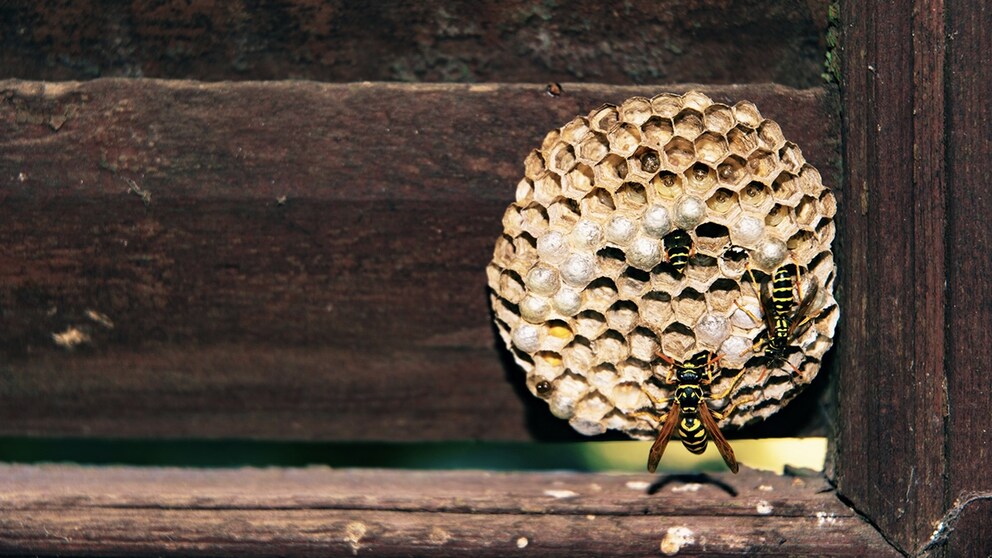
Although wasps are not welcome, they are actually protected by nature conservation laws. Once they have built their nest, you cannot simply remove it or use chemicals against them. Especially in spring, the first wasps become noticeable as they search for suitable locations for nest building. Shutter boxes, windows, balcony doors, and other entry points are particularly prone to this. How can you prevent a wasp nest in time? And what to do if nest building has already begun?
Wasps Search for Suitable Nest-building Sites in Spring
If you spot a single wasp buzzing around the window in spring, it is usually a royal visitor—a queen. They are the only wasps that survive the winter and then search for a suitable place to establish a new colony. This colony will only last for one season, as most wasps die afterward. The nest is then abandoned and not reoccupied the following year.
Stop Wasps From Building Nests—before They Start
As soon as spring begins, wasps start looking for a sheltered place to build their nests. Dark, hard-to-see spots—such as shutter boxes—are particularly popular. Therefore, it is important to check all potential entry points in the house early in the year and seal them if necessary.
A simple yet effective protection: install a brush seal on the shutter slot. This prevents wasps from entering the narrow gap while allowing the shutter to glide smoothly.
How to Keep Shutter Boxes and Windows Wasp-Free
Additional measures can also prevent wasps from getting close to the house:
- Install fly screens: Especially windows in the kitchen, bathroom, and children’s rooms should be equipped with a fly screen. If an insect does get inside, a glass and a piece of paper can help safely escort it outside.
- Essential oils as natural repellents: Wasps avoid certain scents. Wooden cladding and shutter boxes can be rubbed with lavender, clove, or basil oil—a simple method to make nest building unattractive.
- Cover trash cans and compost: What wasps can’t smell won’t attract them. Covered trash cans and compost heaps prevent the insects from finding a food source there.
Tips to Get Rid of Mosquitoes in Your Home
How to Attract Bumblebees to Your Garden or Balcony
Can You Remove a Wasp Nest Yourself?
A wasp nest is not always a problem. Wasps play important ecological roles: They control pests, pollinate plants, and serve as food for birds. Additionally, all wasps are protected by nature conservation laws. This means wild animals cannot be deliberately captured, injured, or killed. Their nests cannot be destroyed either. Certain species, such as hornets, enjoy special protection status.
In most cases, the problem resolves itself over time: Nests are used for only one season and are abandoned by mid-October at the latest. Reoccupation generally does not occur.
If you still want to have a nest removed, you should not attempt it yourself. Instead, contact a professional pest control or building cleaning service. In some cases, you can also reach out to the local fire department.
What to Do if Nest Building Has Already Started?
If a nest is already being built, a simple yet gentle trick is often recommended. It is suggested to hang a crumpled brown paper bag, wrapped with packing tape, near the real nest to deceive the wasps. The hope is that the wasps will move on, thinking the area is already occupied.
But does this trick really work? “Unfortunately, that is absolute nonsense,” explains Dr. Melanie von Orlow from the NABU Berlin State Association. “No wasp would mistake it for a wasp nest, nor would it deter them from visiting,” the expert explains upon myHOMEBOOK’s inquiry. Wasps can smell the nests, and they wouldn’t mind being surrounded by competition. Therefore, this trick is not recommended.
It is better to rely on the following proven methods to prevent a wasp nest early on:
- Inspect in spring (March–May): Remove small nest beginnings immediately before nest building progresses.
- Block access points: Seal cracks and install fly screens.
- Use repelling scents: Spray scents of garlic, lemons, cloves, tea tree oil, or vinegar to deter the insects.
- Plants against wasps: Certain plants emit scents that can also drive away wasps.
- Keep areas lively: Wasps generally avoid frequently used places.