



March 14, 2024, 11:48 am | Read time: 5 minutes
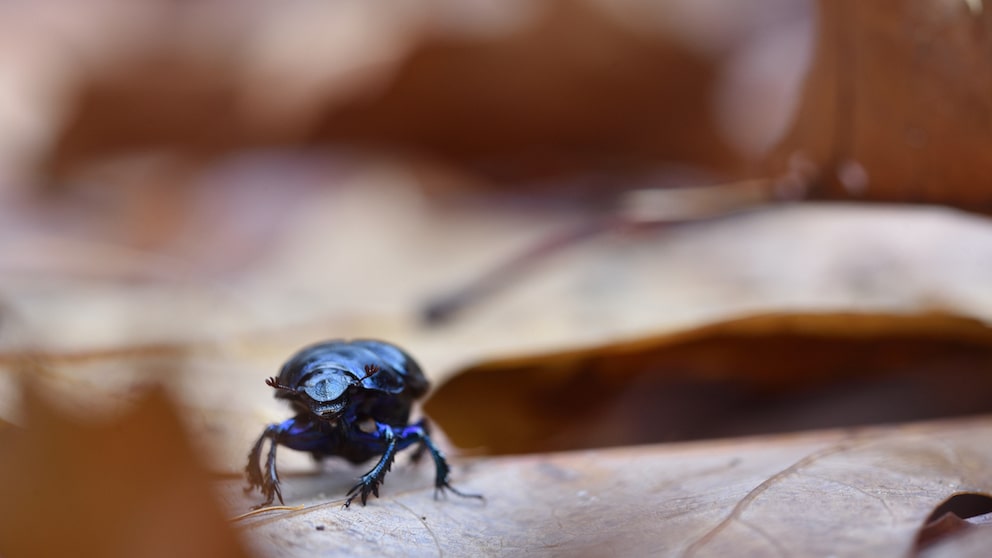
In spring, nature awakens: You can see the first leaves and blossoms on the shrubs, and insects and arachnids bustle in the undergrowth. Among them is the oil beetle. A very special beetle, as it is the only one in Germany that is poisonous.
When thinking of poisonous animals, most people first think of snakes or perhaps jellyfish. A small, blue beetle is probably less likely to come to mind. The fact that this particular beetle is found in Germany may surprise many even more. We are talking about the oil beetle, also known as the May bug. However, there is no need to panic about the beetle, explains the Nature Conservation Association (Nabu) to myHOMEBOOK.
Why the Oil Beetle Is Not Dangerous
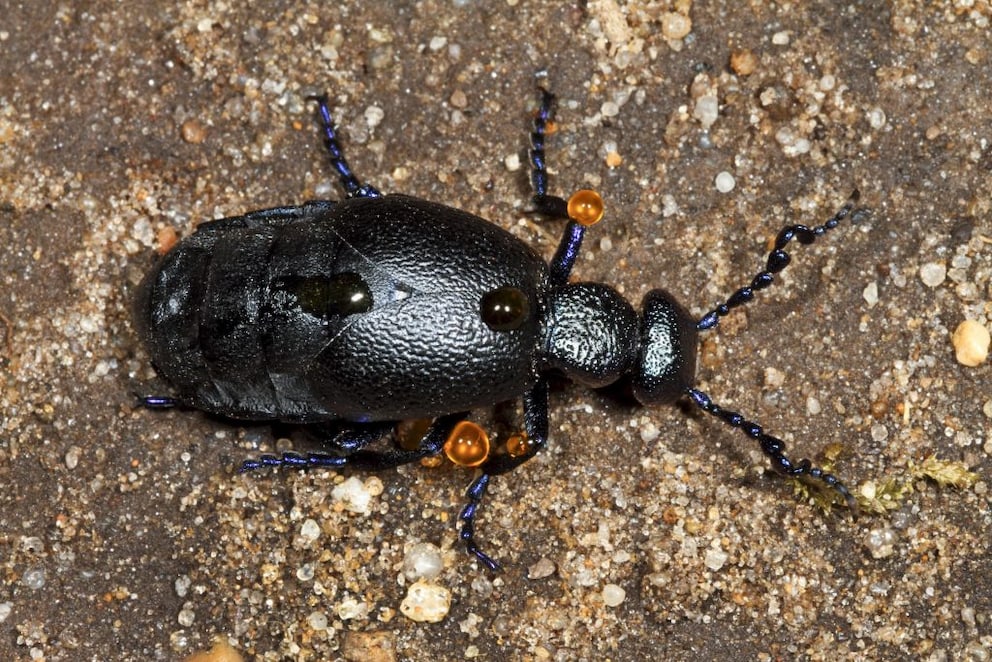
Oil beetles owe their name to the fact that they secrete a poisonous, oily substance when threatened by predators. It protects them from ants or ground beetles, for example. The secretion is yellowish and oozes from the joints of the oil beetles’ legs. It contains the main active ingredient cantharidin. Upon skin contact, the poison can cause redness and blisters. If the secretion gets into the eyes, it causes pain and swelling.
Swallowing an oil beetle can lead to gastrointestinal issues, kidney damage, and even kidney failure, according to the Erfurt Poison Information Center. Blood clotting disorders, circulatory problems, and in the worst case, cardiovascular failure, are also possible.
Nevertheless, the Nature Conservation Association gives the all-clear. “The oil beetle is not dangerous, but it is indeed poisonous,” Nabu explains to myHOMEBOOK. “If you leave it alone, nothing can happen. (…) The poison is deadly if you were to eat a beetle. But who would want to do that?”
Media Attention on Oil Beetle Unwarranted
From the perspective of the Nature Conservation Association, the public exaggerates the oil beetle issue: “The media attention and panic about the oil beetle last year was completely overblown,” emphasizes Dr. Laura Breitkreuz, biodiversity and entomology officer at Nabu. The beetle is poisonous, yes, but simple contact does not cause any harm. No fatal incidents have been reported so far.
She advises explaining to children that they should not put insects in their mouths. “You can avoid areas where oil beetles have been sighted for a few weeks as a precaution,” says Breitkreuz. The oil beetle season is very short.
Black-Blue Oil Beetle Classified as Endangered
Additionally, Nabu reminds us that the oil beetle is native to Central Europe and has always lived here. “It is neither new nor spreading rapidly, as is often claimed. On the contrary–it is endangered and listed on the Red List,” explains Nabu’s federal managing director Leif Miller.
In 2023, the oil beetle was found particularly often. Breitkreuz notes that this has little to do with a recovery of the population. “The media attention was there, and therefore more people recognized it.” However, experts did not see it more frequently than usual.
According to the expert, it is difficult to predict how the population will develop. Interestingly, oil beetles are linked in their development to certain wild bee species. “Since these are not doing well in Germany, it is not expected that the oil beetle population will suddenly explode,” says Breitkreuz. She adds, “Some insects benefit from climate crises, so it is possible that they [oil beetles and wild bees, ed. note] will get a boost from the warmer weather.” However, this is not certain, as the animals find little natural habitat.

How to Attract Bumblebees to Your Garden or Balcony
How to Distinguish “Good” Grubs from “Bad” Grubs
What Oil Beetles Look Like
Oil beetles are monochromatic and have a metallic blue-black sheen. Their stocky body shape, which resembles a worm, is striking, which is why they are also called May bugs. The beetles cannot fly and move rather sluggishly. Notable are their relatively small elytra compared to the rest of the body–they cover only a small part of the abdomen. Typically, the animals grow to about one to five centimeters in size.
According to Nabu, females carry several thousand eggs in their abdomen–an overproduction necessary for oil beetles. Only a few larvae can develop into adult beetles. Experts estimate that only one in a thousand larvae becomes an oil beetle.
Initially, the eggs remain in the soil for almost a year. Only then do the larvae hatch, clinging to flowers or stalks. There, they wait to latch onto an insect. However, the larvae can only develop further if they catch a wild bee, their host animal. This way, they enter the wild bee’s nest, consuming the eggs and pollen provisions. If the larvae latch onto another insect, they die.
Also interesting: Silverfish also come into the bed–here’s how to get rid of them
What to Do if You Encounter an Oil Beetle
If you encounter an oil beetle, there is no need to panic. The secretion they release can be dangerous–but if you keep your distance, oil beetles are harmless. It is important to leave the beetles alone and observe them only from a safe distance. If you see an oil beetle in the garden, do not touch it to avoid contact with the secretion. If you swallow an oil beetle, it is best to call the poison control center!
Another reason to leave oil beetles alone: All species are under special protection. This means you are not allowed to remove them from nature, harm them, or kill them.