


August 21, 2025, 5:43 am | Read time: 3 minutes
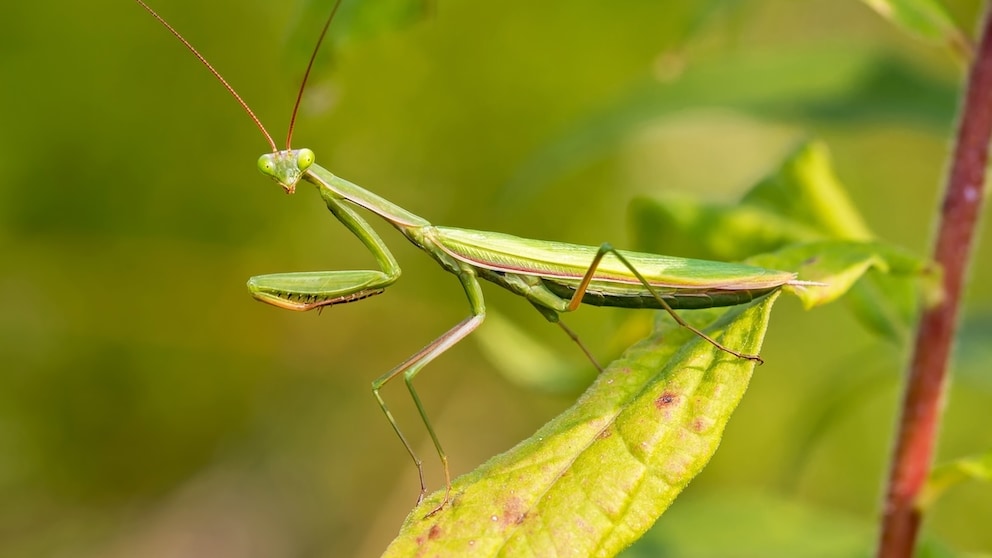
Once an exotic insect, the European mantis has long since become native to Germany. With a bit of luck, you might even spot one in your own garden. myHOMEBOOK explains how often they appear here, what to watch out for when encountering one, and whether they can cause damage in your garden.
Follow myHOMEBOOK on WhatsApp now
Distribution in Germany
The European mantis (Mantis religiosa) was originally found mainly in the Mediterranean region. However, in recent decades, it has spread further north. This is due to both climate change with rising temperatures and the adaptability of the species. Today, they are found not only in Bavaria or Rhineland-Palatinate but increasingly in other federal states. Particularly warm, dry, and open habitats such as vineyards, meadows, slopes, or natural gardens offer ideal conditions for them.
Recently, there have been sightings in the Rhein-Erft district. Reports of sightings are requested to document the spread of the species. Various platforms are available for this, including NABU.
Encountering the Mantis
If you spot a mantis, you should appreciate the rare sight, as these creatures are harmless to humans. They can snap quickly, but it doesn’t hurt. Moreover, they do not have a venomous sting, so there is no danger from them. However, careful handling is advisable, as they are listed as “vulnerable” on the Red List of Orthoptera and are protected under the Federal Nature Conservation Act (BNatSchG) and the Federal Species Protection Ordinance (BArtSchV). This means they must not be captured, injured, or killed.
If you discover a mantis, you should not harass or touch it, as they are sensitive. Photos or observations from a distance are the best way to admire these special creatures.
Protected snail species: Which snails should be left alone in the garden

Why the Water Shrew Is More Dangerous Than It Looks
Significance for Your Own Garden
Garden owners might wonder if the mantis could cause damage. The answer is clear: no. On the contrary, it is a natural pest controller. Its diet mainly includes insects such as flies, grasshoppers, and wasps. It also preys on aphids, helping to keep plants healthy and strong.
Gardeners can rest easy, as it poses no threat to plants, feeding exclusively on animal prey. Its presence in the garden is a sign of a healthy, ecologically diverse environment and is no cause for concern. The mantis particularly enjoys sunny areas with shrubs, bushes, and flowering plants.
Facts About the European Mantis
- Females can grow up to 80 mm long, while males are significantly smaller at up to 60 mm.
- Their basic coloration ranges from green to brown.
- Strong front legs adapted into grasping arms
- A protected species, endangered in Germany