


May 28, 2026, 3:13 pm | Read time: 4 minutes
A bean tipi is not only a real eye-catcher in the garden but also a great DIY project for the whole family. The climbing beans transform simple wooden poles into a green, natural tent within a few weeks—perfect as a shady retreat or decorative climbing aid in the garden bed. The best part: It’s easy to set up and can be done without much gardening experience. myHOMEBOOK gardening expert Franka Kruse-Gering explains step by step how to easily build a bean tipi yourself and which tricks are important.
What You Need
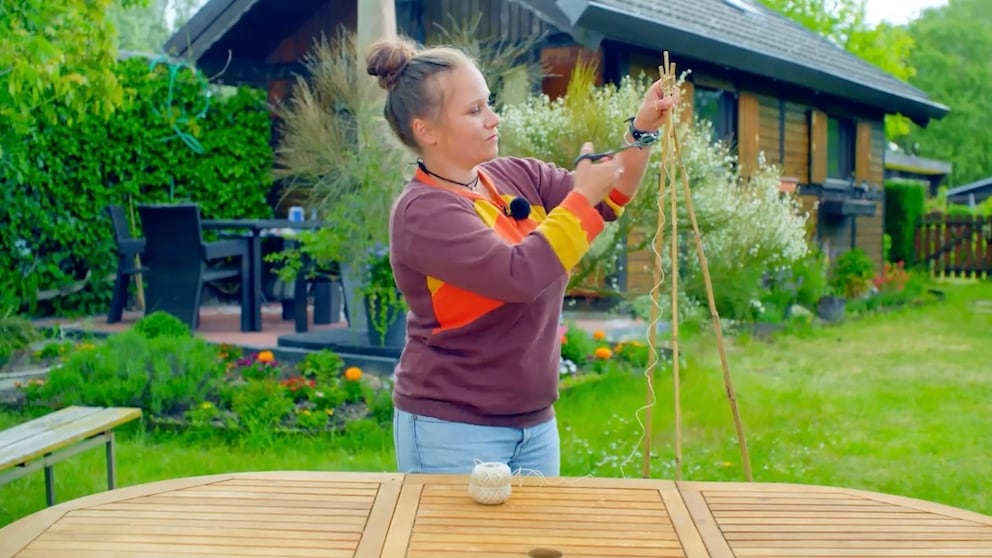
Depending on how large the bean tipi should be and how many bean plants will later climb it, you need three to five long poles or sturdy branches. These form the basic structure of the tipi and should be as firm and even as possible. You also only need a piece of string to secure the poles and a pair of scissors. That’s all you need for this simple garden project—with just a few materials, you can quickly create a decorative bean tipi that will later be covered in dense greenery and become a real eye-catcher in the garden.
How to Build the Bean Tipi
First, you need to set up the poles in the shape of a triangle or tipi. To do this, stick the lower ends into the ground with some distance between them to create a stable structure. The poles then come together at the top and are tightly bound together at the tips with a string. It’s important to wrap the string tightly around the poles several times and tie it well so that the tipi can later withstand the weight of the climbing bean plants. This way, you create a stable framework for the green garden project step by step. If you don’t have string on hand, cable ties can also work, though they are rarely long enough to hold all the poles together.

7 Mistakes When Growing Pole Beans

6 Ways Climbing Plants Can Grow
Where to Set Up the Tipi
For the bean tipi to be densely covered and for the beans to grow vigorously, the right location is crucial. Beans love warm and sunny spots in the garden. An ideal location is one where the plants receive several hours of sunlight daily and are somewhat sheltered from the wind. This allows the long vines to climb the poles undisturbed.
Additionally, the soil should be as loose, nutrient-rich, and well-drained as possible. Beans do not tolerate waterlogging well. Before sowing, it can help to loosen the soil a bit and enrich it with compost. This provides the plants with optimal conditions to transform the tipi into a dense green natural tent within a few weeks.
Advantages of Pole Beans
Pole beans offer several practical advantages over bush beans. Since they grow upward on supports, harvesting is much more comfortable because you don’t have to bend over constantly. This makes a noticeable difference, especially with larger quantities of beans.
Additionally, the beans do not hang directly above the ground and are therefore less likely to end up in the mud after rain. The plants usually dry faster and often remain healthier due to better air circulation. At the same time, pole beans require less space in width because they primarily grow upward. This makes them ideal for smaller gardens or raised beds. And last but not least, the long, densely covered vines also create a real visual highlight in the garden.