


June 15, 2026, 12:43 pm | Read time: 4 minutes
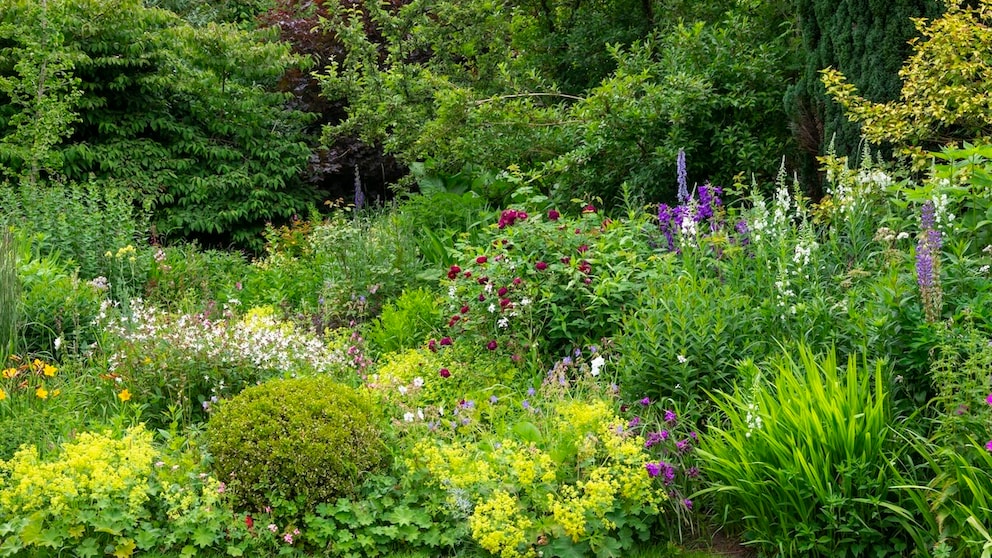
Not only do humans crave refreshment on hot days—insects need water too. In addition to special insect waterers in the garden, certain plants can naturally form small water sources. Dew, rain, or even guttation droplets collect on leaves and flowers, providing bees, butterflies, or beetles with a welcome drink. Those looking to make their garden insect-friendly can plant species that serve this function and act as natural insect water sources.
Natural Water Sources
Many insects do not drink from deep water containers. For them, small, shallow water collections are much safer. This is where certain plants come into play. Their leaves, flowers, or leaf bases form small depressions where water gathers. These natural mini-reservoirs offer insects an important drinking source—without the risk of drowning.
Especially in times of increasing drought, such plants can make a valuable contribution. They complement traditional insect waterers and blend harmoniously into natural garden concepts.
Lady’s Mantle
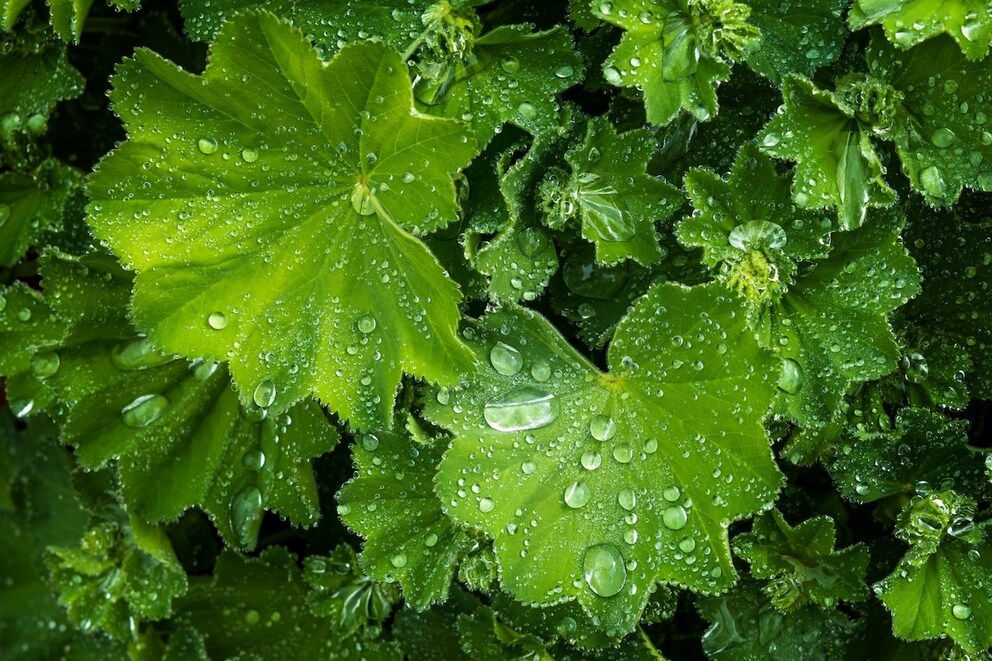
One of the best-known garden plants in this context is the lady’s mantle (Alchemilla). Its leaves are shaped to collect dew drops like a bowl. Anyone who walks through the garden early in the morning knows the impressive sight: perfect water droplets gather on the velvety leaves of the lady’s mantle, resembling small crystals. The bowl-shaped leaves hold dew and rainwater for a long time, providing ideal drinking opportunities for small insects.
Lady’s mantle is also considered very low-maintenance, hardy, and well-suited to the German climate. It grows in both sunny and partially shaded areas and is suitable for beds as well as natural plantings.
Teasel as a Summer Insect Bar
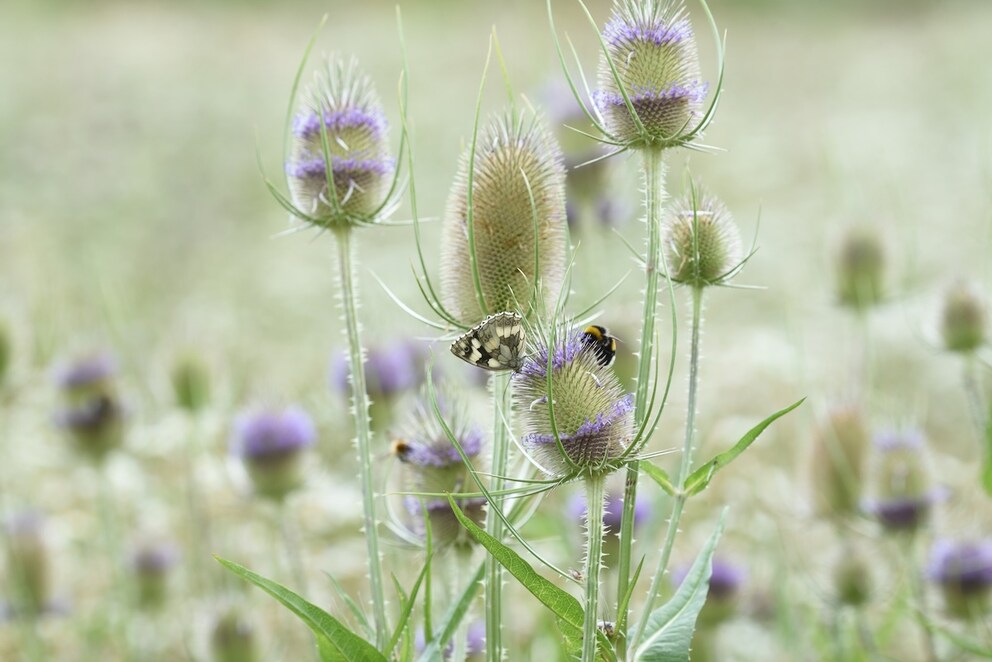
Teasel is one of the most fascinating plants for wildlife-friendly gardens. Its oppositely arranged leaves form small basins on the stem where rainwater collects. These water sources are regularly used by insects.
Additionally, the distinctive flowers attract numerous wild bees, bumblebees, and butterflies. In fall and winter, the seed heads also serve as a food source for many native bird species.
Nasturtium–Edible and Useful
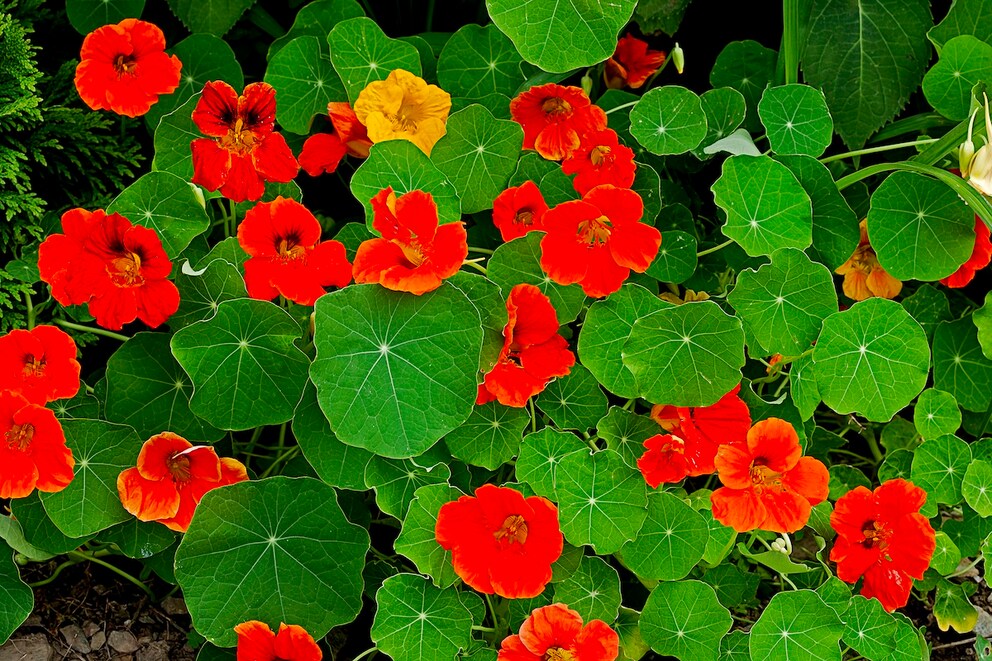
The popular nasturtium can also contribute. Its round leaves hold small water collections after rain or morning dew. Especially on balconies and terraces, it offers an easy way to protect insects.
Another advantage is its colorful, edible flowers, making the plant a decorative all-rounder for both garden and kitchen.

The 6 Best Perennials for Beginners
7 Tips for an Insect-Friendly Balcony
Flowers as Drinking Bowls
Not only leaves, but flowers can also serve as a water source. Especially bowl- and funnel-shaped flowers catch small amounts of water after rain or morning dew. These include hollyhocks (Alcea rosea) and various mallow species, which are not only colorful eye-catchers in summer but also valuable water sources for thirsty insects.
Elegant daylilies and hibiscus also form small water reservoirs in their flower cups. They are not only a nectar source but also doubly attractive to garden visitors.
A Natural Garden Helps the Most
Natural insect water sources are most effective when part of a diverse garden. Flowering plants, native perennials, wild corners, and various water sources together create a habitat that supports insects in the long term. Especially during hot and dry summers, these green helpers are a simple way to promote biodiversity right outside your door.
Incorporating lady’s mantle, teasel, hostas, or cup plant into your planting plan combines aesthetics with ecological benefits. The plants not only look attractive but also make a small yet important contribution to the protection of bees, butterflies, and many other garden inhabitants.
Additionally, it’s always worthwhile to set up a traditional insect waterer: A shallow dish with water, with small stones or moss added, provides a secure hold and prevents insects from drowning. Combined with natural insect waterers, this creates a true paradise for many insects.
Good to know: To ensure insects have access to natural waterers year-round, it’s worth combining different types so they alternate in their blooming periods.