


September 7, 2026, 4:41 am | Read time: 4 minutes
When the sun sets, it’s the hour of nocturnal insects. Plants with light-colored flowers and strong scents serve as their main food source. myHOMEBOOK introduces nine plant species that are particularly attractive to nighttime visitors and explains why these small creatures are so important for the garden.
How Nocturnal Insects Find Their Flowers
Being active at night has a clear advantage. Predators and food competitors are rarely around at this time. In the dark, nocturnal insects need special signals to find the right food sources: bright flower colors that reflect the little light available and an intense scent. For many of these plants, the scent only begins at dusk and becomes stronger. Besides moths, many beetles also search for food on these plants at night.

Benefits of a Solar Green Roof
The Best Plants for Sandy Soil
9 Plants That Provide Food for Nocturnal Insects
1. Evening Primrose
A biennial plant that grows 60 to 150 cm tall. It blooms from June to September in a vibrant yellow. Evening primroses prefer sunny, rather dry, and nutrient-poor locations. The flowers open at dusk within minutes, allowing you to witness it yourself.
2. Dame’s Rocket
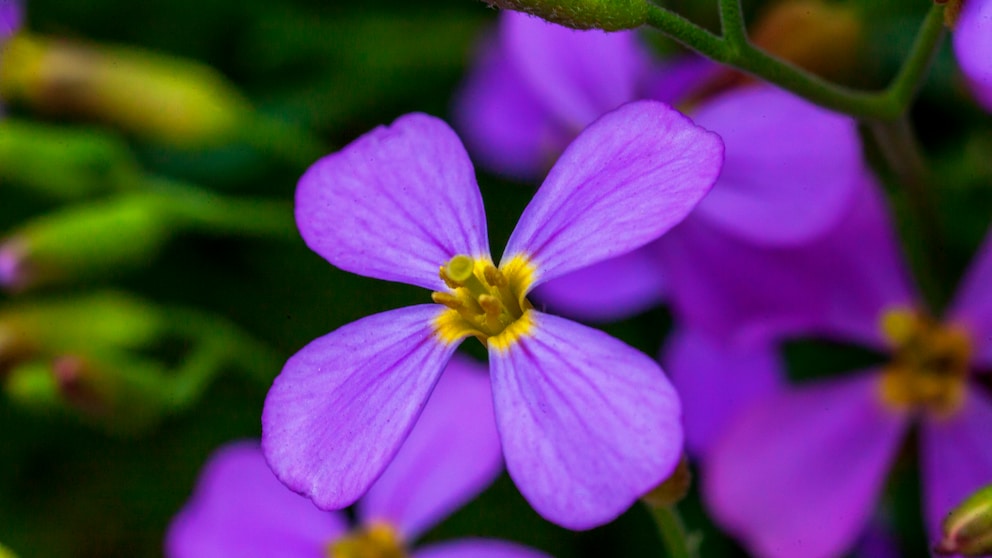
A short-lived perennial that can grow between 60 and 90 cm tall. Its blooming period is from May to July in impressive shades of violet to white. It prefers humus-rich, semi-shaded locations and readily self-seeds. Its scent is barely noticeable during the day but intensifies significantly at dusk.
3. Woodbine Honeysuckle
A deciduous climbing plant that can reach a height of up to six meters. It blooms from June to August, in shades from yellowish-white to reddish, and thrives best when it has a semi-shaded location with a shaded root area. The nectar is so deep in the flowers that only moths with sufficiently long proboscises can reach it.
4. Soapwort
A typical moth plant that grows 30 to 60 cm tall and blooms from July to September in white to pale pink. It likes sunny to semi-shaded locations with nutrient-rich, well-drained soil. Since soapwort spreads vigorously through runners and seeds, you should carefully consider if and where you want it.
5. White Campion
The white campion is a short-lived perennial. It displays its white flowers from May to October and grows 30 to 90 cm tall. It thrives in nutrient-rich, humus-rich soils in sunny to semi-shaded locations. The flowers only open in the evening.
6. Musk Mallow
A perennial, old medicinal plant that is quite undemanding. It likes well-drained soil and a sunny spot. It grows between 40 and 80 cm tall and blooms from June to September in pink to white. Its fine musk scent gives it its name.
7. Betony
Betony is also a medicinal plant that blooms from July to September. It shines in a beautiful purplish-pink and grows 30 to 60 cm tall. The plant prefers a lean to moderately nutrient-poor and well-drained soil in sunny to semi-shaded locations.
8. Nodding Catchfly
A delicate perennial that grows between 30 and 60 cm tall and blooms white from June to August. It likes sunny to semi-shaded places and rather lean and dry soils. The flowers emit an intense scent reminiscent of hyacinths.
9. Fringed Pink
The fringed pink is a perennial, mostly evergreen plant that can grow 30 to 80 cm tall and displays its strikingly fringed pink flowers from June to September. It prefers sunny to semi-shaded locations on fresh, well-drained soil and is also suitable for containers. At night, it has a floral vanilla scent.
In addition to the species presented, there are many others that serve as a food source for nocturnal insects. These include red campion, narrow-leaved fireweed, dyer’s chamomile, yellow mignonette, and perennial honesty.
More than just food
When visiting flowers, moths carry pollen from one plant to the next, ensuring pollination and thus the survival of the plants. Some plants not only offer pollen and nectar but also serve as nurseries for the offspring of nocturnal moths. The spectacularly patterned caterpillars of the mullein moth, which look like a Marsupilami, primarily feed on the leaves of the mullein, a robust, tall-growing wild perennial. Whether as nectar drinkers or caterpillars, moths themselves become food—for hedgehogs on their nightly forays, for bats on their hunting flights, and for birds that find the resting nocturnal moths on bark or in other hiding places during the day.