


October 26, 2026, 1:11 pm | Read time: 5 minutes
How to design your garden to be imperfect yet well-kept, which materials and plants can help, and what it all has to do with Wabi Sabi, as revealed by myHOMEBOOK. With tips from garden designer Annette Lepple.
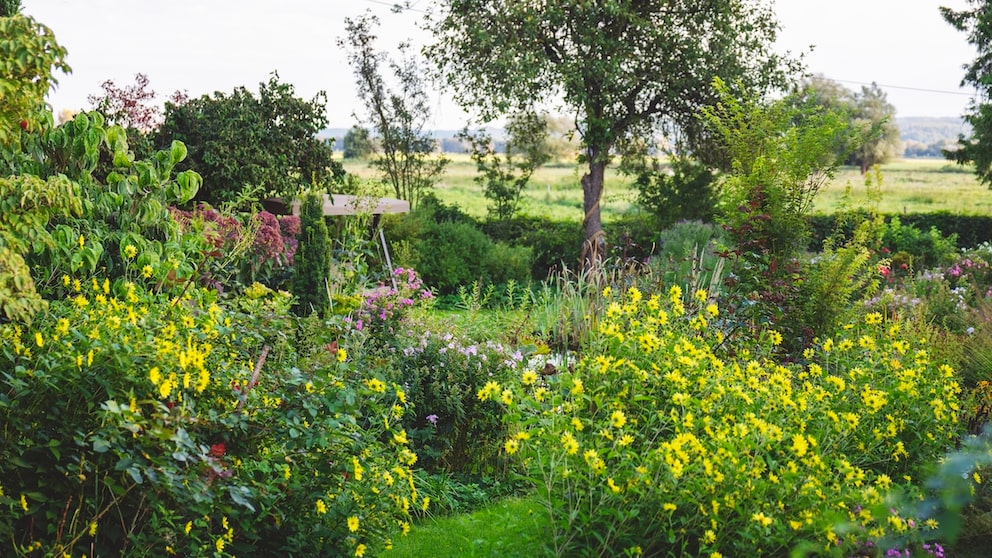
A finished garden is boring–and unrealistic. Anyone who wants a flawless lawn must constantly make adjustments, yet dandelions or daisies always sneak in. In a Wabi-Sabi garden, this battle is unnecessary. You can also skip removing moss or keeping hedges perfectly trimmed. Designing your garden according to the Wabi-Sabi principle allows you to leave it imperfect and even celebrate it.
A Philosophy of Life with Zen Roots
The concept originates from Japan and is closely linked to Zen Buddhism and Japanese tea culture. “Wabi” stands for simplicity and accepting circumstances while finding beauty in them, “Sabi” refers to what develops over time: patina, gentle decay, and the dignity of aging. Annette Lepple, garden designer and author of the book “My Wabi-Sabi Garden,” has applied this philosophy to gardening for the first time in this country. Her book, as the subtitle suggests, leads to the “perfectly imperfect garden.” According to Lepple, it is about “mindfulness, harmony, authenticity, and the acceptance that nothing in life is ever perfect and complete. Everything is transient, everything is in flux.”
It’s not a garden style in the classical sense, but rather an attitude with which one approaches the garden (or life). For Lepple, this means, among other things, “harmoniously connecting house and garden by using natural materials, incorporating light and shadow into the design, and consciously celebrating the seasons.” In everyday life, this might look like this: The table by the patio door is made of wood, with a clay vase on it–in summer with freshly cut flowers, in autumn with a few rose branches and hips. Through the patio door, you can see overflowing flower beds and a lawn that is more like a meadow.
Also interesting: Raised bed sinking? Why that’s normal and when refilling becomes necessary
Time That Lets Beauty Grow and Fade
In a Wabi-Sabi garden, both growth and decay are equally welcome: The sprouting in spring is as beautiful as the seed capsule in December. It begins with serenity, which often consists of deliberate omission. The expert explains: “The lawn is no longer aerated and fertilized, but enchants with daisies, bugleweed, and crocuses.” Let it grow longer in spring and only mow a path through it. Faded blooms can remain: Seed heads and stalks retain their shape for a long time and give the bed structure in winter. The beds remain as they are in autumn because “perennials and grasses exude the charm of transience and simultaneously provide food and shelter for animals,” says Lepple.
Everything in the garden, from the bench to the flower pot, is allowed to age: “Natural materials like stone, wood, and clay develop an attractive patina over time, which is left and not ‘cleaned away.'” Instead of a thuja, there is a living hedge that changes throughout the year.
Water is also part of a Wabi-Sabi garden. “Water is important because Wabi Sabi celebrates all life,” says Lepple. A small bowl or water basin “brings the sky into the garden”: Clouds and light reflect in the water, and it also serves as a birdbath.
Aging Gracefully
Serenity does not mean doing nothing. Wabi-Sabi gardeners “subtly influence and strive for a cheerful place with soulful, natural flair,” Lepple enthuses. Wabi Sabi is not an excuse for negligence. There is dignity in decay when it looks well-kept. Wooden furniture may turn gray, stone walls may moss over, but the birdbath is cleaned. Lepple is strict about water: “No matter how it is integrated into the garden, it is never neglected or algae-covered, but an aesthetic pleasure.”
Pruning is also part of a Wabi-Sabi garden. “Through a transparency cut, I emphasize the natural beauty of a shrub.” Instead of topping the crown, individual branches are removed at the base, just as trees shed old, dry branches themselves. This makes growth and bark more visible, while also allowing light and air into the interior.

“I wanted to do everything right in the garden—and ended up making the biggest mistakes.”

Bird Bath on the Balcony – Guide and Tips
Plants for Perfectly Imperfect Gardens
Annual and biennial summer flowers, perennials, and shrubs–the selection of suitable plants is vast. What matters most is diversity: different colors, growth forms, and heights, preferably with many insect-friendly options. Lepple cites examples that fit for various reasons: the Japanese maple (Acer palmatum) with picturesque growth and magnificent foliage, the serviceberry (Amelanchier), which is “a win on all levels” with its flowers, fruits, and foliage, and the glaucous rose (Rosa glauca), a year-round eye-catcher and “perfect partner for perennials and grasses.” Additionally, there are three plants that leave much to chance: ornamental onion (Allium) with a beautiful winter aspect, coneflower (Echinacea) with useful seed heads, and poppy (Papaver), which Lepple calls a “charming vagabond” and “magic of chance.” Poppies don’t take planting plans seriously; they sow themselves wherever they please.
A Day in the Wabi-Sabi Garden
Gardening is part of it, but mindfulness and joy are more important. Lepple describes what a day in her garden might look like: “In the morning after getting up, I walk (in the summer months happily barefoot) with a cup of tea through the garden and enjoy the atmospheric light. During the day, I clean and fill the birdbaths and create a small still life from flowers, branches, and other natural finds. In the evening, I do Pilates on the herb lawn and shower outdoors before harvesting the ingredients for dinner.”