


July 31, 2025, 11:28 am | Read time: 3 minutes
Most hobby gardeners are familiar with waterlogging. When water can’t properly seep into the soil or drain from a pot, it accumulates. The plant’s roots remain in wet soil. In gardens, waterlogging can occur due to prolonged rain and significantly damage the lawn. In the worst case, root rot, a fungal disease, can develop, requiring parts or even the entire lawn to be replaced. myHOMEBOOK consulted a lawn expert on how to properly care for lawns affected by waterlogging.
What Do Waterlogged Lawns Look Like?
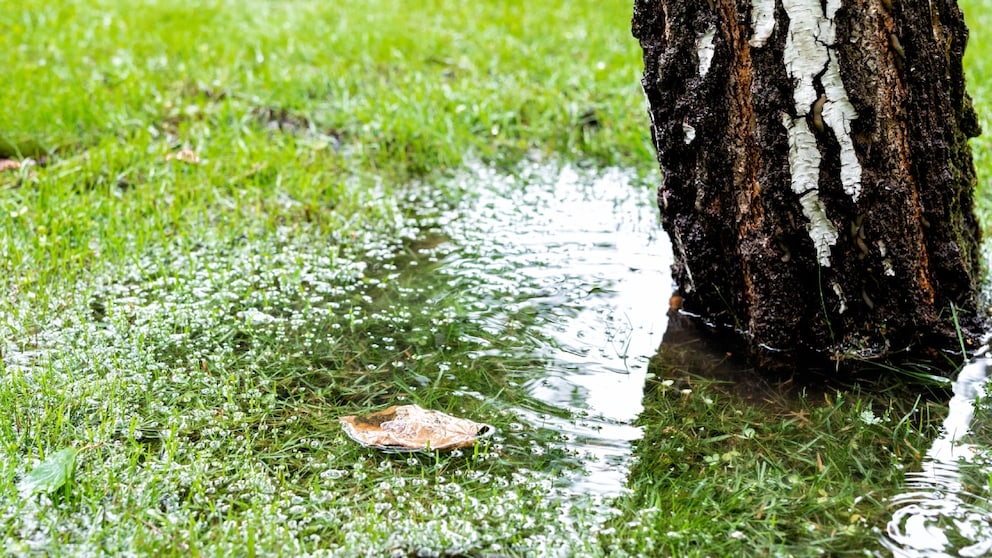
Heavy and prolonged rainfall can lead to the soil in the garden being unable to absorb all the water. The water collects on the surface. You can easily identify waterlogged lawns by the fact that the grass is submerged, either completely or partially. The standing water can result in a muddy lawn and lawn diseases such as root rot.
Yellow or wilted leaves and an increased presence of moss in the lawn are also signs of waterlogging. A musty smell from the soil can also indicate waterlogging in the lawn.

Why the Aerating Fork Is an Underrated Gardening Tool

What Exactly Is Drainage for Plants?
How to Combat Waterlogging in Lawns?
A possible cause of waterlogging in lawns can be soil compaction. When soil layers are tightly compressed, the pore structure changes. Loose garden soil has large pores that allow water absorption. Compacted, heavy soil has few to no larger pores. Smaller soil pores are less able to absorb water or channel it to deeper layers—the water remains on the surface.
“If excessive soil compaction with waterlogging is present, the soil must be loosened,” explains Dr. Harald Nonn from the German Lawn Society (DRG) upon inquiry from myHOMEBOOK. To increase pore space, it’s important to loosen the soil. According to Dr. Nonn, this can enhance permeability. “It’s crucial that excess water can seep deeper or be drained through drainage systems.”
Also interesting: Mowing Wet Grass? Expert Reveals Trick
To loosen a lawn, both spiked shoes and an aerating fork are suitable. Nonn states: “Here, permeability is improved not across the entire area, but at specific points.” Through aeration, hobby gardeners can loosen the lawn’s root system, rocks, and muddy spots. It’s important to loosen the lawn soil only when it’s dry.
How to Prevent Waterlogging?
To prevent waterlogging, loose garden soil is essential. “A well-structured soil with a sufficient proportion of large pores is both water and air permeable,” says the lawn expert. Excessive stress on the lawn can lead to compaction. According to Dr. Nonn, the use of heavy equipment in the area or the formation of footpaths should be avoided.
“A water-saturated soil compacts faster than a dried-out soil.” Therefore, one should primarily avoid walking on or burdening the lawn with machines during rain. “This is especially true for soils with high silt and clay content,” Nonn explains.
To make the lawn more resistant to moisture, the lawn expert recommends sanding the garden annually. “This gradually makes the soil more resilient.” Furthermore: “Ideally, when setting up a lawn, use a loamy-sandy soil that both retains water and allows water to seep during prolonged rain.”