


August 4, 2025, 12:48 pm | Read time: 3 minutes
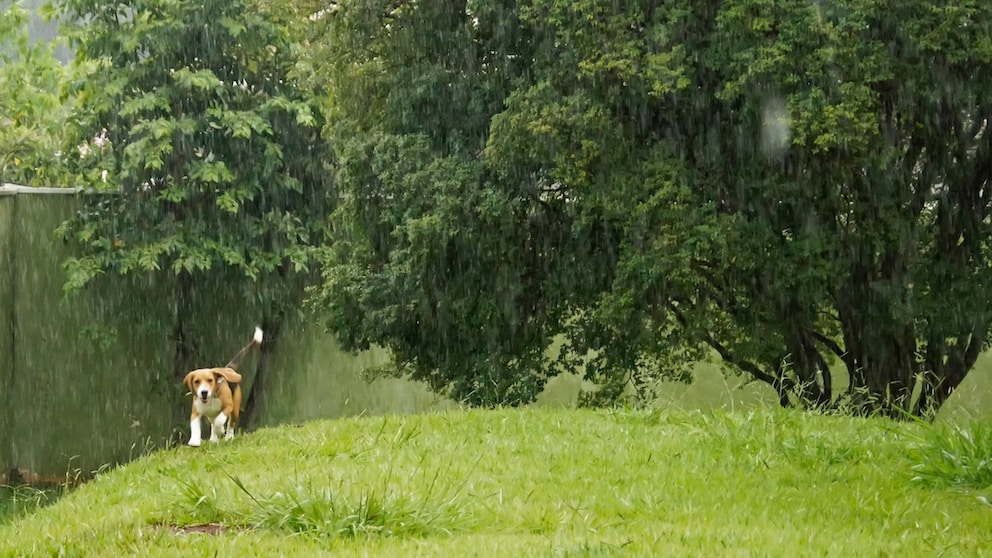
There are phases when it just won’t stop raining. But even during extended rainy periods, lawns need care, including fertilization. Fertilizing the lawn in the rain can have both advantages and disadvantages. myHOMEBOOK consulted a lawn expert to find out what hobby gardeners should consider.
Should You Fertilize the Lawn During Persistent Rain?
In general, the ideal weather for fertilizing the lawn is overcast with forecasted rain. Only with sufficient moisture can the fertilizer work quickly. For this reason, garden owners need to help out in sunny weather by watering the lawn after fertilizing. Only by washing it in can you prevent mineral fertilizers from causing burns on the lawn surface.
However, although moisture is important when fertilizing, you should generally only fertilize when the grass is dry. Wet grass and persistent rain could lead to uneven distribution of the fertilizer, as it may clump. This can, in turn, cause damage to the turf, including burns. Persistent and heavy rain could also result in the fertilizer being washed too quickly into deep soil layers. This not only deprives the lawn of nutrients but can also be harmful to the environment.
Also of interest: Waterlogging in the Lawn? A Pro Explains What to Do

Which Fertilizer to Use for Your Lawn in Spring

3 Tips for Caring for Cucumbers in Rainy Weather
Fertilizing the Lawn in the Rain – Here’s What Matters
As a hobby gardener, you depend on the right weather and should always keep an eye on the weather forecast. During prolonged rainy periods lasting several weeks, regular fertilization can be hindered. But “when the grass is hungry, it needs to be supplied with nutrients, regardless of the weather,” says Dr. Harald Nonn from the German Lawn Society (DRG) in response to a query from myHOMEBOOK.
Ideal is long-term lawn fertilizer with synthetic-organic or naturally organic nitrogen sources. “They release the nitrogen, which is important for growth and greening, in a controlled manner to the grass and minimize the potential leaching of nitrogen in the form of nitrate, even during prolonged rain,” explains the expert.
Tips for Fertilizing the Lawn in the Rain
- Do not fertilize immediately after heavy rain. It’s better to wait until the soil is a bit drier to avoid leaching.
- If light rain is forecasted, you can apply the fertilizer just before. It’s sufficient if the rain is only light afterward to bring the fertilizer into the soil.
- Long-term fertilizer is the best choice in the rain. The nutrients are released slowly and are not immediately washed out.