


June 4, 2026, 11:51 am | Read time: 3 minutes
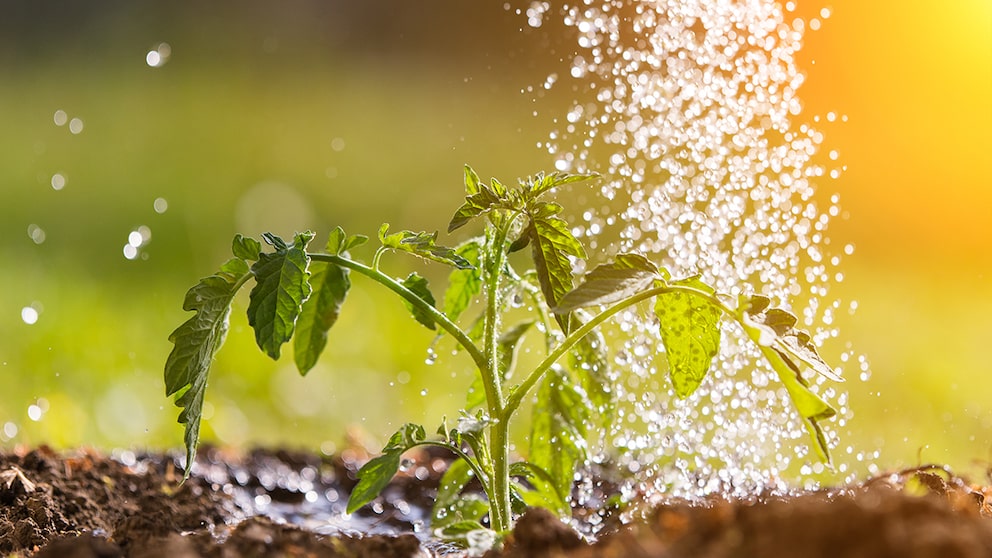
Tomatoes are among the most popular vegetables for home gardening—and for good reason: Homegrown fruits often taste better and, despite the extra effort, are usually cheaper than store-bought ones. However, successful harvesting depends on proper care. myHOMEBOOK gardening expert Franka Kruse-Gering explains why tomatoes should always be watered from below: Watering over the leaves and plant encourages diseases and risks long-term damage to the harvest.
1. Wet Tomato Leaves Promote Fungal Diseases
Tomatoes are prone to fungal diseases such as powdery mildew. Constantly wet leaves create a humid microclimate around the tomatoes. Wet leaves play a central role in this—they provide the ideal breeding ground for spores, which are spread by wind, rain, or contact. While avoiding wet leaves doesn’t guarantee that tomatoes will remain disease-free, it does minimize the risk.

The 5 Most Common Tomato Diseases and How to Combat Them
Brown Spots on Tomatoes? What Disease Could Be Behind It
2. Plants Can Get Sunburned
Not only fungal diseases, but also sunburn can become a problem if the tomato leaves get wet during watering. If water droplets remain on the leaves after watering and then strong midday sun hits them, the droplets act like small magnifying glasses. The concentrated sun rays can literally “burn” the plant tissue.
The result is light, dry spots on the leaves, sometimes even on the fruits. These are irreparable damages. Young plants or freshly pruned shoots are particularly at risk because their tissue is still sensitive. Therefore, it’s best to water tomatoes early in the morning, directly at the root—this way, any moisture on the leaves can evaporate before the hot part of the day.
3. Disrupted Air Circulation
Moist leaves increase the humidity around the plant. Combined with dense planting or stagnant air, the risk of heat buildup and mold formation rises.
Tomato plants need fresh air—not only to grow healthily but especially to allow moisture to dry quickly. If the air around the plant doesn’t circulate well, water remains on the leaves longer after watering or a rain shower. This creates a humid-warm microclimate, ideal for the development of fungal diseases—especially late blight, which can destroy entire plants within a few days.
Therefore, it’s important to plant tomatoes with sufficient spacing and to ensure that the leaves don’t get wet when watering.