


October 23, 2026, 3:16 am | Read time: 6 minutes
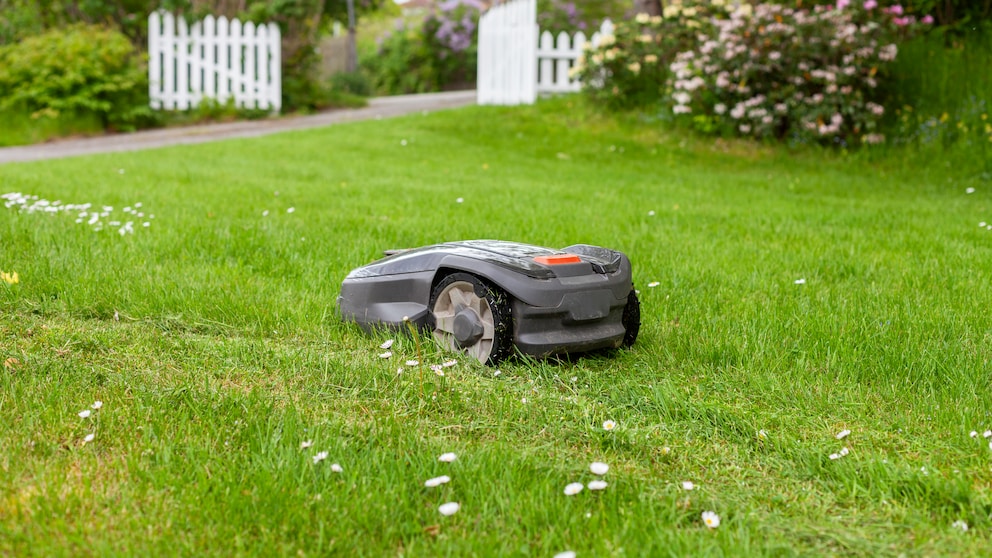
A robotic lawn mower does the job almost unnoticed. However, it can affect the soil. For nocturnal garden dwellers, it can also pose a danger. A garden expert explains when the constant trips become a problem and why the timing of mowing is often more important than the device itself.
Hikers know the principle from footpaths. A single person leaves no trace on the meadow. A larger group walking the same line does. It’s similar with robotic mowers. They are light compared to gas mowers but frequently travel over the same areas. myHOMEBOOK spoke with Torsten Brämer from the online garden community Wir sind Garten about how the weight of a mowing device and the frequency of mowing affect the soil.
Follow myHOMEBOOK on WhatsApp now
What the Soil Can Handle
In general, the more pressure applied to a small area, the more a device stresses the soil. Low weight and wide tires are therefore advantageous. Most robotic mowers weigh between 8 and 16 kilograms. All-wheel-drive models for steep slopes weigh about 20 kilograms. A gas lawn mower often weighs 25 to 40 kilograms, while a manual reel mower weighs about 8 kilograms.
How many passes a lawn can withstand mainly depends on the soil. “A single mowing with a heavier lawn mower can be less problematic for the soil than many repeated passes with a lighter device,” Torsten Brämer explains to myHOMEBOOK.
The type of soil is also crucial. Sandy soils hardly compact. Water quickly seeps through, and the soil remains stable. Clay and loamy soils are much more sensitive. When wet, the wheels compress them and damage the grass. Besides soil type, the current moisture level is also important. On dry, stable soil, Brämer usually sees no problem.
If the soil compacts, its pores shrink. Less air reaches the roots, and rainwater seeps less effectively. Grass roots develop weaker, and over time, the entire lawn suffers. “Especially with increasing heavy rain events, I consider a well-drained, lively garden soil very important,” Brämer emphasizes.
Also interesting: What Makes Garden Soil Hard After Rain
Wetness Leaves Traces
In wet conditions, the expert generally advises against mowing. This applies to both robotic and traditional lawn mowers. The wheels leave marks and tear up the grass. Wet grass is also harder to cut, and the clippings clump together. Waiting until the lawn and soil have dried protects both.
Some robotic mowers have a rain sensor. It reacts to water on the device and sends the robot back to the charging station. The device then takes a break, which can be preset. For some models, this is three hours by default. Other devices pause based on weather data from an app. However, the sensor only measures water on the device, not soil moisture. It doesn’t replace checking the lawn.
The effects are most evident on fixed paths. In front of the charging station, on frequently used routes, and at turning points, tracks and bare spots can form. A wet ground amplifies this effect. Modern devices with free navigation distribute their paths better and reduce some of these tracks. However, repeated stress on certain areas remains an issue, according to Brämer.

Turn Off Robotic Lawn Mowers at Night

How Much Power Robotic Lawn Mowers Really Use in Everyday Life
Frequent Mowing Is Beneficial
In one respect, there’s a lot to be said for the robot. Frequent mowing can promote a dense lawn, provided the device cuts only a small portion of the grass blades each time. Robotic mowers operate precisely on this principle.
However, Brämer is critical of the idea of keeping the lawn permanently extremely short. Slightly taller grass often withstands heat and drought better. Other lawn experts recommend a cutting height of 3.5 to 4 centimeters for utility lawns. In hot weather, the lawn can be one to two centimeters longer.
Longer grass also shades the soil and provides more habitat for animals. “From an ecological perspective, not every square meter of garden needs to look like a golf course,” Brämer adds. Less frequently mowed areas are much more valuable for insects and other animals.
Robotic Mowers Can Be Dangerous for Hedgehogs at Night
Brämer sees the main criticism in operating after sunset. Robotic mowers should not run at night or dusk. That’s when amphibians, insects, and other nocturnal garden dwellers like hedgehogs are active. In danger, the spiny animals often don’t flee but curl up. Studies like those from the Leibniz Institute for Zoo and Wildlife Research show another behavior: Most hedgehogs even turn toward the approaching device. This increases the risk of injuries to the head and neck.
Researchers documented a total of 370 hedgehogs with cuts from electric garden tools. Nearly half of the animals died. The injuries occurred on all days of the week, including Sundays. For researchers, this is an indication of robotic mowers: Only they are allowed to mow on Sundays. In a test with 19 models, almost all devices had to touch a hedgehog to recognize it. Some robotic mowers now have cameras and thermal sensors. In a sample by Stiftung Warentest in spring 2026, all robotic mowers except one still touched the hedgehog dummies.
Brämer therefore advises letting the robot run only during the day and checking the area beforehand. “I consider a strict night driving ban indispensable.” He is not alone in this demand. In April 2026, the German Association of Cities and twelve animal, nature, and species protection organizations called for a nationwide night driving ban. Such a law does not yet exist. However, several cities and counties prohibit nighttime operation by general decree, including Cologne, Düsseldorf, Freiburg, and the Kassel district. The ban usually applies from 30 minutes before sunset to 30 minutes after sunrise.
Brämer himself uses a classic manual reel mower. This allows him to decide when, where, and how often he mows. He leaves blooming islands standing, considers animals, and simply refrains from mowing when it’s wet. Robotic mowers are convenient and can work responsibly, he says. Nevertheless, his principle is: “Better to mow selectively and a bit less often, and consciously allow some wilderness in the garden.”